Why South Korea’s chip boom is now a US tariff trap as a US$350b pledge looms

Washington’s latest trade investigation has created a dilemma for South Korea, forcing it to defend the state-backed industrial strategy that helped make it a semiconductor powerhouse while facing renewed pressure to shift more manufacturing capacity to the United States to deliver on investment commitments, analysts said.
They warned the move could give Washington leverage to revisit tariff terms, enforce existing investment pledges and press Seoul to commit more capital to the US.
The Office of the US Trade Representative (USTR) on Wednesday proposed new tariffs targeting 14 major trading partners – including South Korea, China, Japan and the European Union – over what it described as excess industrial capacity, following an investigation launched in March across 16 economies that left determinations on Mexico and Norway pending.
While Seoul insists the 15 per cent tariff rate agreed under its trade deal struck with Washington last year will remain in place, analysts warned it could rise to 25 per cent if South Korea failed to honour the US$350 billion investment pledge included in the agreement.
“The USTR’s Section 301 investigation report has effectively made the 15 per cent tariff rate conditional, with the possibility of an increase to 25 per cent if certain conditions are not met,” said Hur Jung, an economics professor at Sogang University.
“Allegations of semiconductor overcapacity and delays in implementing the US$350 billion investment package have emerged as major risk factors,” he said.
South Korea needed to continue convincing Washington that its industrial strategy was aimed at supply-chain cooperation rather than competition among market economies, aside from non-market economies such as China, he added.
The USTR accused South Korea of contributing to global industrial overcapacity through government-led industrial policies, preferential financing and aggressive export promotion, arguing that these practices distort market competition and undermine American manufacturing.
Its 194-page report, compiled under Section 301 of the US Trade Act of 1974, identified the automotive, semiconductor and petrochemical industries as particularly problematic. It argued that decades of industrial planning had led Seoul to pursue increasingly aggressive policies to expand manufacturing capacity while failing to adequately regulate foreign direct investment and address growing imports from non-market economies, particularly China.
Hur said the investigation had introduced a new friction point into the trade relationship.
“The issue of overcapacity is a new point of contention that was not included in the original agreement,” he said.
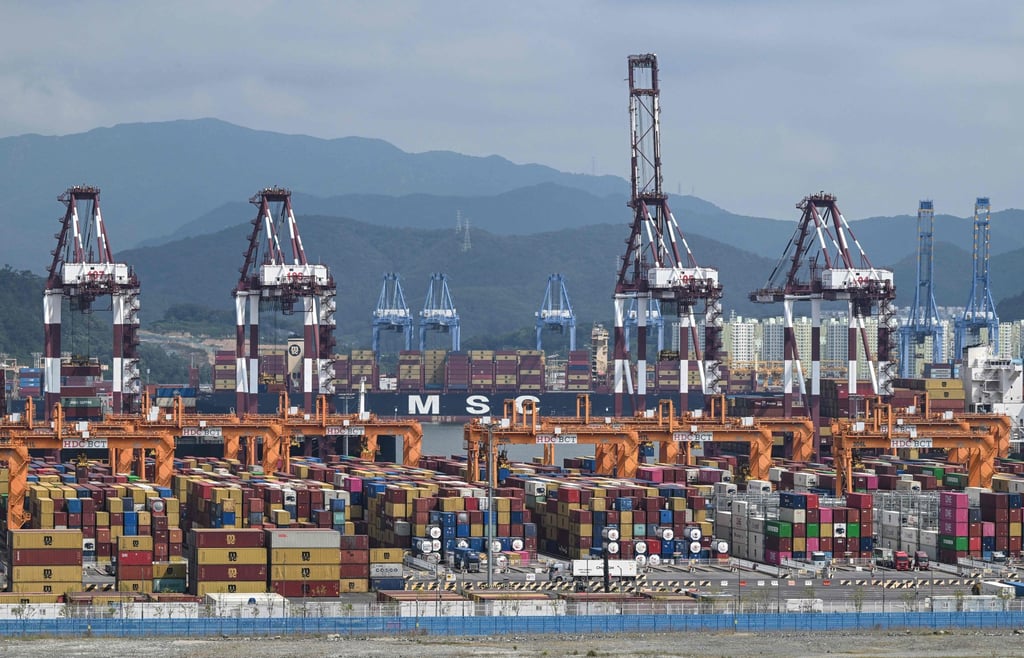
Cho Seong-dae, director of trade policy and strategy at the Korea International Trade Association, said the report appeared primarily intended to pressure Seoul into implementing the bilateral trade and investment commitments outlined in last year’s fact sheet.
“Washington appears to be seeking justification for maintaining the existing tariff levels, rather than explicitly threatening to raise tariffs to 25 per cent,” Cho said.
He added that the report should also be understood in the context of the US Supreme Court’s February ruling that unilateral tariff measures imposed by US President Donald Trump were unlawful. Rather than directly threatening higher tariffs, the investigation could give Washington an alternative legal and institutional basis for keeping existing tariffs in place while pressing Seoul to honour its commitments under the trade agreement reached last November.
Kim Kwang-suk, head of the economic research department at the Korea Economic and Industrial Research Institute, said Washington appeared to be using allegations of overproduction to maintain high tariffs and pressure major trading partners into fulfilling existing investment pledges and making additional investments in the US.
“The Trump administration appears to have found a new rationale for its high-handed tariff policy by invoking concerns over excess production, potentially providing additional leverage to demand that trading partners deliver on existing investment promises – and commit to more than they have already pledged,” Kim said.
The USTR argued that South Korea’s manufacturing-oriented economic model relied excessively on expanding production capacity and exports rather than stimulating domestic consumption. It cited goods exports equivalent to 35.9 per cent of South Korea’s gross domestic product, compared with 7.1 per cent in the US, based on 2021–25 averages.
Particular scrutiny was directed at Seoul’s K-Semiconductor Belt strategy, introduced in 2021 with the aim of establishing the world’s largest semiconductor supply chain by 2030.
The report pointed to around US$530 billion in planned semiconductor investment over two decades, tax incentives of up to 50 per cent for research and development and 20 per cent for facility investment, as well as government support for electricity, water supplies and other infrastructure, alongside preferential financing for chipmakers.
It also highlighted the proposed semiconductor cluster in the Gwangju and Jeolla regions, backed by corporate investment commitments of around 800 trillion won (US$518 billion), and South Korea’s dominant position in the global memory chip market.
Samsung Electronics and SK Hynix together accounted for more than 70 per cent of global dynamic random-access memory (DRAM) production and 51 per cent of NAND flash production, according to the report.
Although semiconductor products were exempt from the proposed additional duties under the investigation, the sector’s domestic production and investment policies remained a central focus of Washington’s allegations.
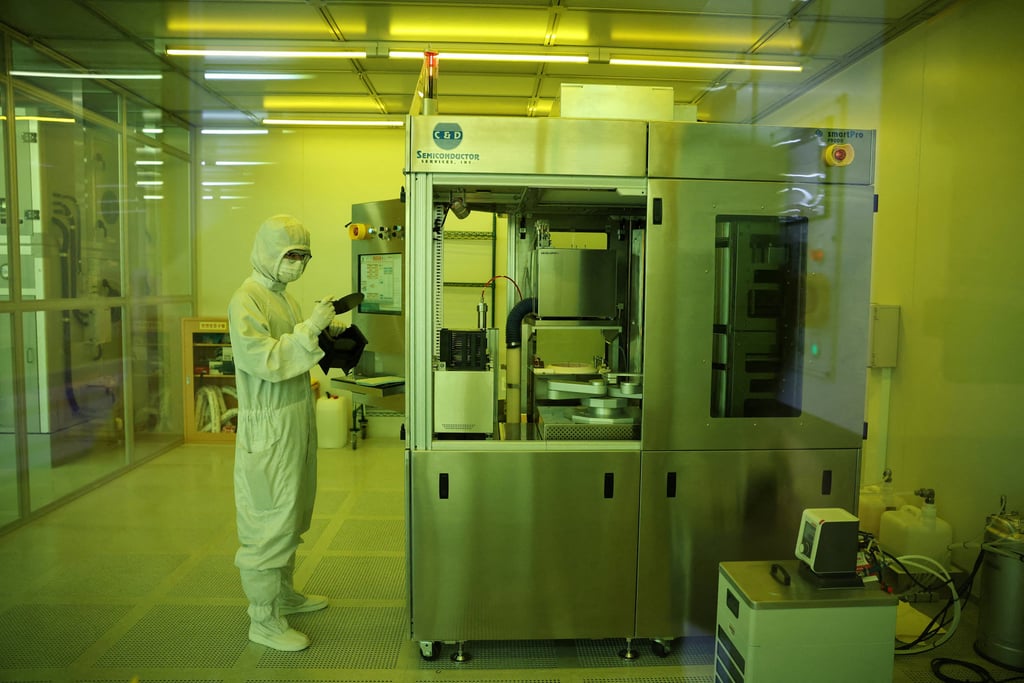
South Korea rejected the characterisation of its industrial policies as contributing to structural overproduction, arguing that its support measures were designed to strengthen corporate innovation and provide infrastructure needed for industrial development rather than encourage state-led expansion regardless of market demand.
“Our industrial policies provide indirect support for corporate innovation and infrastructure in accordance with market principles. They are not designed to encourage state-led overproduction,” an industry ministry official said.
Seoul also received assurances from Washington that the final tariff rate would remain consistent with the bilateral trade agreement reached last year.
“During consultations ahead of the announcement, the US side confirmed that the final applicable tariff would honour the deal reached between the two countries,” the official told reporters in a background briefing on Wednesday.
The official said the assurance had been repeated through multiple channels, including at senior levels, and that Seoul would continue to press for the agreed tariff rate during subsequent consultations and hearings.
But analysts dismissed Washington’s allegations of semiconductor overcapacity, arguing that the industry was struggling to keep pace with rapidly growing global demand.
Hur said Seoul needed to make a stronger case that the semiconductor industry faced supply constraints rather than producing more than the market could absorb.
“The US appears to want South Korea to reduce semiconductor production at home and shift more manufacturing capacity to the United States,” he said, noting that Trump had threatened in January to impose 25 per cent tariffs over the construction of semiconductor plants in South Korea, and that similar arguments had now resurfaced in the latest investigation.
Kim said demand had recently outpaced supply, particularly in the memory chip sector, with DRAM prices surging severalfold as manufacturers struggled to produce enough chips to meet growing requirements.
For South Korea, the immediate priority should be to convince Washington that its semiconductor industry faced a global shortage of production capacity rather than generating excess supply, he said.
“If further investment commitments become necessary, Seoul should ensure that they are structured in ways that serve South Korea’s broader economic interests, rather than simply responding to American pressure,” he added.
KioskNews shows a cleaned-up reading view extracted from the publisher’s page — the original always lives on their site, not ours.