‘The tools change, the spirit does not’: 50 years of Hong Kong construction industry training

[The content of this article has been produced by our advertising partner.]
Gone are the days when aspiring construction workers in Hong Kong relied almost entirely on experienced craftsmen to learn their trade. Today, AI, robotics and smart construction technologies are changing the way buildings are designed and built, creating new demands for training and professional development.
This transformation was at the heart of the Hong Kong Institute of Construction (HKIC) Smart Construction and Construction Industry Vocational and Professional Education and Training International Forum, held on November 25 as part of Construction Innovation Expo 2026.
The local and overseas academics and industry experts joined together to exchange insights on smart construction, vocational training and future skills, featured a Chairmen’s Dialogue with eight past and present construction training leaders to reflect on the industry’s evolution from craftsmanship to smart construction.

The discussion came as the Construction Industry Council (CIC) forecast a shortage of 45,000 to 50,000 skilled and semi-skilled workers by 2030, partly driven by major infrastructure projects, including the Northern Metropolis and new railway developments.
“Today, the tools change, the spirit does not,” said Ir Professor Thomas Ho, CIC chairman, in his opening address. “We have entered the era of smart construction and AI.”
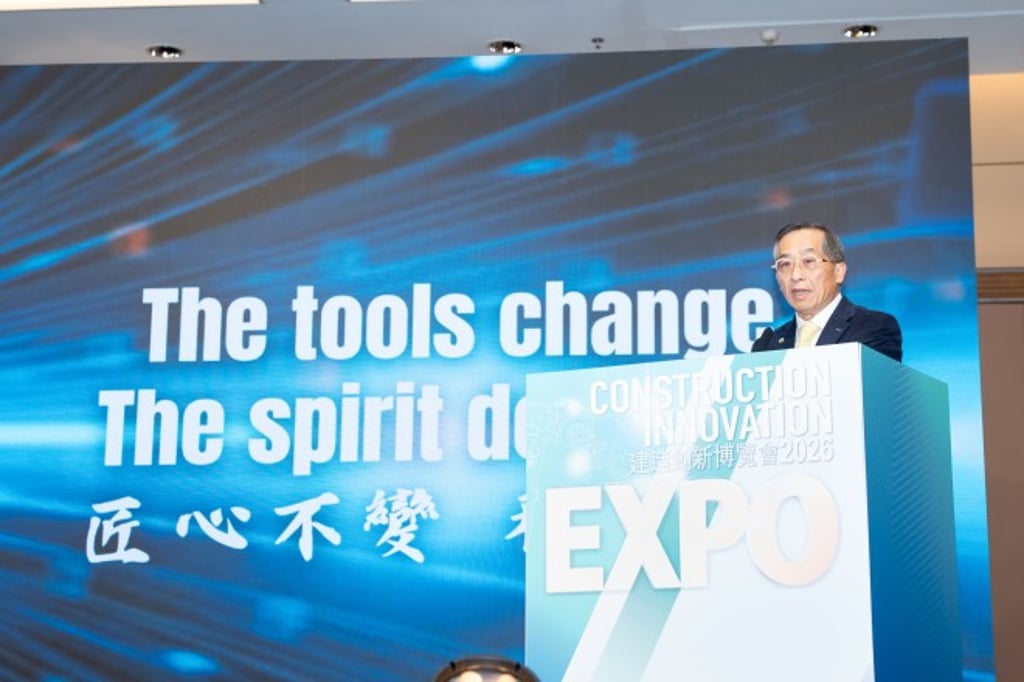
Ir Ricky Lau, Permanent Secretary for Development (Works), said building information modelling (BIM), the Smart Site Safety System (4S) and Modular Integrated Construction (MiC) were helping the industry build safer, faster and greener.
“Technology gives us only better tools,” he said, adding that construction workers' skills and expertise ultimately built the city. He thanked past and present CITA and CITB chairmen for developing a competent workforce.
The formalisation of construction training
Hong Kong's formal construction training began in 1975 with the establishment of the Construction Industry Training Authority (CITA). Before then, workers learned largely from experienced craftsmen known as masters, with the transfer of tacit knowledge dependent on their willingness to teach, recalled Dr Chan Ka-kui, CITA chairman from 1993 to 2001.
CITA introduced recognised training standards and expanded its courses as construction methods advanced. Major projects, including the new airport at Chek Lap Kok and Tsing Ma Bridge, prompted more management training and trade testing.
Ir Billy Wong, Chan's successor, recalled difficulties attracting young people to physically demanding work. Training subsequently expanded across trades and, following the CIC's establishment, increasingly covered professional qualifications and new technologies.
Ir Dr Derrick Pang, Construction Industry Training Board chairman from 2014 to 2015, recalled the introduction of BIM training. “If we don't train people to use BIM, it's very hard to get clients to adopt BIM,” he said.
HKIC opened in October 2018, following work by Ir Allan Chan, chairman from 2016 to 2019, to develop its concept. Its BIM training centre has since trained about 14,000 people.
Under Ir Yu Sai-yen, training continued during the pandemic. His successor, Sr Eddie Lam, oversaw efforts to replenish an ageing workforce and introduce smart-site safety courses.
Combining craftsmanship with technology
Ir Simon Liu , chairperson of Construction Industry Training Board since July 2025, said new technology should complement traditional skills.
“Technology cannot replace professional judgement, and AI cannot replace the craftsman's commitment to quality and safety,” he said.
Workers using technology effectively could improve construction quality and productivity.
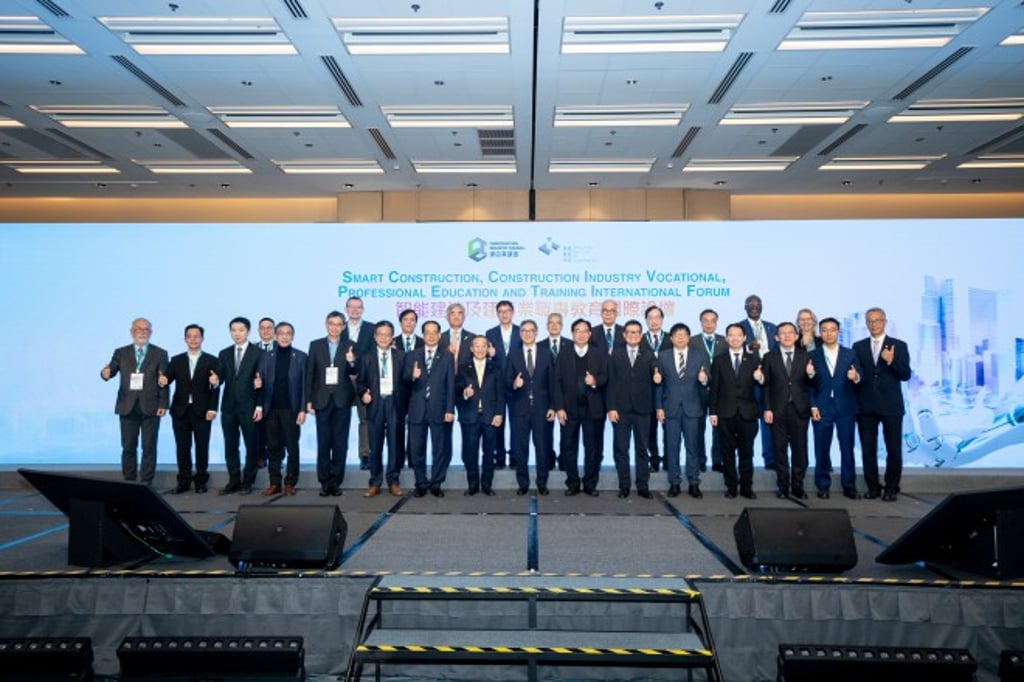
As a leading vocational and professional education and training (VPET) institution, HKIC offers courses in emerging construction methods and works with educational institutions to connect industry skills with recognised qualifications.
Ir Dr Lo Wai-kwok, chairman of the HKIC Management Board, said young people needed clearer career prospects. HKIC works with universities and professional bodies in Hong Kong and overseas to improve recognition of graduates' qualifications.
“Craft is a starting point, not the end point,” Lo said, explaining that apprentices could progress to professional careers.
The CIC has doubled annual training places for skilled workers from 6,000 to at least 12,000. It also supports training in MiC and Multi-trade integrated Mechanical, Electrical and Plumbing (MiMEP), increasingly important methods for major projects.
Preparing the next generation for construction careers
As construction becomes more tech-driven, universities and training institutions must equip students with new skills while preserving craftsmanship and professional judgement.
The HKIC international forum offered academics, educators and industry experts from Hong Kong and overseas a platform to exchange knowledge on AI, automation, smart construction and talent development.
Discussions connected academic research and international perspectives with the needs of Hong Kong's construction industry.
HKIC's international engagement also creates opportunities for students. Through the WorldSkills Competition, young construction talent can exchange techniques with peers from other countries and benchmark their craftsmanship against international standards.
Closer to home, HKIC's STEAM education initiatives and secondary school collaborations introduce young people to construction, innovation and technology, encouraging them to explore related courses and careers.
KioskNews shows a cleaned-up reading view extracted from the publisher’s page — the original always lives on their site, not ours.