The Greatest Beatles Lyrics Ever Written, Ranked

Audrey Connelly is a writer living and working in Boston, MA. Music is and has always been one of the most important parts of her life. While rock & roll is her true love, Audrey's taste runs the gamut. Deep cuts, overplayed Billboard Hot 100 hits, trip hop, reggae, musical theater. It's all fair game. However, if she's being totally honest, she is not a huge fan of (most) country music, but she is (mostly) willing to give anything a listen or two.
She has previously contributed to Atwood Magazine and has brought her passion for writing and music – specifically classic and alternative rock – to Collider.
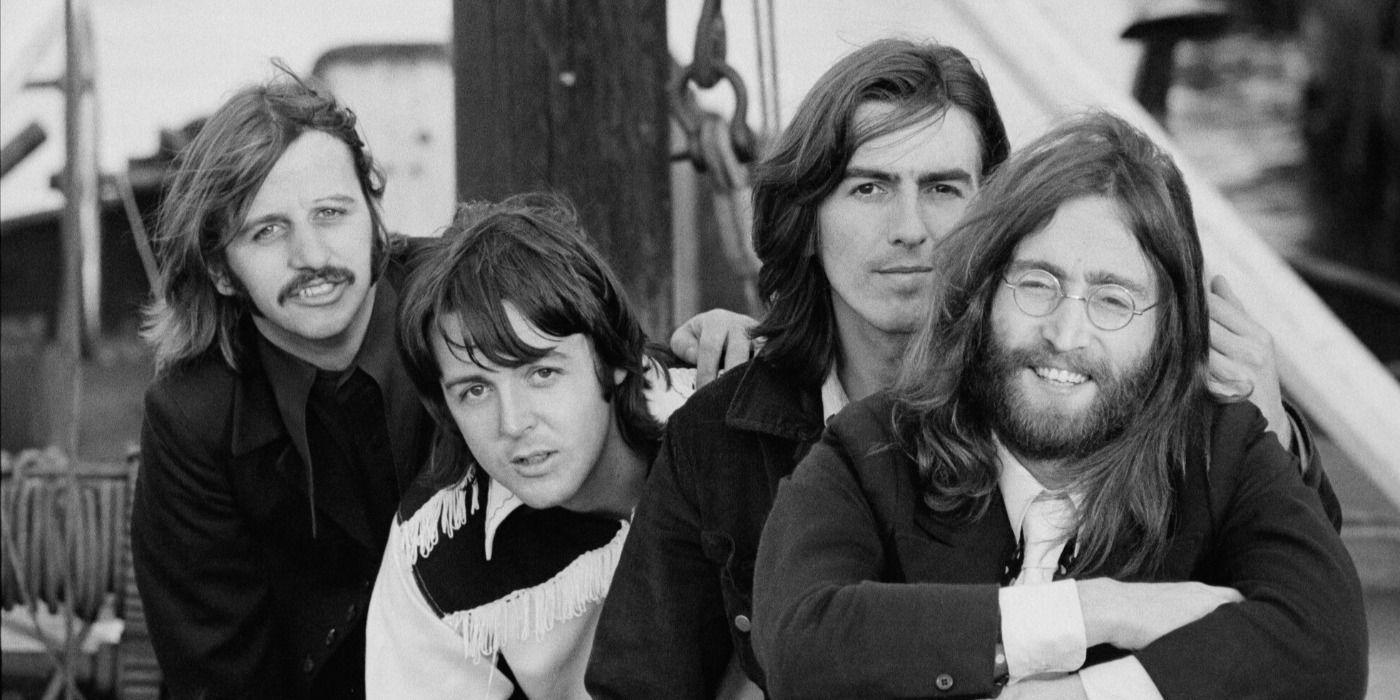
There has never been a band with more influence over popular music than The Beatles. It is an inarguable fact. They incorporated countless genres into their work, pushing the boundaries and exponentially expanding what was possible for music. Over their decade-long career as a group (can you believe it was only ten years?) they produced a vast variety of music that literally changed the world.

Perhaps the most intriguing and revolutionary aspect of the paradigm-shifting band was the Lennon-McCartney songwriting duo. John Lennon and Paul McCartney, two polar-opposite minds merged into one, created some of the most beautiful, cerebral, and confounding lyrics to ever appear in popular music. While George Harrison and Ringo Starr were responsible for many valuable contributions, it is no secret that the heart and soul of The Beatles existed between this duo. But which of their many ingenious lyrics surmount the rest? These five songs portray the songwriting of Lennon and McCartney at its very best.
5 “Lucy in the Sky with Diamonds” (1967)
Starting off on a wonderfully strange note: “Lucy in the Sky with Diamonds.” As iconic as it is perplexing, the otherworldly track is the third on Sgt. Pepper’s Lonely Hearts Club Band – hands down the most psychedelic album in The Beatles' catalog. The song was inspired by a drawing Lennon’s nursery-aged son, Julian, brought home from school one day. It is also often posited that the first letter of each noun in the title, which spell out “LSD” when put together, is an obvious drug reference. Lennon refuted this theory emphatically. That being said, it was no secret that The Beatles’ music was influenced by hallucinogens during this time.
Lennon credits the bizarre, dreamlike imagery to Lewis Caroll’s 1865 novel Alice’s Adventures in Wonderland. This connection is apparent – both works are chock-full of chimerical nonsense and technicolor imagery, as seen in the opening lines of the song: “Picture yourself in a boat on a river/ With tangerine trees and marmalade skies/ Somebody calls you, you answer quite slowly/ A girl with kaleidoscope eyes.” The lyrics instantly fill the listener’s mind with vivid imagery, one of the primary reasons why “Lucy in the Sky with Diamonds” is a key work in psychedelic music.
4 “In My Life” (1965)
John Lennon called “In My Life” his “first real major piece of work,” despite its being released halfway through the band's career. It was the first time he had written autobiographically, approaching songwriting from a literary angle rather than as a means to an end for a pop song. This song, and the entire Rubber Soul album upon which it appears, marks a departure from traditional Western music.
The lyrics are written in the form of a long poem. Initially, they were much more specific, describing his daily bus journey during his childhood in Liverpool. He ultimately found the lyrics boring, and expanded them into a more generalized meditation on childhood, memory, and home. In the song, Lennon contemplates his past with a feeling of peace and acceptance, as is evident in lyrics such as: “Tho' I know I'll never lose affection/ For people and things that went before/ I know I'll often stop and think about them/ In my life I love you more.” These beautiful and deeply relatable lyrics make this song a soft place to land.
3 “Eleanor Rigby” (1968)
“Eleanor Rigby” is one of the few songs upon which Lennon and McCartney disagreed about primary authorship. They both claimed to have written the majority of the lyrics – and who wouldn’t want to be responsible for such a beautiful and unique song? While it was surely a group effort (with lyrical contributions from George Harrison as well) it is widely agreed upon that “Eleanor Rigby” is Paul McCartney’s brain child. He had already completed the first verse and the melody before presenting it to the rest of the band.
Similarly to Lennon’s “In My Life,” “Eleanor Rigby” marked a change in McCartney’s approach to songwriting. Many of his past lyrics focused on a standard love story and were often written in the first or second person. These lyrics speak from the perspective of an outsider, a detached narrator that emphasizes the song’s theme of loneliness and isolation. The lyrics of “Eleanor Rigby” are rooted in the mundane upon which a layer of unreality is superimposed, creating a relatable and contemplative feeling: “Eleanor Rigby picks up the rice/ In the church where a wedding has been/Lives in a dream/ Waits at the window, wearing the face/ That she keeps in a jar by the door/ Who is it for?”
2 “Blackbird” – (1968)
“Blackbird” is one of Paul McCartney's greatest pieces. He performed it solo, accompanied by simple acoustics and the gentle calls of blackbirds. It is simply gorgeous and as close to perfect as any song has ever been. McCartney was inspired by the Civil Rights movement in the American South, specifically the Little Rock Nine protests in Arkansas. The protest is one of the most famous in American history: nine Black students repeatedly attempted to enter the recently desegregated high school in which they were enrolled – despite the National Guard’s illegal effort to prevent them from doing so. McCartney was profoundly inspired by the resilience and bravery of these persecuted young Americans. Secondarily, he was deeply affected upon hearing a blackbird’s call while studying meditation in India, an experience that also influenced his lyrics.
The theme of freedom is clear within the lyrics: “Blackbird singing in the dead of night/ Take these broken wings and learn to fly/ All your life/ You were only waiting for this moment to arise.” The symbolism elicits a feeling of hope, of a light at the end of the tunnel. The lyrics are incredibly powerful and emotional, especially when viewed through the lens of his deeply meaningful inspiration.
1 “Norwegian Wood (This Bird Has Flown)” (1965)
“Norwegian Wood” contains some of the most clever lyrics in Beatles history. So, here it is at number one – despite the somewhat unsavory context behind it. John Lennon wrote this song about an extramarital affair he had in London, but he didn’t want the lyrics to fully reveal what he had been up to. He never revealed who inspired the song, which adds a layer of mystery to the already ambiguous lyrics. His writing was influenced by the work of Bob Dylan and the music of India – despite having just begun to learn the instrument, George Harrison plays sitar on the recording. The song has a comforting and cozy English-folk vibe to it – an interesting juxtaposition for the decidedly uncomfortable topic of infidelity.
The song describes a different kind of love interest than is represented in past Beatles songs – the woman about whom Lennon writes is self-sufficient, metropolitan, and sexually liberated. She is in control of this illicit tryst, inviting Lennon up to her apartment but not allowing him to seal the deal: “She told me she worked/ In the morning and started to laugh/ I told her I didn't/ And crawled off to sleep in the bath.” The narrative around sex that was typically displayed in rock/popular music is subverted. Another lyric that catches the listener's attention is the final lines: “So, I lit a fire/ Isn’t it good, Norwegian Wood?” Many wonder if Lennon is insinuating his reaction to the woman’s flippant rejection would be arson (a theory McCartney has publicly supported.) Regardless of the true meaning, these lyrics are in keeping with the rest of the song: cheeky, clever, and very thinly veiled.
KioskNews shows a cleaned-up reading view extracted from the publisher’s page — the original always lives on their site, not ours.