NDR 2026: Singapore can make more room for dialects while promoting Mandarin, says PM Wong
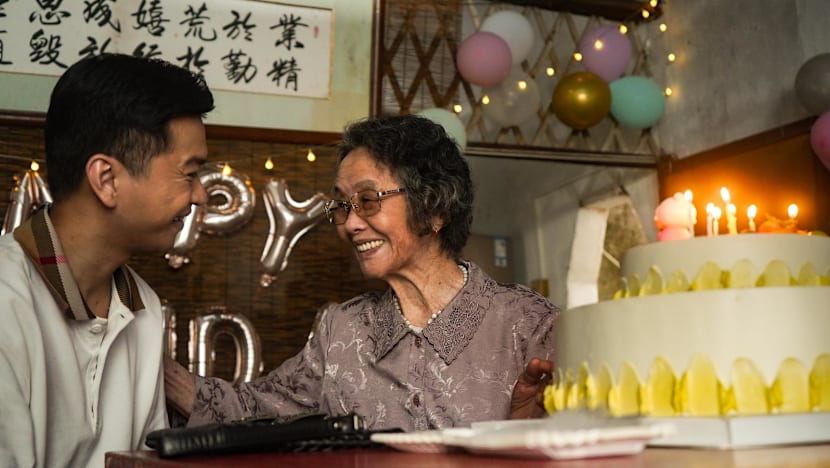
Free-to-air broadcasts will continue to mostly use Mandarin, but paid television and cinemas will see fewer curbs on dialect content.
New: You can now listen to articles.

This audio is generated by an AI tool.

23 Aug 2026 07:16PM (Updated: 23 Aug 2026 07:24PM)
SINGAPORE: Even as Singapore promotes the use of Mandarin, it can make more room for dialects, said Prime Minister Lawrence Wong in his Mandarin National Day Rally speech on Sunday (Aug 23).
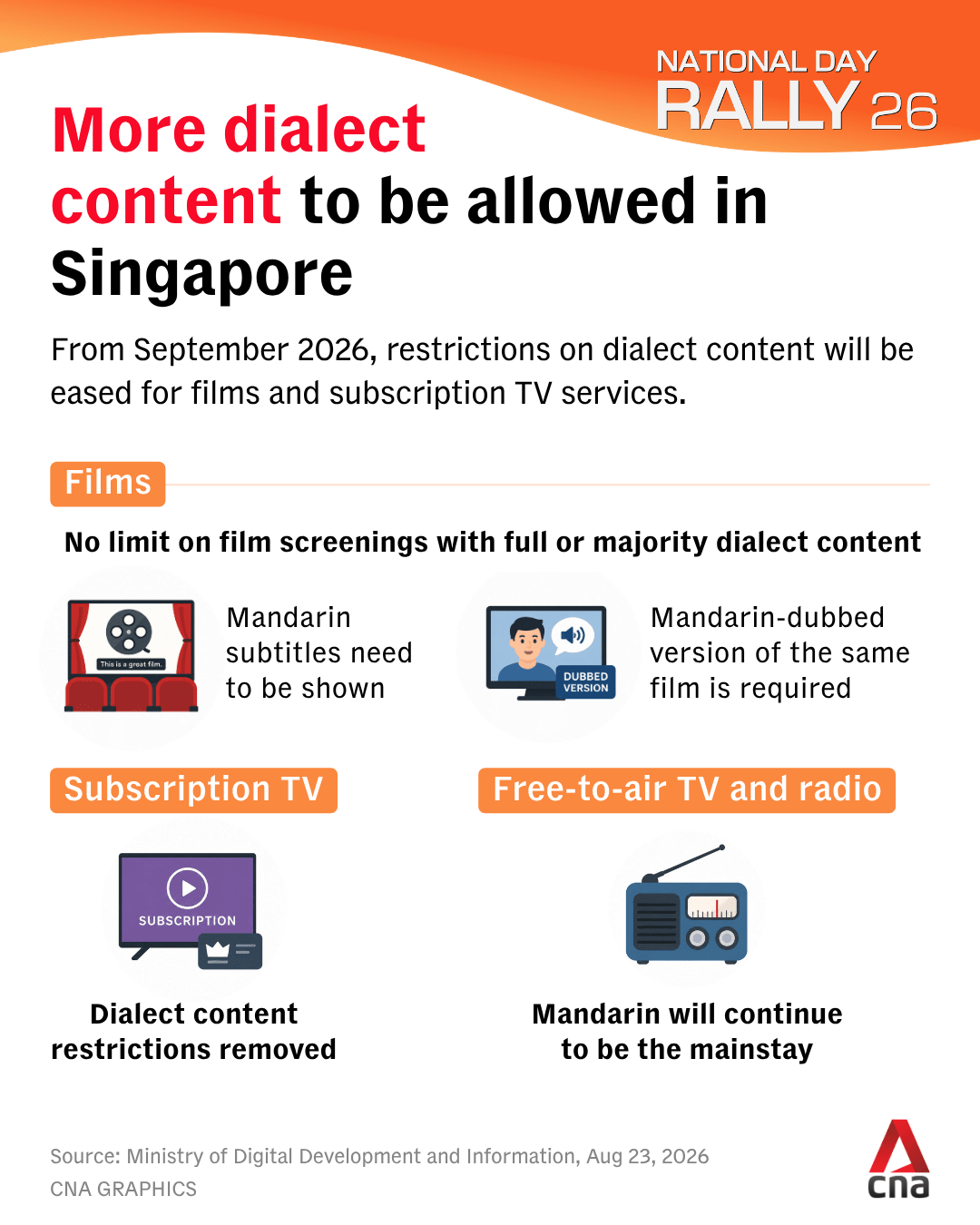
While free-to-air broadcasts will continue to mostly use Mandarin, the government can ease restrictions on dialects for paid television and movies, he said, based on an English translation of the speech provided by the Ministry of Digital Development and Information (MDDI).
A cap currently applies to the number of dialect film screenings, he noted. The government will relax this rule: dialect screenings will no longer be capped, as long as a Mandarin-dubbed version is available.
MDDI said separately on Sunday that it will remove existing restrictions on dialect content for subscription TV services, including a rule allowing only one dialect arthouse film a week and a cap on the proportion of dialect songs on music channels.
The updated guidelines take effect in September.
Mr Wong's comments come months after the release of the film Dear You, which opened in Singapore on Jun 18 with Mandarin-dubbed general screenings. Its original Teochew version was shown only at subsequent festivals and niche screenings.
At the time, the Info-communications Media Development Authority (IMDA) said the arrangement supported the bilingual policy of promoting Mandarin as the main language among Chinese Singaporeans. It later approved more than 1,000 screenings of the Teochew version and said it was reviewing the guidelines on dialect use in films.
PROTECTING GAINS FROM MANDARIN CAMPAIGN
“Many see dialects as a cultural heritage worth preserving. I agree,” Mr Wong said in his speech. But Singapore must protect the “hard-won gains” of the Speak Mandarin Campaign, he added.
The campaign was launched in 1979 by then-Prime Minister Lee Kuan Yew to encourage Chinese Singaporeans to speak standard Mandarin, at a time when dialects were still widely spoken at home.
Decades ago, Chinese Singaporeans spoke many dialects, with different accents even within the same dialect group, Mr Wong said.
Mandarin has since become their common language, laying the foundation for Singapore's bilingual policy and connecting the country to Chinese communities worldwide. This is why the government's push to promote Mandarin must continue, he added.
“Back then, the Speak Mandarin Campaign urged Chinese Singaporeans to ‘Speak more Mandarin and less dialects.’ The situation today is very different,” said Mr Wong.
“Few families speak dialect at home. Most Chinese Singaporeans know Mandarin but use English more often. The challenge now is to encourage those comfortable in English to speak more Mandarin. The more we use Mandarin, the better we will get at it.”
HERITAGE GALLERY
A Singapore Chinese Heritage Gallery will also be established to honour the country's Chinese pioneers, Mr Wong announced.
The gallery will trace how these pioneers put down roots and built lives here, and pay tribute to the Chinese community organisations that built Singapore’s multiracial society, he said.
It will be housed in the Singapore Conference Hall in Shenton Way and managed by the Singapore Chinese Cultural Centre, he added. The gallery is scheduled to open in 2031.
“The true value of Singapore Chinese culture lies not only in what we can see and taste. It carries well over a century of our pioneers' wisdom,” said Mr Wong.
“They forged a life with people of different races. The wisdom they gained underpins our peace and prosperity today.”
KioskNews shows a cleaned-up reading view extracted from the publisher’s page — the original always lives on their site, not ours.