OPINION: The Philippines is not ready for Super El Niño
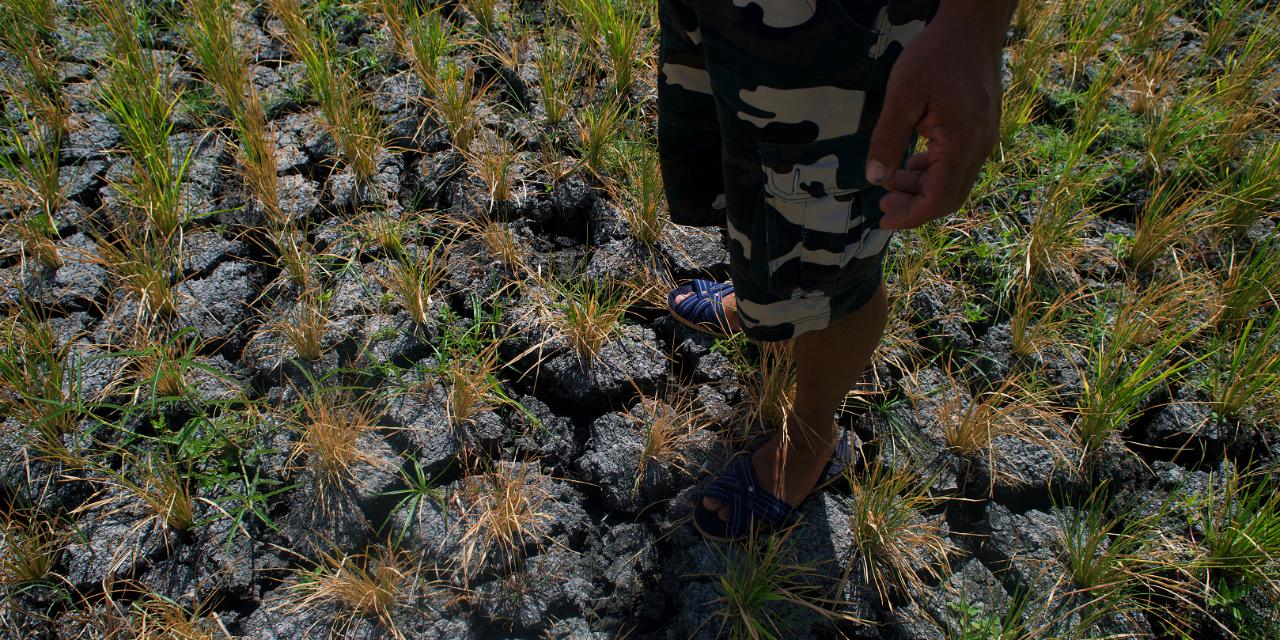
In its latest report, PAGASA warns that the already-strong El Niño would get even stronger, with its heat to be probably felt until March next year.
To be fair, it seems the Philippine government appears to be listening to the warnings better than during the 2016 strong El Niño, or the moderate one from two years ago.
We have seen improved early warning actions and enhanced efforts for more risk-informed and spatially-based mapping and planning, integral for anticipatory actions. The pool of agricultural adaptation measures has also matured from a decade ago – from solar-powered irrigation to drought-tolerant crops.
On the other hand, PAGASA itself reports that a decade ago, the government was also “well-forewarned and informed” about the El Niño, but the nation was hit hard anyway. Being ready is different from being better-prepared.
Just look at the ongoing discussions on the national budget.
Not just reactive
Even before the threat of the Super El Niño became more apparent, the government already identified food security as a priority in the 2027 national budget. The initial National Expenditures Program (NEP) included PHP261.7 billion given for continuity of its ongoing programs for rice, farm support, irrigation, and others.
In the NEP deliberations in Congress, there is also some recognition of the need to increase the budget for the agricultural sector to be more “El Niño-ready.” Per recent recommendations, agencies would receive an additional P20 billion-plus, from the Presidential Assistance to Farmers and Fisherfolk to provision of solar irrigation pumps.
_2026_10_07_10_24_29.jpg)
L-R: PAGASA's drought forecast (represented by red) for October 2026, December 2026, and March 2027; vs. 2027 NEP DPWH data for water infrastructure projects (the deeper shade of blue, the higher the budget).
These potential additions would aid in softening the impacts on agriculture, but they do not enhance drought-proofing infrastructure. The NEP targets an additional 11,153 hectares of new irrigation service areas, but the nationwide irrigation deficit is likely in millions of hectares. This leaves many communities – especially agricultural ones – vulnerable to water shortages for months.
While priority sites are being identified for the likes of rainwater harvesting and small impounding systems, these are not enough for a nationwide drought-resilient water system, especially in a country that is already nearing water bankruptcy.
What these tell us is that the biggest improvements to the country’s El Niño responses are focused on absorbing shocks to the system, not making the system itself drought-proof.
The government’s communications strategy is also lacking; in many interviews, officials tend to highlight what the public should do – mostly to start saving food and water. But it is unwise to emphasize too much on the demand side of the Super El Niño issue in public communications.
While lessons are increasingly being applied to governance, the hazards are becoming more extreme. The limited fiscal space is also hindering adequate preparations; this is where all of those billions of pesos stolen from us from the flood control corruption scandals would have really helped – an issue that still remains unresolved and with most of those billions still unrecovered, to this day.
Among the steps to be done aside from changes in the 2027 national budget, PAGASA’s forecasts must be turned into local-level risk maps and plans to inform decisions and responses. Agencies must speed up the repair and rehabilitation of water-related infrastructure in these next few weeks, from broken pumps to water storage.
The government cannot just focus on food and water, though. In the context of Super El Niño, health and electricity risks must also be mitigated. Details such as occupational health protocols, improving heat-related early warning systems, and improved monitoring of hydropower plants must not be forgotten under current strategies.
Additionally, the Philippines must support directly flows to communities that need it the most. It must also mobilize non-debt-creating funds to enhance long-term adaptation and reduce reliance on short-term, reactionary responses.
Speaking of hazards, the Super El Niño is not the only one that is a looming, immediate threat to Filipinos.
Just not enough
While the proposed 2027 National Disaster Risk Reduction Management Fund is set at PHP45.7 billion, this is not just for responding to the Super El Niño, but also for other hazards, especially super-typhoons.
Remember that warmer oceans breed stronger storms. This year, the combined effects of a very strong El Niño and global warming would make the odds of a super-typhoon even higher. Remember that the country was battered by six storms – including three super-typhoons in four weeks in 2024, followed up by super-typhoon Uwan hitting back-to-back with Tino last year.
Imagine this: a farmer sees his irrigation canal run dry on a dry November day, then see his rice fields wiped out a few days later due to high flooding brought by a super-typhoon. A fisherman could see his fish catch decline, then be prevented from even sailing due to stormy conditions 48 hours later.
The agriculture and fisheries sectors – already among the poorest sectors – could still experience this rapid occurrence of both sides of climate extremes soon.
Many of our systems – including on food, water, energy, and education – are in a state of crisis. Unfortunately, these next few months could see these worsen because existing vulnerabilities remain too large and, while improved from the last two cases, the prepared short-term government responses are unlikely to be enough.
In the meantime, the long-term adaptation infrastructure development must also be prioritized. This makes the financing strategy of the National Adaptation Plan important to be finalized to help the country deal with climate extremes like these. The P1.4 trillion estimate is actually the cost of inaction, not necessarily the cost of implementing it.
Nonetheless, the government must change its finance mix to raise more funds – from changes in priorities under the national budget, especially nature-based solutions, to securing more grants-based finance to protecting the already-limited fiscal space after disasters.
The President has called for a more "predictive" style of governance for times like these. Soon, we will find out just how ready we are for what is essentially another preview of life in a world exceeding 1.5°C of global warming.
John Leo Algo is the National Coordinator of Akyson Klima Pilipinas, the largest network of civil society organizations for climate action in the Philippines.
KioskNews shows a cleaned-up reading view extracted from the publisher’s page — the original always lives on their site, not ours.