Moderate new Muslim group aims to broaden dialogue beyond certain ‘politically charged issues’
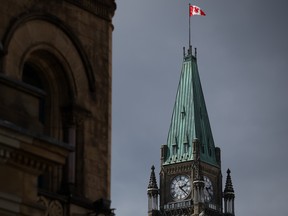
There are roughly two million Muslims in Canada. But they don’t see themselves in conversations being held in their name in Ottawa, says a leader of the new Muslim Policy Institute (MPI).
Sign In or Create an Account
The MPI, launched this month, is dedicated to including Canadian Muslims in the dialogue that shapes policy about how they live.
“The questions MPI cares about most, like belonging, opportunity, the pressures families are facing, and what Muslim Canadians actually prioritize, are often overlooked. Meanwhile, the national conversation keeps circling one or two politically charged issues,” said Nika Jabiyeva, the institute’s managing director of operations and partnerships, told National Post.
Jabiyeva said research last year revealed that although Islamophobia was a concern for the community, bigger concerns for Muslim Canadians, like most Canadians in general, were the cost of living and housing.

Get a dash of perspective along with the trending news of the day in a very readable format.
By signing up you consent to receive the above newsletter from Postmedia Network Inc.
A welcome email is on its way. If you don't see it, please check your junk folder.
The next issue of NP Posted will soon be in your inbox.
We encountered an issue signing you up. Please try again
MPI “doesn’t claim to represent two million people,” she said. The group’s purpose is to learn “what shapes Muslim Canadian life and identity, from youth and professionals to women in leadership and elders, and bringing that to the public and into policy.”
There are many Muslim advocacy groups already that have “predetermined points of view and opinions,” she said. What MPI aims to do is provide research and evidence about what the community wants to prioritize.
In a recent move, nearly 1,000 prayer rooms, or “quiet” rooms, were added to federal buildings, the Toronto Sun and Blacklock’s Reporter reported, despite only two per cent of employees self-identifying as Muslim.
While Jabiyeva said that representation matters, the way the government responds to a community’s needs can “often come off as performative, and that’s what ends up dominating the conversation.”
“What actually changes the well-being of our communities are things like economic opportunity, housing, education, and real investment in cohesion between communities,” she said.
“None of these are quick wins, so it’s easier to invest in something that makes a quick news story. That’s where MPI’s work comes in: finding out what Muslim Canadians need most, and bringing that evidence to policymakers.”
The institute undertakes studies on a wide variety of topics — health, safety and how foreign influence can impact Muslims — and other projects, including one committed to protecting Muslims from radicalization.
“Either all Muslims get painted with the same brush, or some of the loudest voices dismiss all discussion of it as Islamophobia. Neither is true, and that’s how we end up with the public discourse we have today,” said Jabiyeva.
In a description of the project online, it says that Muslim communities are disproportionately affected by radicalization as targets of extremist recruitment and as victims of social and political fallout when radicalization leads to violence. The project develops tools, resources and early intervention frameworks, it says.
“Few look inside the community and ask why. What makes a young person go looking in the darkest corners of the internet? Where are they not finding belonging?” said Jabiyeva.
“We also can’t be naive about the systems that fuel radicalization. It doesn’t spread by accident. It’s organized, it’s funded, and in some cases it’s backed by foreign states and movements that benefit when young people feel they don’t belong here.”
There has also been religion-based hatred towards the Muslim community in Canada, on display prominently in recent weeks.
A Whitby man was arrested on Sept. 23 for promoting anti-Muslim violence, according to Durham Regional Police. Also last week, a mosque and Islamic schools across Canada were threatened with violence over email, the Muslim Association of Canada said.
In the Toronto Police Service’s 2025 hate crimes report, anti-Muslim incidents made up 14 per cent of religiously motivated crimes.
“Of course, (Islamophobia) will be part of the research and part of the issues that we will address. But we first want to understand before coming forward with either solutions or predetermined opinions,” Jabiyeva said.
Our website is the place for the latest breaking news, exclusive scoops, longreads and provocative commentary. Please bookmark nationalpost.com and sign up for our daily newsletter, Posted, here.
Join the Conversation
This website uses cookies to personalize your content (including ads), and allows us to analyze our traffic. Read more about cookies here. By continuing to use our site, you agree to our Terms of Use and Privacy Policy.
KioskNews shows a cleaned-up reading view extracted from the publisher’s page — the original always lives on their site, not ours.