Group urges transparency, not content regulation, vs election lies
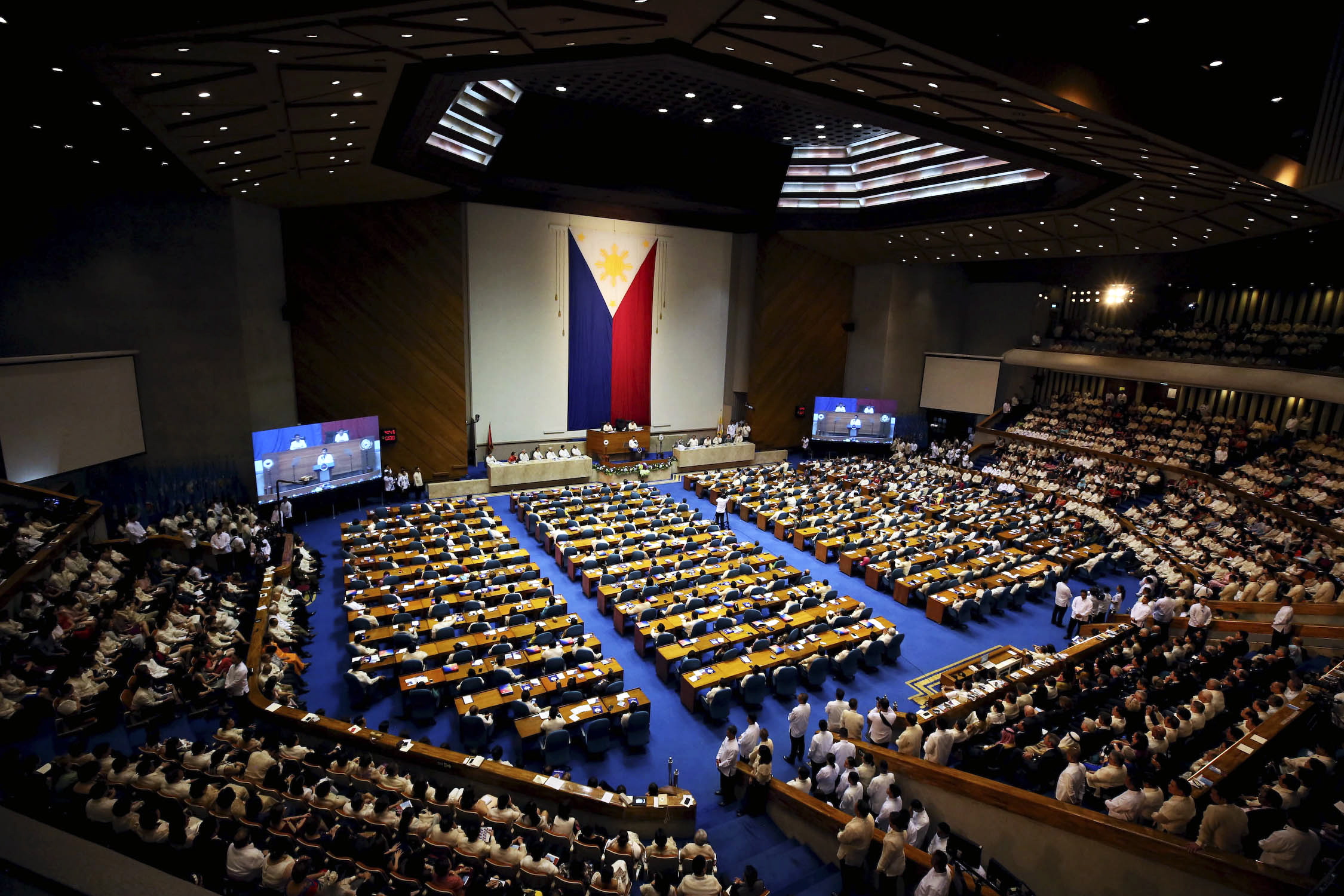
MANILA, Philippines — A poll watchdog has urged the House of Representatives to consider basing a proposed law against misinformation and disinformation on transparency rather than mere content regulation, as the latter supposedly has the tendency to result in censorship.
At the House Committee on Suffrage and Electoral Reforms’ hearing on Monday on four bills seeking to ensure the fair use of the internet, social media, and artificial intelligence (AI) during elections, the Legal Network for Truthful Elections (Lente) said it wanted to avoid a chilling effect, as defining misleading and false content would depend on the implementing agency and could touch on protected speech.
READ: Facebook takes down accounts linked to Duterte’s ex-socmed strategist
Article continues after this advertisement
“We would like to anchor enforcement in transparency rather than content regulation. Our comparative mapping of disinformation policy found through jurisdictions relying on content regulation broadly-worded definitions of false content […] have produced censorship and abuse rather than a better information environment,” Lente Executive Director Ona Caritos said.
FEATURED STORIES
NEWSINFO
NEWSINFO
NEWSINFO
“Several of the pending measures make the creation and dissemination of fake news a punishable act. Definition of that breath, coupled with criminal liability, risks chilling protected expression and being turned against critics rather than against organized operations,” she added. “Lente urges caution on this, and cause for transparency approaches over content regulation.”
Instead, Caritos told the House panel that they prefer transparency measures like the disclosure of who was behind the use of technologies in the campaign material, who financed the campaign, and other information that would relay to the public who the personalities involved are.
“The provisions most likely to work are the transparency provisions, mandatory disclosure of AI use, paid advertisement disclosure, identifying who paid for the material, the public database of funding and spreading disclosures proposed in one of the measures, and the right of reply,” she explained.
“Transparency initiatives are less draconian and effective in addressing the problem of disinformation by increasing the perception of accountability, insofar as suppliers of political content are concerned,” she added.
Article continues after this advertisement
After the presentation, committee chairperson and Lanao del Sur Rep. Zia Alonto Adiong asked Caritos to expound how she intends this proposal to be carried out. In response, Caritos said they prefer disclosures of who are the parties behind the campaign, instead of an outright removal of the content.
“Chair, it’s more on the disclosure on the part of the users and the platforms, so the responsibility or the obligation should be lodged on the part, primarily on the platforms, the different social media platforms on disclosure and transparency, and of course the users, for example if they use AI in the campaign, they should disclose that they use AI,” Caritos said.
Article continues after this advertisement
Adiong then reminded Caritos that the reason why the bill is being pushed is to remove false information on the internet during election season — whether these campaign materials are in favor or against a particular candidate.
“Actually it’s not even the negative (campaigning), it’s entirely a different story because we intend to address fake news nga eh ‘di ba? So either way, positive or negative, basta hindi tama, hindi dapat ‘yan ilalabas ‘di ba?” Adiong said.
(Actually it’s not even about negative (campaigning), it’s entirely a different story because we intend to address fake news, right? So either way, positive or negative, as long as it’s not correct, that should not come out, right?)
“So the responsibility share should be primary lodged on the social media platforms, so they have that responsibility to disclose, to be transparent, and to act as soon as possible on post like what you mentioned chair, the negative campaigning or campaigning against for example the electoral process or negative information about the electoral process,” Caritos responded.
READ: Facebook shuts down fake China-based accounts backing Duterte, Sara’s possible presidential bid
Before Caritos’ presentation, four bills have been consolidated, including House Bill (HB) No. 3691 or the proposed Social Media, Artificial Intelligence and Internet Technology Regulation for Fair Elections Act from House Majority Leader Ferdinand Alexander Marcos.
Marcos’ proposal defines various terms related to the internet like AI, bots, deepfakes, and coordinated inauthentic behavior (CIB), as well as who and what parties will be covered by the proposed measure.
HB No. 3691 would allow “election propaganda on the internet and the social media” but will be “subject to the limitation on authorized expenses of candidates and parties, observation of truth in advertising, and to the supervision and regulation” by the Commission on Elections (Comelec).
“Social media posts, regardless of format, whether original or re-posted from some source, which may either be incidental to the poster’s advocacies of social issues or which may have, for its primary purpose, the endorsement of a candidate only including paid advertisements in internet subject to the requirements set forth in Section 5 hereof and the Fair Elections Act shall also be allowed,” Section 4 of the bill stated.
Also, the bill listed what activities will be considered prohibited:
- Use of ‘false amplifiers’, such as fake accounts, bots, and astroturf groups filled with fake users to propagate disinformation and misinformation in endorsing or campaigning against a candidate, a political party/coalition, or party-list organizations
- Coordinated inauthentic behavior and utilization of hyperactive users for the aforementioned purposes
- Creation and dissemination of deepfakes, cheapfakes, and soft fakes for the aforementioned purposes
- Use of fake and unregistered social media accounts during the election and campaign period for the same purposes
- Creation and dissemination of fake news in furtherance of the aforementioned purposes
- Use of content produced through AI technology but without compliance to the transparency and disclosure requirements under these guidelines
No one has been penalized for engaging in CIB, but the said activity has been observed several times in the Philippines. As early as M arch 2019, then Facebook Cybersecurity Policy head Nathaniel Gleicher said they removed 200 fake accounts operating under the network of communication strategist Nic Gabanuda Jr. for CIB.
Gabunada was the social media campaign of former president Rodrigo Duterte.
According to Gleicher, the taken-down accounts were made to appear as normal and legitimate accounts while boosting messages in favor of certain political candidates.
Then in September 2020, Gleicher announced that the social media platform had taken down two networks for CIB again, with one of the networks being traced to the Philippine National Police and the Armed Forces of the Philippines.
Your subscription could not be saved. Please try again.
Your subscription has been successful.
The other network taken down by Facebook was traced to a group of individuals in China’s Fujian province. This network had sites with posts in Filipino expressing support for President Rodrigo Duterte and the possible 2022 presidential bid of his daughter, then Davao City mayor and now Vice President Sara Duterte. /jpv
KioskNews shows a cleaned-up reading view extracted from the publisher’s page — the original always lives on their site, not ours.