Why Punjab can’t shake off drug crisis: Role of history, geography, economics
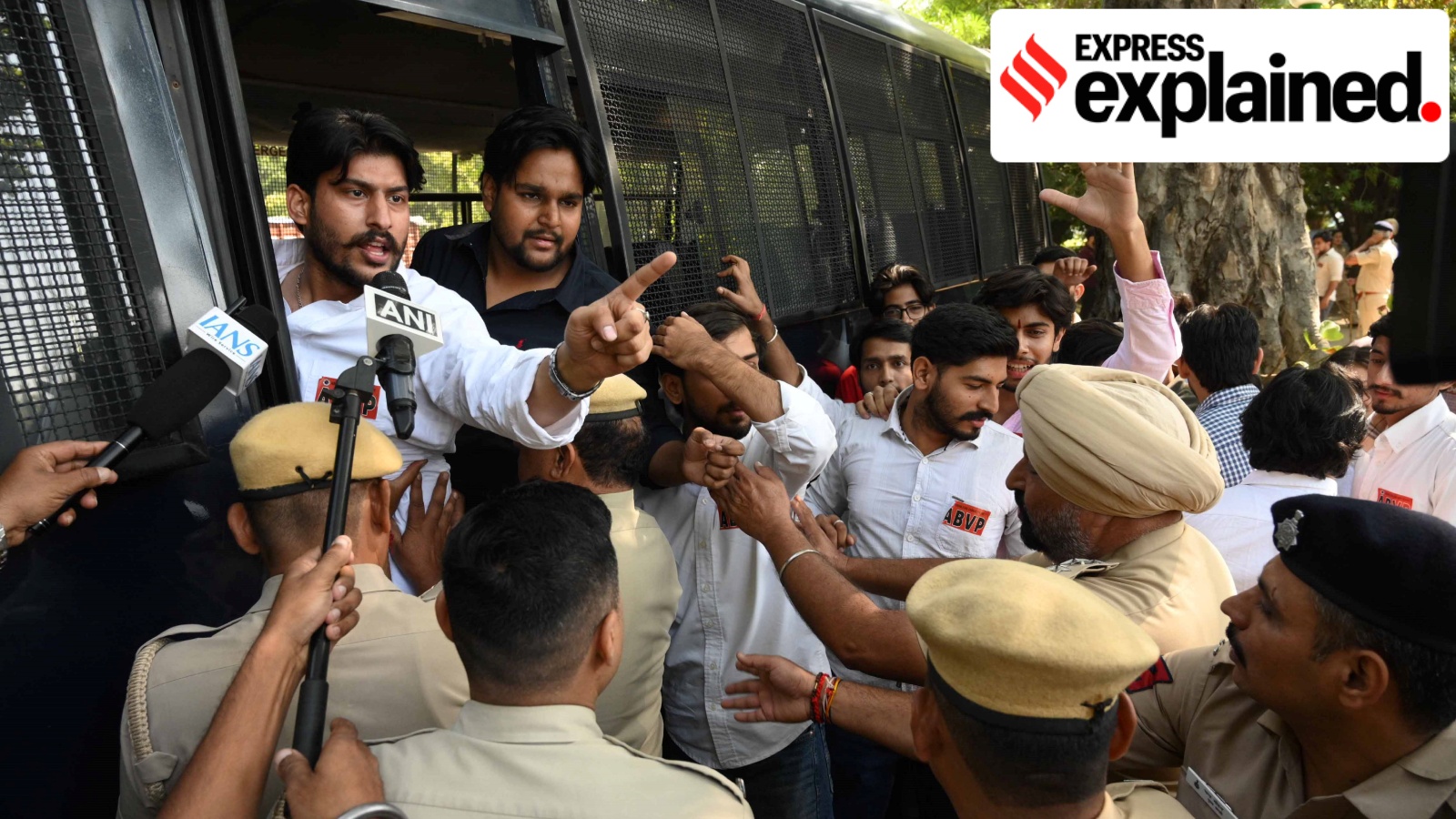
Punjab’s drug crisis has led to another flare-up, with the government under pressure after the police on Wednesday (October 28) ‘seized’ the body of a man who had died of suspected overdose and whose family was planning a protest.
The body of 35-year-old Daljit Singh was being taken to the site in Mansa where the family of activist Parvinder Singh Jhota was already protesting. Jhota was killed after he accused a medicine shop owner of selling drugs.
Punjab has been battling drugs for almost a decade and a half, but there seems to be no let-up in the scourge. As per National Crime Records Bureau (NCRB) 2024 data released this September, Punjab leads the country with 6,060 cases of drug trafficking. It also recorded 106 drug overdose deaths, second only to Tamil Nadu (313).
With Assembly elections due next year, the issue of drugs is being raised loudly. It is central to the BJP’s poll pitch, putting the ruling AAP government on the backfoot. No AAP leader of repute has been able to set foot in Mansa since Jhota’s killing, even as Union Home Minister Amit Shah, Congress Punjab in-charge Sachin Pilot and Akali leaders have visited the family.
How did the state reach this point? Here is a look at the roots of the drug problem and why it persists.
Punjab and drugs before Independence
Opium and poppy husk were prevalent in pre-Independence Punjab and had social acceptance. Prof Ranjit Singh Ghuman, author of the book Dynamics of Drug Abuse and Addiction in India, said Punjabis consumed afeem (opium) in very small quantities, often prescribed by doctors. The Royal Commission on Opium in 1894 observed: “The consumption of opium by the people of India generally is infinitesimally small; it has been consumed for centuries by certain classes in Northern India.”
Ghuman says home-brewed alcohol (desi daru) was long the most favoured form of “nasha” and socially acceptable.
Opium use continued after Independence despite a ban in the state. Since Rajasthan had legal opium thekas, people crossed over to buy it. A 1979 study, “Patterns and prevalence of opium use in rural Punjab (India)”, found that opium was widely used by Punjab’s rural population, despite being smuggled from neighbouring states at the risk of prosecution.
Vulnerable by geography
Story continues below this ad
Punjab’s 553-km border with Pakistan makes it vulnerable to smuggling. The mountainous parts of Pakistan, Afghanistan and Iran form the Golden Crescent, one of three major global centres of heroin processing. The other two are the Golden Triangle (Myanmar, Thailand and Laos) and South America.
A senior police officer said Pakistan began pumping drugs into Punjab to weaken the border state after militancy ebbed, terming it “narco-terrorism”.
While heroin, locally called chitta, is smuggled across the porous border, opium and poppy husk come from Rajasthan and Madhya Pradesh, where cultivation is legal for medical, scientific and export purposes. Charas and hashish come from Himachal Pradesh. Officials suspect high-quality heroin from Delhi is routed through Gujarat, Rajasthan’s Ganganagar and Hanumangarh districts, or Jammu and Kathua in J&K.
The pharma drugs
As the state and Centre stepped up border enforcement, abuse of pharmaceutical drugs increased sharply. In 2021, the Centre extended the BSF’s jurisdiction from 15 km to 50 km inland. Of the 5.13 crore pharmaceutical drug units seized across India in 2024, Punjab accounted for 2.94 crore. Around 25 per cent of NDPS (Narcotic Drugs and Psychotropic Substances) FIRs filed by Punjab Police in 2022 involved pharma drugs. Around 80 per cent of these drugs enter Punjab from manufacturing hubs in Himachal Pradesh, Uttar Pradesh, Haryana and Rajasthan.
Story continues below this ad
The latest outrage is also linked to pharma drugs: Jhota was shot dead by a chemist on October 13 when he confronted him over the alleged sale of prohibited drugs to addicts.
The role of drones
Drone-based smuggling has risen sharply in recent years, with drones now landing in daylight. Most are small Chinese quadcopters carrying heroin and weapons. According to BSF data, drone droppings rose from three in 2021 to more than 200 in 2025. The Amritsar-Tarn Taran-Ferozepur-Gurdaspur belt forms the operational core of this corridor. The BSF has set up a dedicated anti-drone intelligence wing, and Punjab Police has procured anti-drone guns, but smugglers continue to evade the forces.
A lucrative business
One reason the trade flourishes despite crackdowns is its profitability. A gramme of chitta (heroin) can fetch Rs 1,000 to Rs 5,000, while a single run as a drug mule can earn a lakh. This becomes especially relevant in a state where there aren’t enough job opportunities commensurate with the high aspirations of the youth.
“When you see people slaving through the month for a few thousands, this seems like a risk worth taking. Also, you can’t discount the changing social mores, where underhand means to earn wealth are increasingly accepted,” said Dr Pramod Kumar of the Institute for Development and Communication (IDC).
Story continues below this ad
The alleged nexus between traffickers, police personnel and politicians also sustains the trade. This came to the fore with the 2013 arrest of Punjab Police DSP Jagdish Singh Bhola in a multimillion-rupee drug racket. He was convicted in 2019 and is currently out on bail.
Women in the fray
Data presented in the Punjab Assembly in March 2023 showed that arrests of women under the NDPS Act rose 85 per cent in 2022 compared with 2015. Experts say entire families can be drawn into the trade, which is why mothers and sons or couples are often booked together. Traffickers use women because they are less likely to be frisked and can ferry drugs by bus. Many women addicts also turn peddlers to fund their addiction.
AAP government’s war on drugs
Since the Akali-BJP government declared a “war on drugs” in 2014, the state has followed the EDP (Enforcement, De-addiction and Prevention) approach. DGP Gaurav Yadav said the police changed strategy after a brainstorming session in August 2022, nearly six months after AAP came to power. “We decided that on the one hand we will choke the supply by catching the big fish and on the other launch a mammoth outreach programme to prevent people from using drugs,” he told The Indian Express then.
When this failed to yield the desired results, the AAP government launched Yudh Nasheyan Virudh in March 2025, taking steps to choke traffickers’ finances and demolish houses built with illicit proceeds. This year, its second phase shifted towards community-driven action, deploying over 1.5 lakh village volunteers (“Pind De Pehredar”). Yet drugs remain available.
Story continues below this ad
The Congress government had earlier introduced measures such as dope tests for arms licences and new government recruitment.
Observers such as Dr Pramod Kumar point to flaws in the EDP approach. Kumar believes prevention and rehabilitation should precede enforcement.
KioskNews shows a cleaned-up reading view extracted from the publisher’s page — the original always lives on their site, not ours.