DeepSeek, MiniMax secure open-source licences days after new China export rules: state media
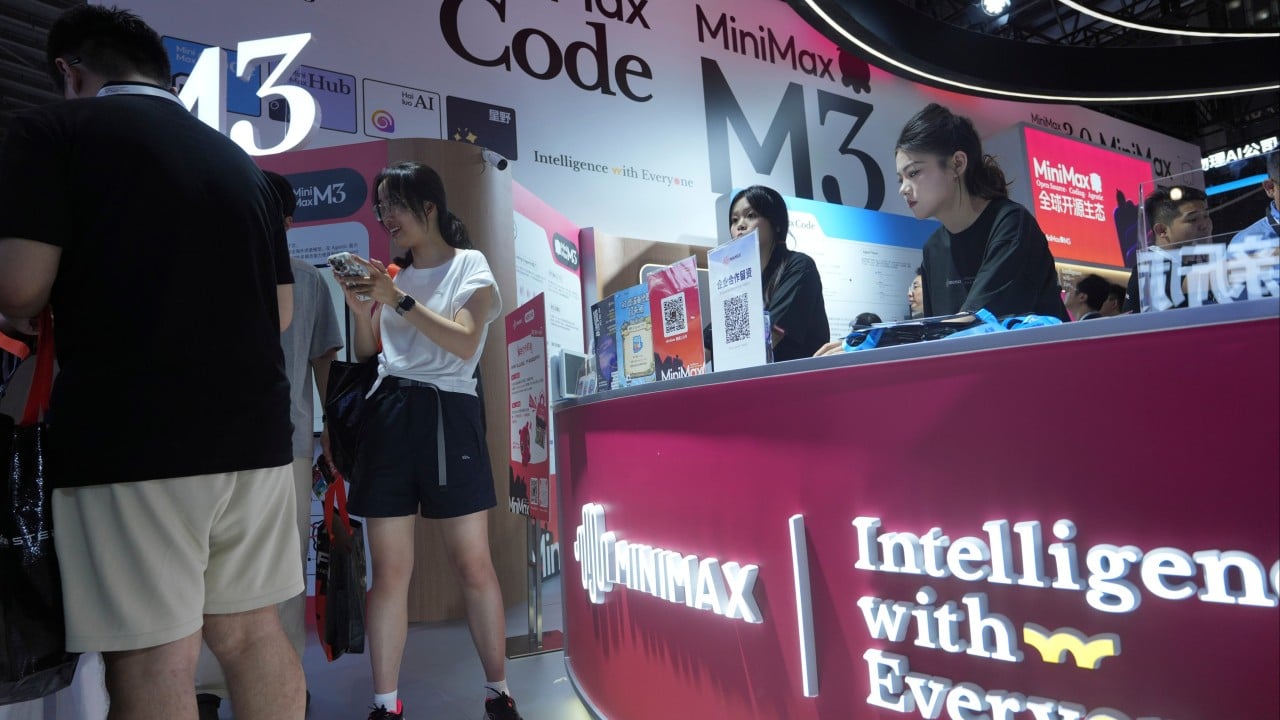
Chinese artificial intelligence model developers DeepSeek and MiniMax have completed export registration procedures and proceeded with open-source releases and overseas licensing activities, according to Chinese state media, days after Beijing moved to tighten oversight on AI tech transfers.
Yuyuan Tantian, an influential social media account affiliated with state broadcaster CCTV, reported on Thursday evening that the two AI companies had completed the required registrations after Beijing proposed adding export control restrictions and prohibitions to 23 AI-related technologies last week, covering large language models, AI agents and computing clusters.
The draft proposal released by the Ministry of Commerce (MOFCOM) and Ministry of Science and Technology, which also included provisions that came into immediate effect requiring official registration for the covered technologies, raised questions about whether Beijing was restricting Chinese AI companies from expanding overseas, particularly as the country’s open-weight models have gained international adoption.
However, the Yuyuan Tantian post said the proposed measures were intended to establish clearer regulatory boundaries rather than shut the door on Chinese AI technology exports.
“Simply put, AI companies can continue with their commercialisation efforts as usual. Once the relevant measures are officially implemented, the vast majority of artificial intelligence technologies will still be freely exportable,” Yuyuan Tantian said.
The CCTV-affiliated post acknowledged the overseas speculation over whether Beijing was shifting its stance on open-source AI, which it has championed as a superior alternative to the closed-source approach of the US AI industry.
However, it highlighted the approvals for DeepSeek and MiniMax as indicative of China’s continued stance of “encouraging openness,” urging businesses to “remain calm in the face of the new regulations”.
Both companies have open-sourced major updates in recent days, with Hangzhou-based DeepSeek upgrading its V4.1 Flash model and open-sourcing its in-house inference framework, while Shanghai-based MiniMax open-sourced its M3.1 model on Friday.
The registration requirements covered transfers of technology ownership, overseas licensing arrangements and changes in ownership or control involving foreign entities. Companies are required to register relevant transactions with MOFCOM before proceeding.
According to Yuyuan Tantian, authorities began preparing the proposed rules in the first half of the year, consulting research institutions, industry associations and leading companies before publishing the draft document.
It noted that Beijing was seeking to distinguish between the transfer of underlying AI technology abroad – which it would clamp down on for national security reasons – and providing commercial AI services overseas, which it would continue to encourage.
The assessment echoes remarks from a MOFCOM spokesperson last week, who said that overseas access to Chinese AI models through application programming interfaces, official websites and mobile applications would not be covered by the proposed export controls.
For the open-sourcing of AI technologies, the spokesperson said that expedited “automatic licensing” measures would be applied, as quickly as “immediate reporting and export”.
Beijing’s bolstering of its tech export control regime comes as the US mulls further restrictions on Chinese access to cutting-edge US technologies, including major congressional bills that would further clamp down on exports of advanced semiconductor chips and chipmaking equipment.
The US Department of Homeland Security on Tuesday also ordered all US federal civilian agencies to remove DeepSeek and third-party tools built on it, a move that Beijing criticised as being discriminatory.
In its post, Yuyuan Tantian drew a line between the US and Chinese approach to export controls, claiming that China “is not taking the path” set by the US of using such measures to isolate competitors and maintain its global technological leadership.
“Our revision is a routine process carried out in accordance with laws and regulations,” it said, while noting that it would also help China gain greater influence in global technological competition.
KioskNews shows a cleaned-up reading view extracted from the publisher’s page — the original always lives on their site, not ours.