Meow, miau or ngiau? How cats ‘speak’ around the world
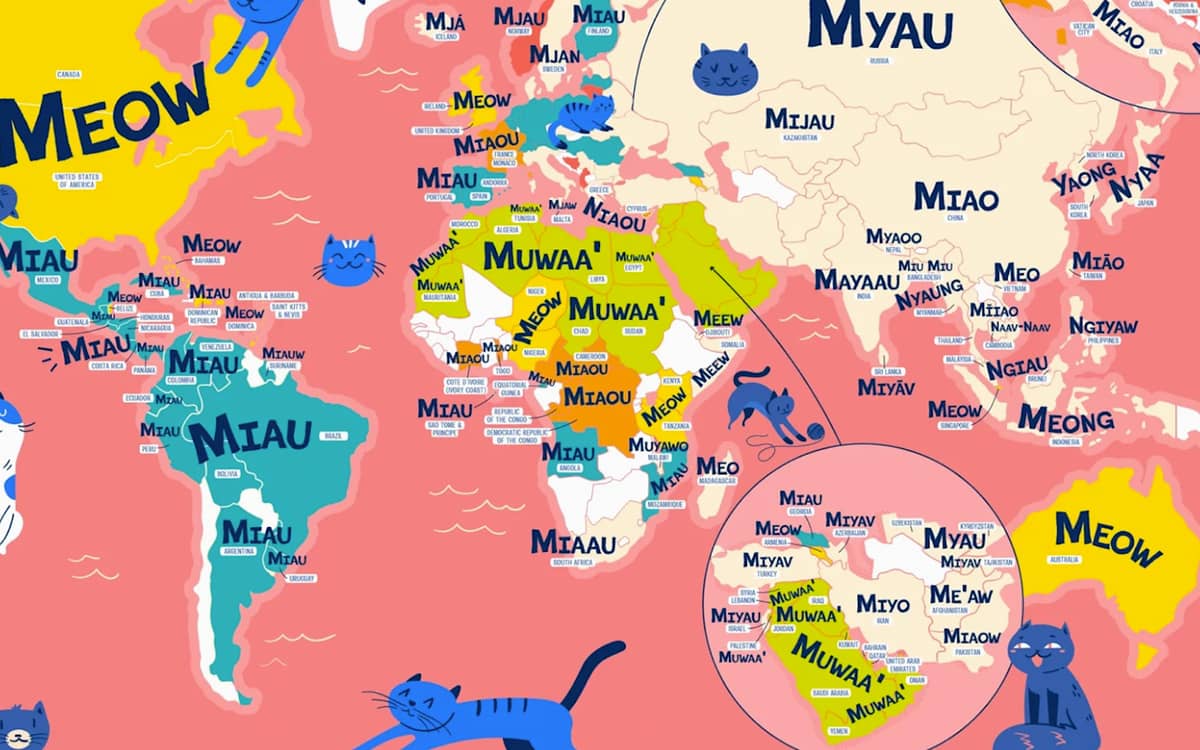
Ask someone in Britain, Australia or the United States what sound a cat makes and the answer will probably be “meow”.
In Japan, however, it may be “nyaa”. In France, “miaou”. In Korea, “yaong”. And in Malaysia, things get a little more interesting.
English speakers here will readily recognise “meow”, while in Malay, a cat is said to “mengiau” – to meow. In Hokkien, meanwhile, “miau” refers to the cat itself rather than the sound it makes.
Same animal, same basic vocalisation – wonderfully different human ears.
A quirky map created by language website WordTips looked at how people represent cats’ meows in 147 countries, using the most widely spoken language in each country and consulting dictionaries, language resources and other written sources.
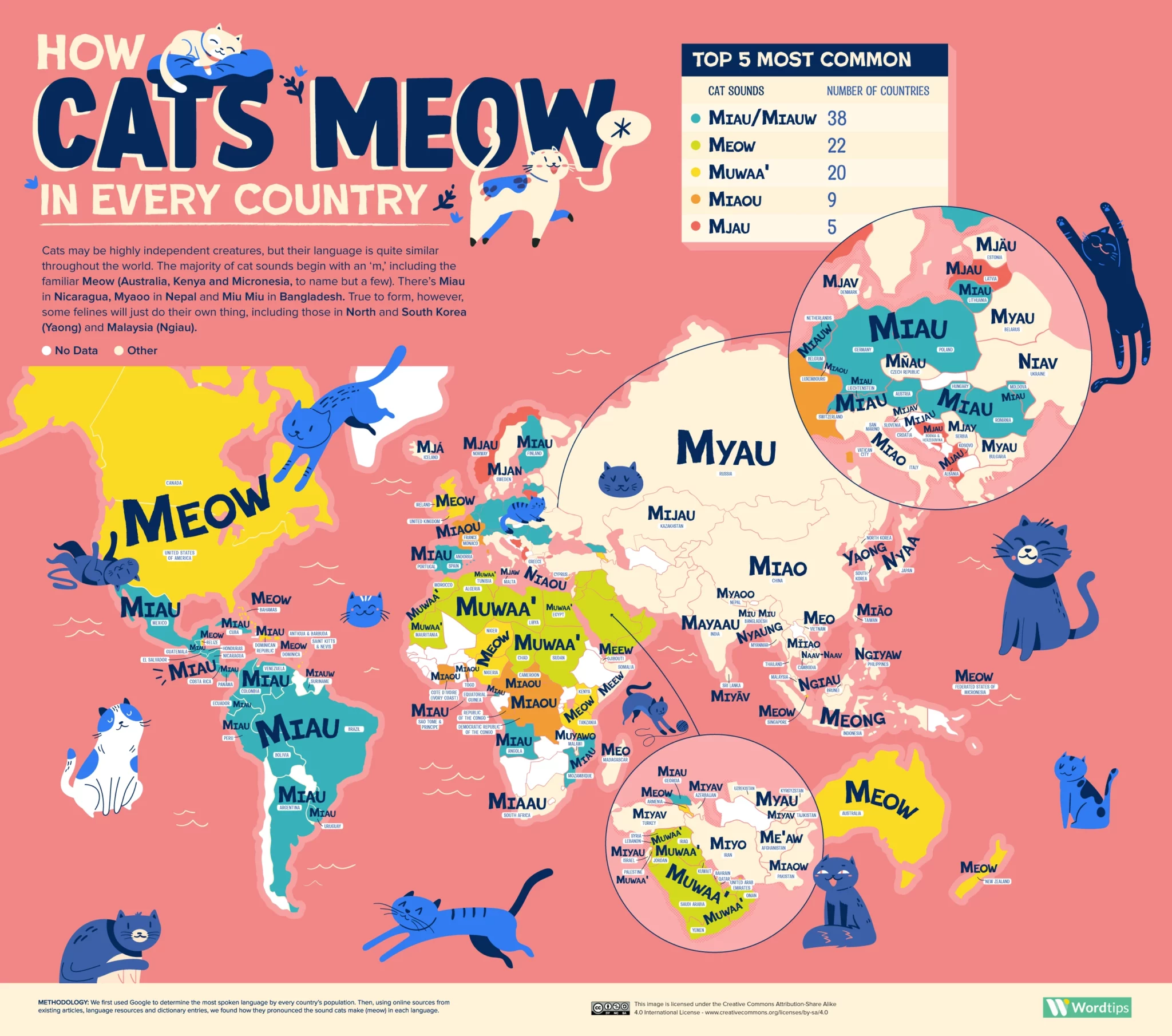
And despite all the linguistic variety, cats turn out to be surprisingly consistent little communicators: across the map, the overwhelming majority of written cat sounds begin with the letter “m”.
“Miau” or “miauw” is the most widespread version, appearing across 38 countries. This is followed by “meow” in 22 and “muwaa” in 20 – largely in the Arab world, including Iraq, Saudi Arabia and Yemen.
“Miaou” appears in nine countries, while “mjau” is used in five, including Sweden and Norway. Spanish and Portuguese speakers commonly hear “miau”, Italians have “miao”, Russians “myau”, and the Dutch use “miauw”.
Mandarin gives cats the rather familiar-sounding “miao miao”, while Vietnamese turns it into “meo-meo”. Then there’s Bangladesh, which offers the adorable “miu-miu”.
In short, there are plenty of variations, but you can almost hear the family resemblance.

Some languages veer further away from the familiar “meow”: Japan has “nyaa”, Korea “yaong”, Greece “niaou”, while Indonesia offers the wonderfully distinctive “ngeong”.
Meanwhile, Estonia goes with “näu”, Iceland “mjá”, and Denmark “mjav”.
Of course, the map is really about onomatopoeia – the way humans turn sounds into written words. Different languages have different sound systems and spelling conventions, so the same animal noise can end up looking very different on paper.
In other words, the cats are not speaking different languages. We are simply arguing over the subtitles.
There is another charming wrinkle to all this: kittens naturally meow to communicate with their mothers when they are hungry, cold or in need of attention. But adult cats tend to reserve much of their meowing for communicating with humans.
Which means that the “meow”, “miau”, “nyaa” or “ngiau” coming from the kitchen may be less a universal feline language than a highly effective way of saying: “Human, attend to me immediately!”
KioskNews shows a cleaned-up reading view extracted from the publisher’s page — the original always lives on their site, not ours.