Experts on whether a polar vortex could hit the UK this autumn
Freezing temperatures and unsettled conditions could sweep the UK as the El Niño weather phenomenon continues to wreak havoc on global weather.
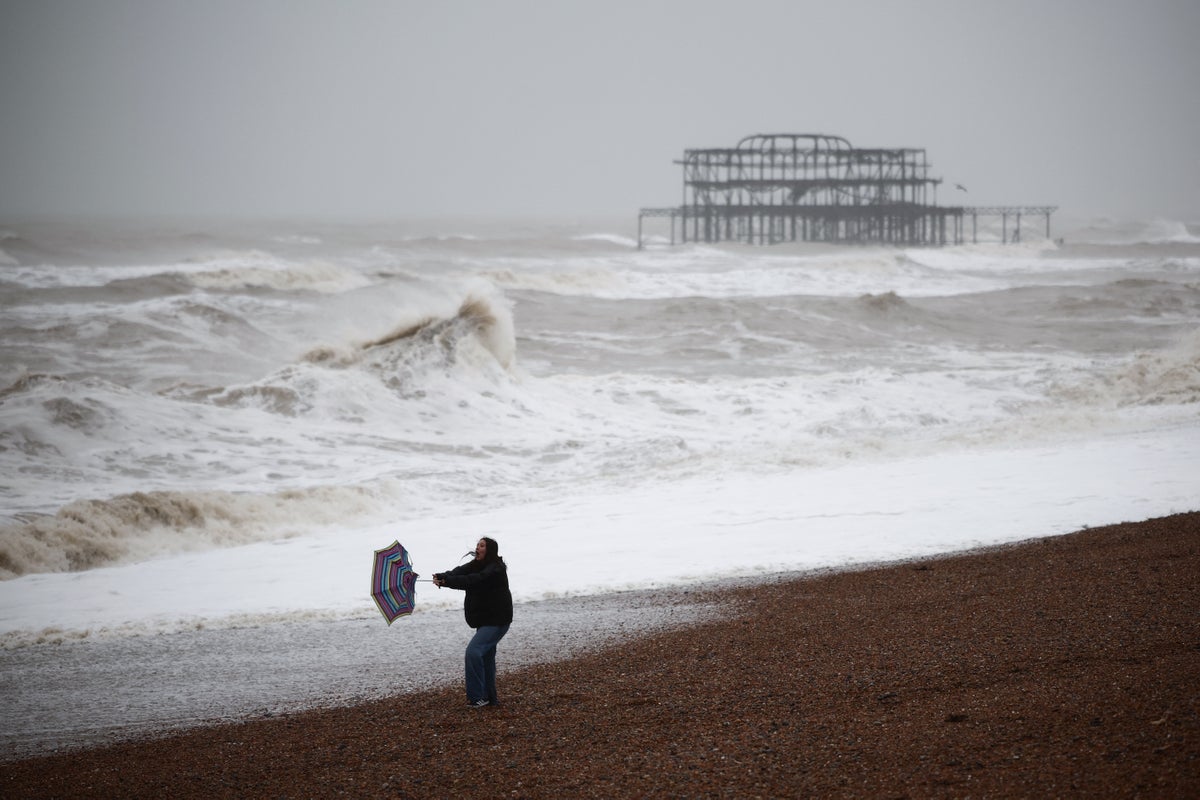
Experts are predicting a wet and stormy autumn that could develop into an icy winter after the “super El Niño” smashed global benchmarks to become the strongest event in history.
The Met Office said the “unprecedented” phenomenon, which has already helped push temperatures to reach the hottest summer on record, will continue to have “far-reaching” implications for weather conditions across the world.
El Niño is a naturally-occurring climate phenomenon that develops in the tropical Pacific Ocean. It occurs when sea-surface temperatures across the the central and eastern Pacific become significantly warmer than average, altering atmospheric circulation patterns and influencing weather around the globe.
Professor Adam Scaife, head of long range prediction at the Met Office, said: “We have been signalling for months that the developing El Niño will be an unprecedented event. The fact that it has already exceeded previous records – with several weeks to go before it peaks later this year – shows the enormity of this El Niño.
“Scientists are still assessing whether the impacts will be in proportion to its magnitude, but we are already seeing expected effects worldwide.”
Forecasters warned the phenomenon could disrupt a large, high-altitude ring of swirling cold winds spinning above the Arctic known as the stratospheric polar vortex. These disruptions can weaken the jetstream, sending severe, freezing Arctic air plunging southward into North America and Europe.
However, if this happens it is more likely to trigger freezing temperatures later on in winter, meaning a polar vortex is unlikely to sweep the UK this autumn.
The Met Office said that over the coming season, the phenomenon is likely to cause “wetter and stormier conditions” that could develop into “cold snaps” over the winter.

However, they said every El Niño is different, so it is currently impossible to predict the impact of the weather system over the winter.
They added they will continue to monitor the El Niño “as it evolves” and warned that in the long-term it is likely to push up global temperatures in 2027 to new record levels.
Met Office science sellow Dr Nick Dunstone explained: “During large El Niño events significantly more heat is released from the ocean to the atmosphere leading to an increase in global average temperature, particularly in the calendar year following the winter peak of the El Niño.
“Hence, 2027 is very likely to replace 2024 as the warmest year on record and be yet another year to temporarily exceed +1.5 C above the pre-industrial period.”
KioskNews shows a cleaned-up reading view extracted from the publisher’s page — the original always lives on their site, not ours.