‘Identity crisis’: UK passes British Nationality Bill in 1981 – SCMP archive
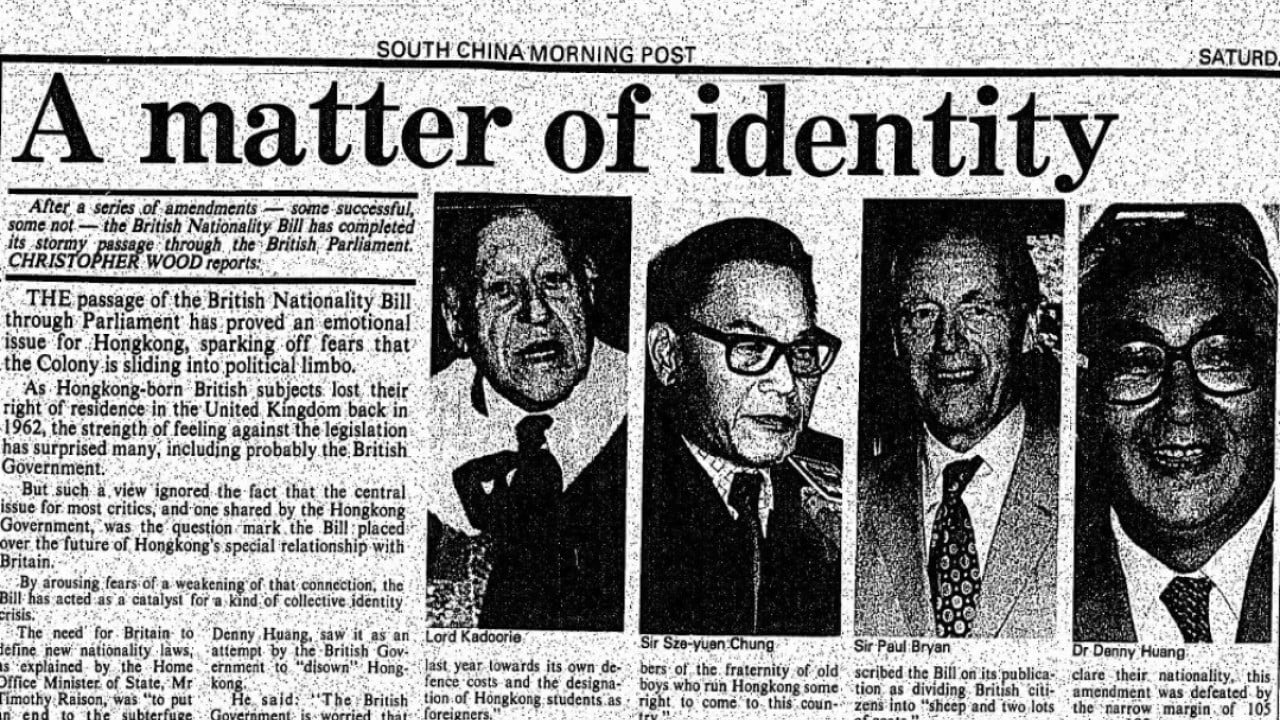
As Hongkong-born British subjects lost their right of residence in the United Kingdom back in 1962, the strength of feeling against the legislation has surprised many, including probably the British Government.
But such a view ignored the fact that the central issue for most critics, and one shared by the Hongkong Government, was the question mark the Bill placed over the future of Hongkong’s special relationship with Britain.
By arousing fears of a weakening of that connection, the Bill has acted as a catalyst for a kind of collective identity crisis.
The need for Britain to define new nationality laws, as explained by the Home Office Minister of State, Mr Timothy Raison, was “to put an end to the subterfuge whereby we describe people as citizens of the UK and Colonies while not permitting them to enter freely either the UK or the Colonies.”
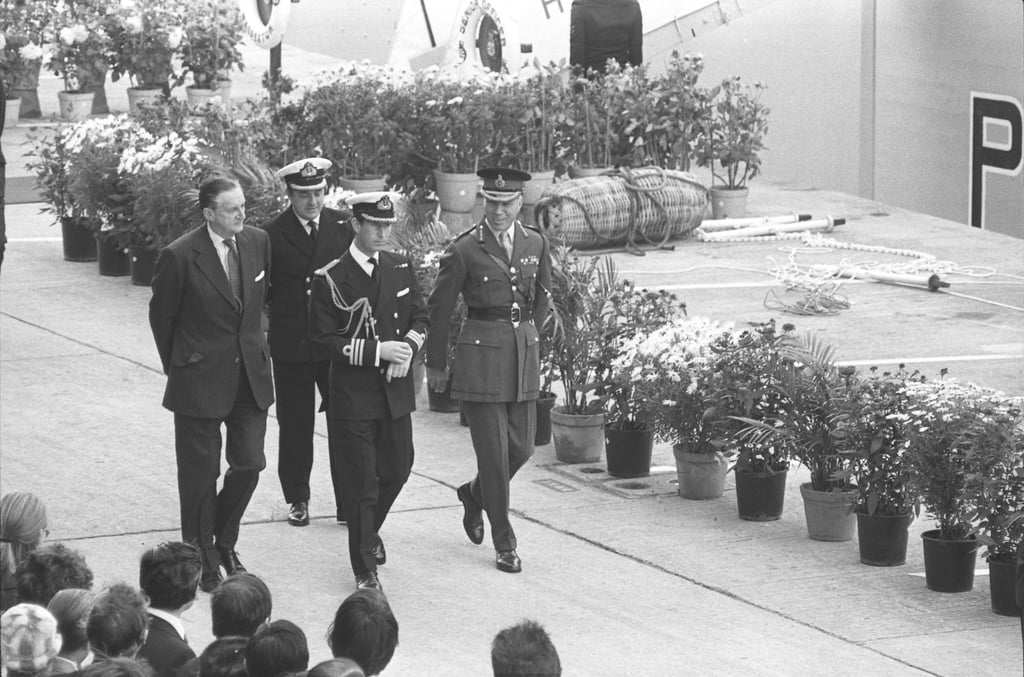
But such rationalisations did not satisfy leading Hongkong figures when the Nationality Bill was published in January and anxious Urban Councillors soon flew off to London while Government House lobbied behind the scenes.
But it was at Westminster, the “Mother of Parliaments,” that most of the action took place.
In the context of British politics, the Bill was anyway a hot potato, with Labour MPs slamming it as racist.
Hongkong’s alarm that it was being fobbed off with a second-class citizenship merely added fuel to the flames.
The passing of the Bill through Parliament has proved a Government minister’s nightmare – a long committee stage, and countless amendments, precipitating a Government guillotine motion to speed up its progress through the House of Commons.
This was followed by the successful amendment in the House of Lords, giving Gibraltar special treatment, and the resulting abortive attempt by Lord Geddes to win Hongkong the same.
Then came his weakened, last-minute amendment which was accepted last week.
The opening shot in the whole saga came in July last year when a White Paper on the proposed Bill was laid before Parliament.
It detailed for the first time the three new categories of British citizenship – British citizens, citizens of British dependent territories and British overseas citizens.
It was the second category, that of British dependent territories, which many saw as introduced with Hongkong in mind.
The Colony’s 2.6 million British citizens represent the largest number of people in this category.
The Bill was published in January and local community leaders were quick to denounce its implications for Hongkong.
There was also a body of opinion that the Hongkong Government had relied too much on discreet behind-the-scenes lobbying instead of openly voicing its deep reservations about the implications of the Bill for the territory.
Urban Councillor, Dr Denny Huang, saw it as an attempt by the British Government to “disown” Hongkong.
He said: “The British Government is worried that millions of people will flock to the UK in the years leading up to 1997.”
Dr Huang went on to describe the Bill as ‘‘just another example of how Britain only takes from Hongkong – they never give anything in return.”
But he added he did not envisage much local opposition: “The people of Hongkong are not politically motivated – it just shows the impact of the colonial system.”
Britain’s Government is worried that millions of people will flock to the UK in the years leading up to 1997.
Dr Huang’s view of Whitehall being haunted by the spectre of millions of ethnic Chinese from Hongkong going to live in Britain seemed to be backed up by The Times of London.
In an editorial written on the Bill’s publication, it said if there was just one category of British citizenship carrying the right to live in the country then “the gates would be flung open to over five million people in Hongkong and other colonies and associated territories.”
Hongkong’s anxieties were articulated strongly during the Bill’s second reading in the House of Commons by the chairman of the All-Party Anglo-Hongkong Group of MPs, Sir Paul Bryan.
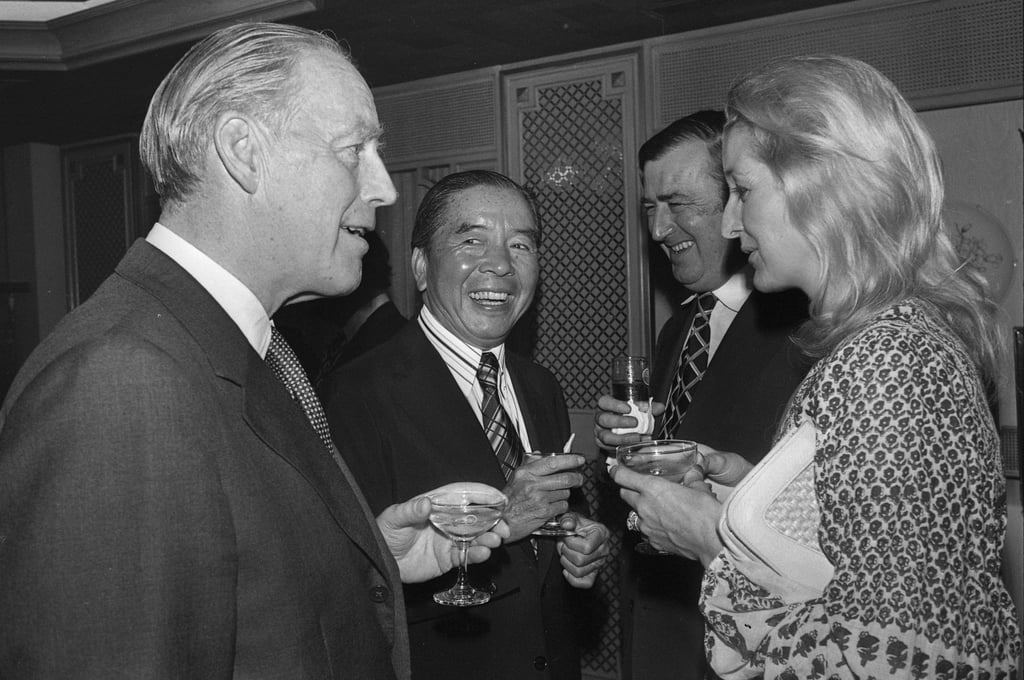
Pointing out there were fears of some “hidden motive” behind the legislation, he said: “Hongkong is deeply interested in this Bill. That is first, because any alteration in citizenship means a great deal to people in practical terms.
“It is hard for us, with our British passports, our unquestioned nationality and right of abode, to understand the strength and depth of the feeling of those who cannot take such rights for granted.”
Recent history, he continued, had made Hongkong people “sensitive” to any evidence of weakening of links with Britain.
Sir Paul cited, for example: “Britain’s leading role in the battle with Hongkong over textile quotas in 1977, the policy for making Hongkong pay 50 per cent more last year towards its own defence costs and the designation of Hongkong students as foreigners.”
Adding that feelings were running particularly high among Hongkong’s younger citizens, who believed they were being turned into second-class citizens, Sir Paul concluded:
“It would be folly to risk the alienation of the people of Hongkong in the course of what is meant to be no more than a tidying up of out-of-date nationality laws.”
Sir Paul made his speech despite reassuring comments from the Home Secretary, Mr William Whitelaw, when introducing the second reading.
“We are aware of the strength of feeling in Hongkong on the need to maintain ties between that territory and the United Kingdom,” said Mr Whitelaw.
“I would like to reaffirm that the proposed legislation is in no way intended to weaken these links to which we attach great importance,” he told the Commons.
The Bill’s second reading was observed by a high-powered delegation from Hongkong, led by Mr Oswald Cheung and Mr David Newbigging, representing the Executive and Legislative Councils.
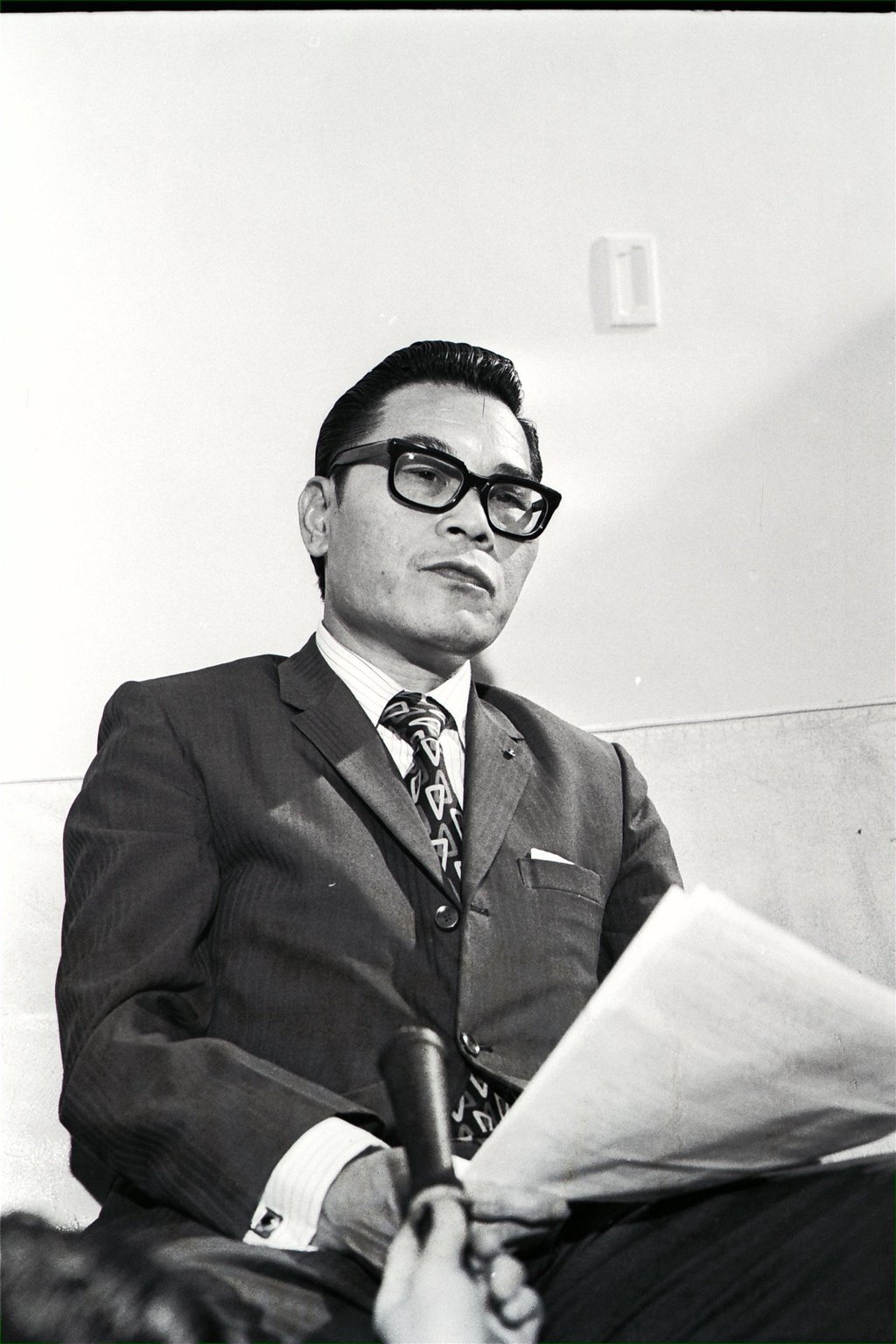
Mr Cheung and Sir Sze-yuen Chung, the senior Unofficial in Exco, also had meetings in London with both Mr Whitelaw and the Foreign and Commonwealth Sccretary, Lord Carrington, during which they argued that Hongkong citizens should continue to be called British citizens.
Sir Sze-yuen told a press conference in London: “Since 1962 we have lost our right of abode in the UK so there’s no need for any change.”
The lobbying paid some dividends when Mr Whitelaw announced concessions at the end of March.
A new clause enabled Hongkong citizens resident in Britain for five years to register as British citizens, whereas under the original version citizens of dependent territories were put on a par with aliens.
The clause also allowed the Home Secretary to register as British citizens Crown servants under the Government of a dependent territory and members of boards established in the dependent territory under Crown authority.
This concession was dubbed the “OBE clause” by one Labour MP, Mr Alex Lyon, a member of the Commons committee examining the Bill.
He said: “We’re going to give to some privileged members of the fraternity of old boys who run Hongkong some right to come to this country.”
Arguing that this was not the way to reassure Hongkong, Mr Lyon advocated a “separate citizenship” for the Colony, a move supported by another committee member, Mr Enoch Powell, who has for long been a virulent critic of immigration into Britain.
But an amendment, giving each of the remaining British dependencies its own citizenship, was narrowly defeated in committee by 13 votes to 11.
Meanwhile, evidence that the British press sympathised with Hongkong’s worries came in a Guardian leader in April:
“Our citizens in Hongkong are particularly worried – caught in a pincer between the People’s Republic of China and our Nationality Bill which, they fear, will enable us to wash our hands of them.”
And it added: “If our obligations are truly to be met to all our citizens overseas, creating three classes of citizens is not the way to do it.”
The Bill returned to the main floor of the Commons in April only to be guillotined – a way of restricting parliamentary debate – a move which put it on course to become law before the end of the year.
The Government’s move came after the parliamentary committee had spent nearly 90 hours in debate after which it had covered only 13 of the bill’s 49 clauses.
In June an amendment in the Commons, seeking full British citizenship for Gibraltar, was defeated by 273 votes to 248, a move which gave a hint of things to come.
Since 1962 we have lost our right of abode in the UK so there’s no need for any change.
More assurances came Hongkong’s way when Mr Raison said at the Bill’s final Commons reading: “We shall of course tell other countries of our new citizenship titles and these descriptions should cause no doubt or difficulty to immigration officers in Third World countries.”
But the Liberal Party leader, Mr David Steel, who had recently visited Hongkong, told the Commons he had found “deep and genuine resentment.”
It was Mr Steel who described the Bill on its publication as dividing British citizens into “sheep and two lots of goats.”
The legislation moved to the House of Lords near the end of June but it was not until late in July that Conservative Party rebels delivered the Government a stunning blow.
Our citizens in Hongkong are worried – caught in a pincer between the People’s Republic of China and our Nationality Bill which, they fear, will enable us to wash our hands of them.
This was the amendment, passed by 150 votes to 112, giving Gibraltar full British citizenship.
The Leader of the Lords, Lord Soames, stressed that Hongkong would demand similar treatment: “What we grant to one, we shall – to put it no higher – certainly be under great pressure to concede to others.”
But this view proved to be of no avail against the surge of emotional support for Gibraltar, which some saw as partly inspired by the King of Spain’s snub of the wedding of Prince Charles and Lady Diana Spencer.
The Gibraltar vote drew a strong reaction from the honorary secretary of the Hongkong Belongers Association, Mr Kenneth Chong, who said:
“To give full UK citizenship to Gibraltarians but deny the same right to Hongkong British subjects exudes the stink of apartheid.”
A few days later, an amendment put’ by Lord Elwyn Jones, seeking to allow the words British (Hongkong) Citizens on the covers of Hongkong passports, was withdrawn through lack of support, while another seeking full British citizenship for the Falkland Islands failed after a tied vote.
Another effort on Hongkong’s behalf came two weeks ago with an amendment tabled by the Conservative peer, Lord Geddes.
Allowing citizens of all dependencies to call themselves “British” when asked to declare their nationality, this amendment was defeated by the narrow margin of 105 votes to 102.
During the debate, Lord Geddes read out a telegram from Sir Sze-yuen Chung, which stated: “To preserve our British connection and status we maintain that the British nationality of citizens of a British dependent territory should be clearly stated in the Bill.”
Despite this defeat, Lord Geddes returned to the fray, filing another amendment which would give the official title: “British dependent territory citizens.”
His efforts were backed up by Lord Kadoorie, who in his maiden speech told the Lords: “To many Hongkong citizens the proposal that we are no longer to share a common citizenship with those of the UK and Colonies gives an impression of rejection. Why alienate the goose that has the potential to lay so many golden eggs?”
Lord Geddes’ amendment was adopted by the Government and the Bill headed towards final passage.
Despite the controversy that has surrounded passage of the Nationality Bill, one pressure group, the Hongkong Observers, has had doubts about the merits of the issue.
To give full UK citizenship to Gibraltarians but deny the same right to Hongkong British subjects exudes the stink of apartheid.
In an article in the SCM Post two months ago, they said: “The issue of nationality and citizenship is not of great interest to the general public because it does not directly affect our lives.”
Noting that British subjects in Hongkong had lost the rights of citizenship after 1962, they advocated a separate Hongkong citizenship.
“We are ethnic Chinese and regard Hongkong as our home, where our future lies. The Hongkong Observers for one have no desire to settle in the UK.
“To have a separate Hongkong identity now might lead nervous ‘belongers’ to think Britain is abrogating its responsibility for its dependent territory. We think not.”
KioskNews shows a cleaned-up reading view extracted from the publisher’s page — the original always lives on their site, not ours.