Carson Jerema: Albertans choose Canada. Perhaps Canada could choose us back
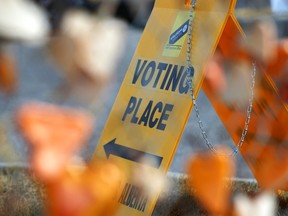
EDMONTON — Heading into Monday’s referendum, Alberta separatists had several things going for them. The question on the ballot was not independence, but on whether to have another vote, meaning, it should have been easier to pull in soft supporters of separation, or just plain old fed up Albertans. The federalist campaign was low energy and the separatists had arguments that both sides more or less agreed with, that the province has been badly treated by Ottawa.
Sign In or Create an Account
The pro referendum side didn’t even need to win Monday’s vote to claim victory, high enough support, say above 30 or 35 per cent, would have allowed them to claim a growing movement and continue to exert pressure on the provincial and federal governments. I don’t know how that will be possible now, given the results, with 75.7 per cent voting to stay and only 24.3 per cent choosing to have another vote. That’s roughly how the independence side has been polling for months and several points back from its peak.

Columnist Jesse Kline keeps you up to date with what’s happening in Israel and the effects of antisemitism on life here in Canada. Friday mornings.
By signing up you consent to receive the above newsletter from Postmedia Network Inc.
A welcome email is on its way. If you don't see it, please check your junk folder.
The next issue of Channel Israel will soon be in your inbox.
We encountered an issue signing you up. Please try again
This should be viewed as a complete and utter rejection of the separatist cause in Alberta. A higher showing may have prompted the more professional factions on the independence side to argue that they were weighed down by the clownish antics of others, in particular those who went down to the U.S. and reportedly offered to sign over oil royalties and water rights in exchange for support in achieving independence.
The many factions within the movement struggled to agree on objectives, between negotiating a new deal within Canada and outright independence, and even within those hoping to create a new sovereign country, there was a divide between republicans and those who hoped to keep King Charles III as head of state. Many within these groups have as much or more vitriol for each other as they do for federalists.
Perhaps a more unified movement could have fared better. But, given the fact they could not grow their support, even as the more competent leaders, such as lawyer Keith Wilson and Western Standard publisher Derek Fildebrandt began to take on a more public role over the summer and into the fall, they should take the hint and redirect their efforts.
Those efforts would best focused on helping Alberta to assert itself within Canada, as Premier Danielle Smith has been doing by taking the federal government to court when it intrudes on provincial jurisdiction, by persuading Prime Minister Mark Carney to agree to a new pipeline, and by advocating for Alberta’s energy exports in the United States.
Alberta’s grievances are real, but the problems the province faces can be solved, and this is where efforts are best directed.
Unfortunately, separation politics has dominated the inner workings of the governing UCP since its creation in 2017, following a merger between the Wildrose and Progressive Conservative parties.
Former premier Jason Kenney, who created the party out of an almost sheer force of will (and a blue pickup truck), attempted to placate the separatist factions in the party, but was ultimately removed for being insufficiently anti-Ottawa and for complaints over his Covid policies. Though he would come to represent the federalist side in the referendum campaign, it was Kenney who introduced legislation to permit citizen-led referendums.
Kenney’s own referendum on removing equalization from the Constitution was successful, but ultimately achieved very little, leaving those hoping for a more robust anti-Ottawa posture disappointed and angry.
After replacing him as leader, Smith brought in the awkwardly-named Alberta Sovereignty within a United Canada Act, which was billed as a way to keep the federal government from intruding on provincial jurisdiction, but has been largely absent from her government’s agenda despite the fanfare of its arrival back in 2022.
Smith’s government would later lower the threshold for how many signatures would be needed to bring a citizen initiative to a vote, remove the requirement that a question be constitutional, and, finally, devise a plan to get a version of an independence question on the ballot, when the courts blocked the separatist petition from going forward.
Separatists and Factions within the UCP have been unhappy that Smith did not remain neutral in the campaign and instead sided with the federalists, though she did very little actual campaigning. Wilson told the Calgary Herald’s Rick Bell last week that he’s unhappy with the premier. “She weakened our position by promoting people to say everything’s fine. It makes no sense,” he said.
Multiple riding associations are hoping to hold a leadership review at next month’s UCP convention and hope to replace her with an outwardly separatist leader. But based on conversations I’ve had with multiple party activists, this movement had already lost momentum, and if it were to succeed it could threaten the UCP’s electability in Calgary, and without Calgary the party cannot win government.
With less than a quarter supporting the independence side, Smith has shown party members why they should keep her. She can credibly claim to have given the separatist side a fair hearing; Possibly too fair. She may be the only person capable of keeping the party together and of governing this unruly, yet beautiful, province.
As for the rest of the country, please note that Albertans have clearly and forcefully chosen Canada. After more than a decade of direct attacks from Ottawa, and after more than a century of being forced to demand the same treatment as other provinces, it would be nice if other Canadians also chose us.
National Post
Join the Conversation
This website uses cookies to personalize your content (including ads), and allows us to analyze our traffic. Read more about cookies here. By continuing to use our site, you agree to our Terms of Use and Privacy Policy.
KioskNews shows a cleaned-up reading view extracted from the publisher’s page — the original always lives on their site, not ours.