Oud across the world, and back: The 27th annual Jerusalem International Oud Festival kicks off

Twenty-six years is a long time by most people’s standards, and much can happen along the way. The Jerusalem International Oud Festival, which takes place for the 27th time, under the aegis of Confederation House, November 5-12, has certainly seen a thing or two over the years.
Back in 2000 it was a modest two-day affair when home venue CEO and artistic director Effie Benaya managed to coax an oud player from Morocco over here. The audiences at Confederation House, quite a few of whom imbibed Arabic music with their mother’s milk back in Iraq, Morocco, and elsewhere around the Arab domain, enjoyed the shows immensely. It was a much-appreciated blast from the past for them.
In the meantime, their offspring – second and third generations – and plenty of Ashkenazi Israelis have jumped on the Arabic music bandwagon, and festival attendees now spread far and wide across the demographic range.
Benaya, naturally, kept tabs on the festival’s growth, and, as in other fields of musical endeavor, the delineating programmatic lines have ebbed and shifted.
Stellar crowd-pullers
The curtain-raiser sets out the crossover stall from the word go. The first thing that springs to mind is that Benaya has gone for star value, with the Jerusalem Theatre show (November 5, 9 p.m.) featuring internationally renowned Iraqi-rooted Israeli rocker Dudu Tassa paired with Jonny Greenwood of famed English rock band Radiohead.
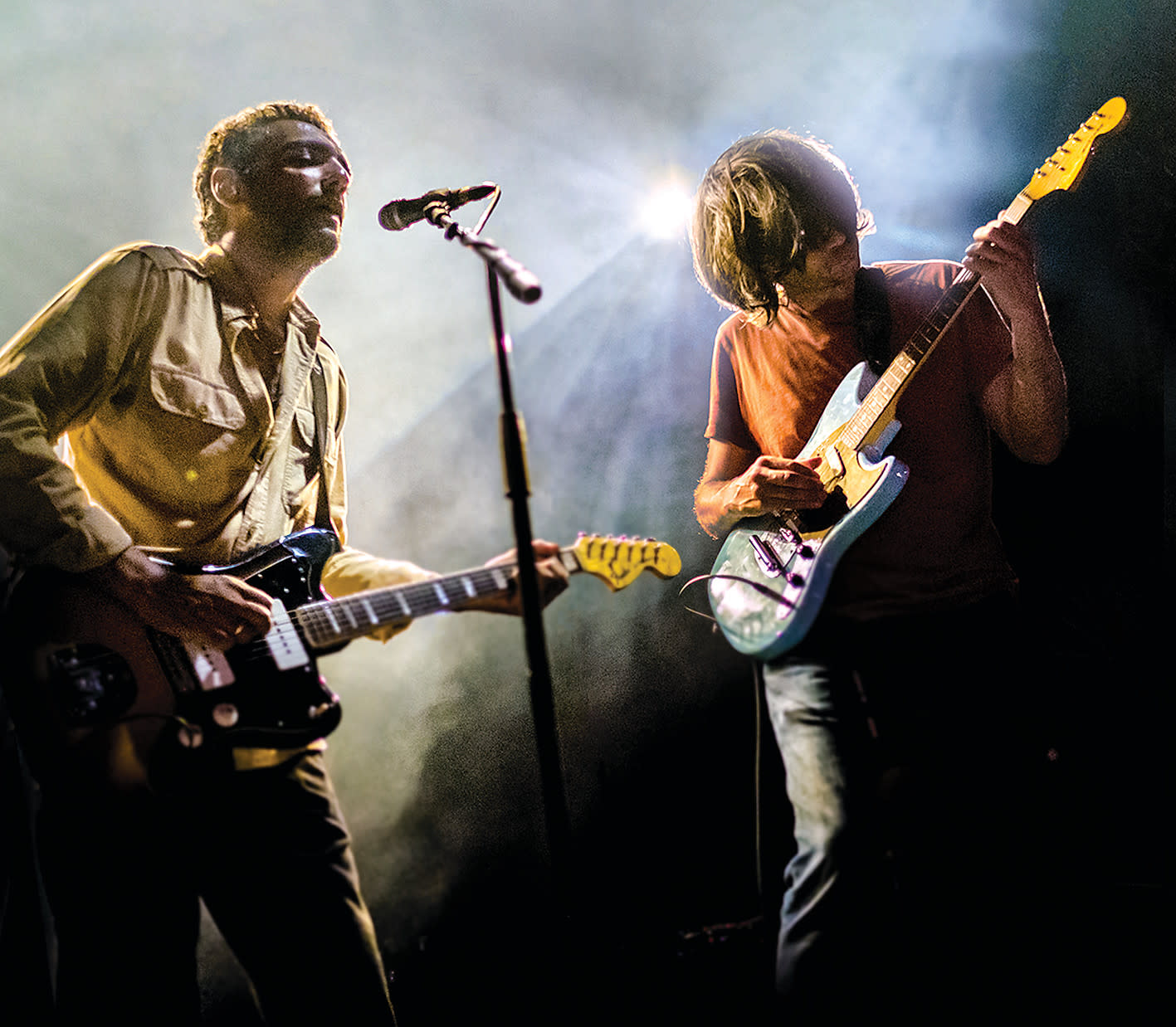
If Benaya was looking to put bums on seats, he has surely hit the jackpot here. Radiohead has been one of the world’s biggest rock acts for over 40 years, and Tassa has been a regular on the global ethnic-leaning rock and festival circuit for well over a decade.
This is something of a supergroup matchup, with the front pair set to play material from their 2023 album Jarak Qaribak, with additional numbers from Tassa’s Al-Kuwaiti projects. They feed off music written and performed by Tassa’s grandfather and great-uncle, Daoud and Salleh Al-Kuwaiti, who were particular favorites of Iraq’s last king, Faisal II, and big shots across the Arab music scene.
The grand production sees Tassa and Greenwood backed by 15 instrumentalists and two vocalists.
With expectations high and tickets hard to come by, Benaya has added another concert to the festival program, with the feted twosome due to strut their stuff for a second time at the same venue, on November 6 (12:45 p.m.).
Happily and, it must be said in the current international political climate, surprisingly, Benaya has managed to work a couple of offshore items into the programmatic fabric, including Greek singers Babis Tsertos, 70, and Areti Ketime, 37.
Their ethnic folk music show features rebetiko, the Greek blues, along with Smyrneika, brought – as the name suggests – to Greek shores by refugees from the Turkish cosmopolitan port city of Smyrna and its hinterland in Asia Minor in the early 20th century.

Lovers of Indian music will, no doubt, be buoyed by the inclusion of the Triveni date at the Jerusalem Theatre on November 10 (9 p.m.).
This is a truly top-notch concert with the stellar trio of bansuri (bamboo flute) player Rakesh Chaurasia, sitar player Purbayan Chatterjee, and tabla player Ojas Adhiya.
This is an Oud Festival reprise for Chaurasia, whose uncle, now 88-year-old iconic bansuri player Hariprasah Chaurasia, also lent his silky skills to the Confederation House-based event, while Chatterjee makes his debut at the festival. This will, however, be his second working trip to Israel, having performed in Tel Aviv and Haifa in 2007 as part of a series of events marking the 15th anniversary of Israeli-Indian diplomatic relations.
Quality Indian music
The Triveni concert looks like a top-class offering to be relished. Chaurasia is hailed as a master of the bansuri, and has several Grammys in his trophy cabinet, while Chatterjee has been dubbed “India’s leading sitar maestro.” He is also gearing up for the 2027 Grammy Award with his new release, Feathered Creatures, in the running for a coveted slot.
The record is a collaborative venture with five-time Grammy-winning American guitarist Mark Lettieri, who plays with celebrated jazz fusion band Snarky Puppy.
After just a few seconds into the opening track of the album, it becomes patently clear that 50-year-old Chatterjee is just as happy delving into such diverse sonic waters as rock, hip-hop, jazz, blues, and even Western classical music as performing more spiritually leaning and ostensibly tranquil ragas from the traditional Indian side of the music tracks.
Watching him do his thing on YouTube, with tabla player Vivek Pandya, or alongside Chaurasia at the 2022 Darbar Festival in London, you cannot fail to discern that Chatterjee is well versed in the intricacies of Hindustani classical material from northern India.
He is a true virtuoso who can reel off white-hot riffs, producing seamless cascading arpeggios at the speed of light, but is not averse to performing more pedestrian, reflective passages. All the above will be rolled out for the Oud Festival attendees.
Chatterjee maintains a balanced eclectic approach to his craft and follows the tenet that anything musical is fair game and can be incorporated into his vast repertoire of sounds and styles.
“I think that in order to truly discover the essence of something, you have to look at it from the external world,” he suggests.
That non-purist ethos got me thinking, and listening to my interviewee even more attentively. “You have to stray. You have to allow yourself to stray and fall in love elsewhere, and come back. That’s exactly the relationship I have with raga music.”
It is, he says, a philosophy borne of experience.
“When I started off this journey – which is now many years old – I was very monogamous,” he chuckles. “I was faithful to this raga music, and I was told it was a sin to stray into anything else. That’s the atmosphere I was brought up in.”
That, presumably, was the line taken by his father, sitar-playing Parthapratim Chatterjee, and Purbayan’s principal source of inspiration, late distinguished sitar player Nikhil Banerjee.
Chatterjee duly put in the requisite shifts to hone his technical skills on the demanding instrument but, over time, also painstakingly developed his own ideas for carving out his niche in his professional timeline. It was time to take a leap of faith.
“I slowly realized that I couldn’t truly love my own kind of music unless I allowed myself to fall in love with every other kind of music; unless I allowed myself to understand every other musical idiom, every other musical language.”
Voyage of discovery
It was a voyage of discovery, and required plenty of sifting and sorting en route to arrive at some kind of distilled – albeit highly varified and generously proportioned – musical sphere in which Chatterjee felt he could explore, imbibe, and eventually present to his audiences.
“There are things that you kind of reject along the way,” he notes. “You think, well, this is not for me. But eventually, when I came back to the [Indian classical] music, I discovered who I was.”
He had arrived at the core of his craft.
“I believe that any form of art is finally about that. It is about getting to a sense of who you are.”
Even so, that hard-earned epiphany isn’t set in stone. “Who you are is constantly changing.”
The go-with-the-flow sensibility is also central to Indian classical music, despite initial appearances.
“Indian ragas are very serene, and a lot of the raga music, and raga-based concerts, is about storytelling,” Chatterjee explains.
But there is a flip side. “Too often, Indian music is described as serene and spiritual and divine, which it is,” he exclaims. “But there is also a sense of ecstasy which lies within that divinity, and a sense of virtuosity and exhilaration, a sense of self-discovery in the moment of exhilaration.”
I came to the unmistakable conclusion that, similar to late modern jazz pioneer drummer Max Roach, who once told me, simply and poignantly, that “music is just music,” Chatterjee does not take a hierarchical route to music appreciation and sonic practice. He calls out a roll of late musical pantheon members.
“It could be [rock guitarist] Jimi Hendrix, [Indian sitar master] Ravi Shankar, [Indian tabla wizard] Zakir Hussain, or [rock guitarist Eddie] Van Halen. That sense of exhilaration, and the pain of not being able to discover and then the exhilaration of being able to discover, are all part of that entire spectrum which you need to explore.”
Chatterjee says he is still finding his way across that rocky, enriching terrain. “I feel there is more to find, but I am at a point in my journey where I am able to at least see the larger picture, as it were.”
Considering his instrumental prowess and his ability to mix it with fellow artists who, seemingly, have little in common with the likes of Chatterjee, who “simply” sit there on the stage and play their music, sometimes for hours on end, his appreciation for ostensibly extraneous art forms is surprising and impressive.
Instruments for all
As the Feathered Creatures venture clearly shows, Chatterjee has no problem with culling sounds from every which place and culture and bringing them into the Indian fold.
Still, he does have a left-field-leaning view of the means employed to put the bottom musical line together. I asked whether, for example, he considers the drum kit or electric guitar acceptable for his line of work.
“I think the drum is a traditional instrument,” he chuckles. “I think the electric guitar is the most traditional instrument there is,” he adds even more surprisingly. That may be because the music business as a whole and musical tastes have changed over the years. “You ask a teenager, they will tell you that is the most traditional instrument.”
That might be challenging for Chatterjee and his ilk. “Nine out of ten Indian teenagers will tell you they are most familiar with the electric guitar. I am not so sure about the sitar.”
Chatterjee adopts a philosophical oxymoronic view of that state of affairs. “It’s a little sad, but, at the same time, it is also cathartic. There is a great deal of influence of Western pop culture [in India today], which I can understand.”
He says, in fact, fusion has been the name of the game almost from the off. “If you look at the sitar itself, it is the result of a collision of two distinct cultures and religions,” he notes, referencing the powerful impact of Persian music and culture that informed the evolution of music across numerous ethnic and cultural demarcation lines.
“I am very proud to be Indian because we’ve allowed for that for many centuries now. We have allowed the culture to slowly percolate, especially in the north of India. The sitar is the result of the setar, which comes from Persia, colliding with the veena, which is the fountainhead of Indian string instruments.”
That broad base has led to a flexibility of musicianship and intent, and the sitar eventually also found its way into Western consciousness, primarily following Shankar’s performance at the seminal 1967 Monterey Pop Festival in California, where he played with Zakir Hussain’s father, peerless tabla player Alla Rakha, with Hendrix happily grooving away in the audience of predominantly hippies and rock and pop fans.
There was also the earlier discovery of the sitar by the Beatles’ George Harrison, who studied with Shankar, and incorporated its captivating textures and otherworldly sounds into such beloved numbers as “Norwegian Wood.”
Chatterjee’s accommodating, free-flowing view of music notwithstanding, the Triveni show will not come with billowing dry ice, strobe lighting, and gigantic video screens. It will be just about the music and, as Chatterjee, puts it, the pure ecstasy of the road to new sonic and emotional vistas, as the trio takes its audience for the best kind of ride.
The rest of the Oud Festival program offers plenty of quality. Percussion player Itamar Doari’s show at the Khan Theater (November 10, 9 p.m.) is also one to look out for, and feted singer-songwriter pianist Shlomi Shaban mixes it, on November 11 at 9 p.m., with internationally renowned kemancha (spike violin) player Mark Eliyahu and the Kadosh Brothers threesome, which colors its Arabic music base with heaping helpings of jazz and rock.
Festival stalwart violinist-oud player Prof. Taiseer Elias will delve into classical Arabic music with mandolin player Shmuel Elbaz (November 7, 9 p.m.), while the confluence of dazzling Andalusian-leaning jazz pianist Omri Mor and 83-year-old, east-west fusion pioneering percussionist-vocalist Shlomo Bar, on November 8 at 9 p.m., promises fireworks aplenty.
Choreographer Orly Portal’s Rite of Spring dance production (November 12, 8:30 p.m.) was inspired by late legendary Syrian-Egyptian singer, oud player and composer Farid al-Atrash, and veteran mizrachi-pop-rock band Teapacks stars in the finale, on November 12 at 9 p.m., supported by the 12-piece The Hafla and Hora Orchestra.
For tickets and more information: *6226, tickets.bimot.co.il, and www.confederationhouse.org
KioskNews shows a cleaned-up reading view extracted from the publisher’s page — the original always lives on their site, not ours.