Carl Sagan Meets Tolkien In 10/10 Space Opera That Changed Sci-Fi Forever

Dhruv is a Lead Writer in Screen Rant's New TV division. He has been consistently contributing to the website for over two years and has written thousands of articles covering streaming trends, movie/TV analysis, and pop culture breakdowns.
Before Screen Rant, he was a Senior Writer for The Cinemaholic, covering everything from anime to television, from reality TV to movies.
After high school, he was on his way to become a Civil Engineer. However, he soon realized that writing was his true calling. As a result, he took a leap and never looked back.
Sign in to your ScreenRant account
Carl Sagan's influence still looms over the sci-fi genre while J.R.R. Tolkien remains the defining architect of fantasy storytelling. One iconic space opera from the 1990s seemingly draws from the works of both authors and delivers one of the most complete and satisfying arcs in sci-fi history.
Both Sagan and Tolkien mastered the art of bridging the gap between real world elements and speculative storytelling. Sagan made hard sci-fi feel realistic by grounding it in rigorous theoretical physics. Meanwhile, Tolkien added authenticity to his fantastical stories by making them extensions of real-world mythology, folklore, and language.
J. Michael Straczynski's Babylon 5, too, creates a universe that feels wildly futuristic and fantastical. Yet, like Tolkien and Sagan's works, it has elements of deep familiarity and scientific plausibility. In hindsight, the show seems light years ahead of its time, and it is hard not to see how it finally deserves a reboot almost 3 decades after its release.
Babylon 5 Combines Carl Sagan’s Scientific Wonder With Tolkien’s Grand Worldbuilding
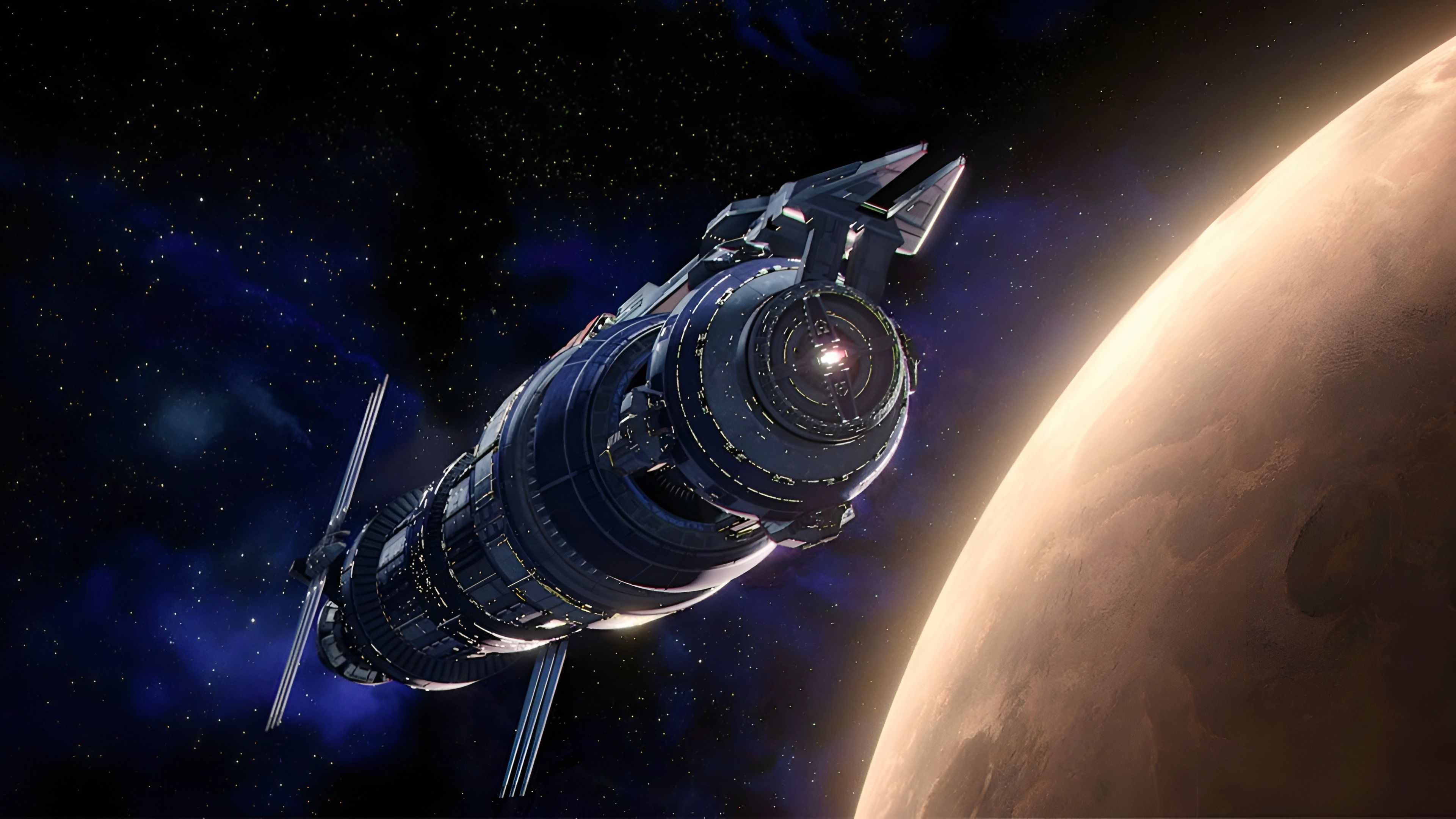
Babylon 5 does not hold back from being incredibly fantastical with its worldbuilding. However, its sense of realism stems from commitment to scientific realism, diplomatic complexity, and an optimistic view of humanity’s long-term evolution. The titular space station itself is a 5-mile-long O'Neill cylinder that creates gravity through centrifugal rotation. Even the characters in the series use true Newtonian physics.
Like Sagan, Babylon 5 also views space travel as a geopolitical imperative. It begins with a UN-style diplomatic station built to prevent galactic war through compromise. The series also dabbles with many relatable real-world themes surrounding trade unions, xenophobia, and media propaganda.
Carl Sagan once famously quoted:
“The nitrogen in our DNA, the calcium in our teeth, the iron in our blood, the carbon in our apple pies were made in the interiors of collapsing stars. We are made of starstuff.”
Riffing on the same philosophical theme, Babylon 5 presents its own version of the above quote. Through its hard-hitting space drama, it explores how human consciousness is nothing but the universe gradually becoming capable of knowing itself. This theme particularly seems evident when Delenn says to Capt, Sheridan:
"The molecules of your body are the same molecules that make up this station, and the nebula outside, that burn inside the stars themselves. We are starstuff. We are the universe made manifest, trying to figure itself out."
Babylon 5's Tolkien-esque elements become evident when it unfolds as pre-planned five-arc novel instead of a typical TV series. Like Lord of the Rings, it features everything from ancient prophecies to fogotten wars. Even its enigmatic Vorlon and "First Ones" seem reminiscent of Tolkien's Valar and Dark Lords.
The sci-fi show even has its own version of The War of the Ring and also features a "Passing of the Elves" moment where the First Ones depart the galaxy and allow younger species to shape their destiny.
The Sci-Fi Genre Needs A Babylon 5 Reboot

For its time, Babylon 5 was a pioneer in CGI. However, after three decades, the show's visual elements have not aged too well. Solely from a visual standpoint, a reboot has the opportunity to make the show's space drama feel even more grounded and realistic. Babylon 5 was also ahead of its time with its long-term five-year vision.
Unfortunately, the show was almost forced to end its run after season 4, which held it back from having a perfect five-season arc. It eventually returned with a final season 5, but the damage from its early cancellation was already done.
A reboot has the opportunity to redeem the series only if it gets to realize J. Michael Straczynski's original vision. If a reboot sees the light of day, it could even be incredibly relevant for the times given how the show dabbles with perscient political themes surrounding authoritarianism, state-controlled media, and corporate curoption.
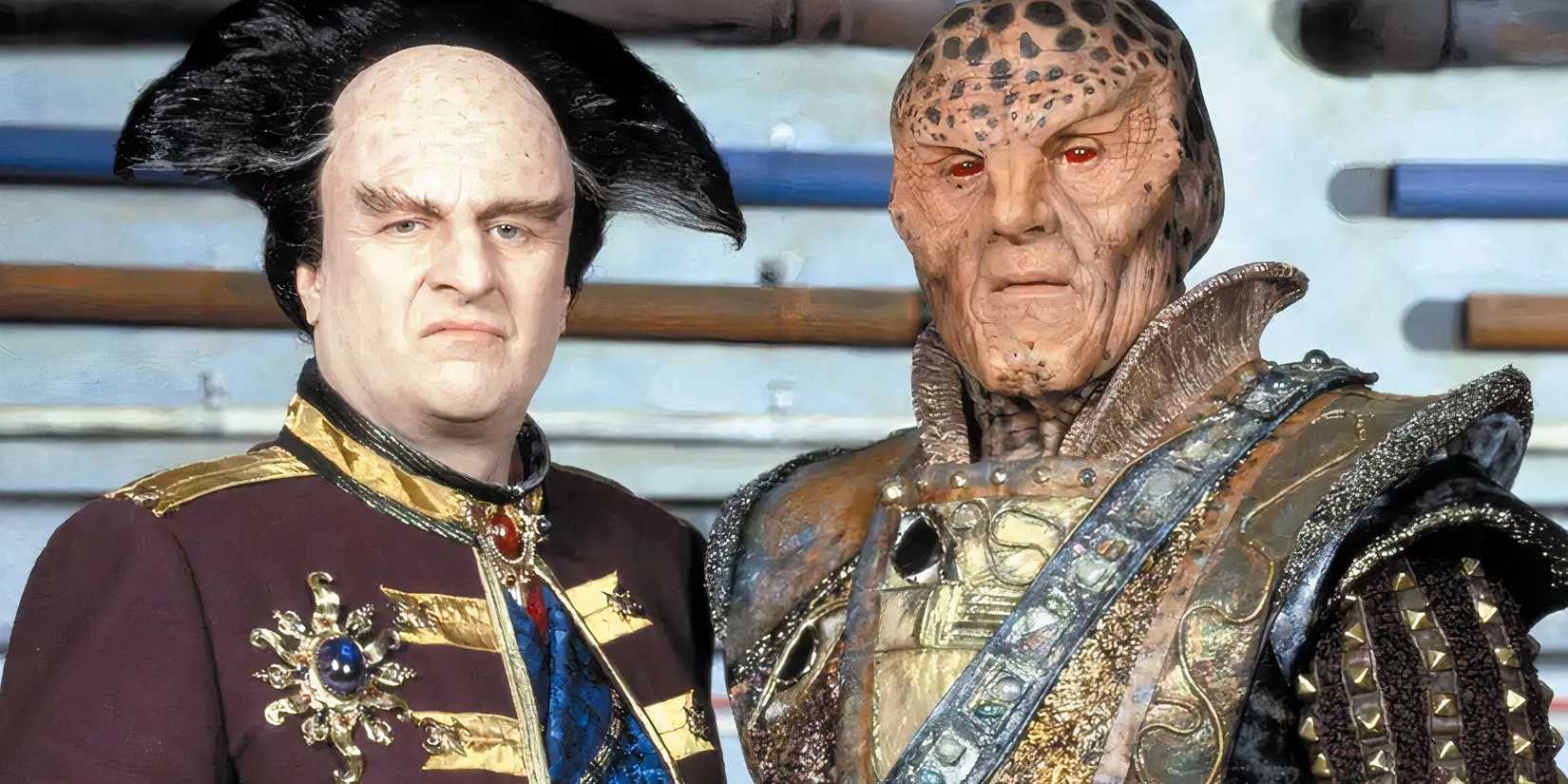
Some aspects from the space opera's original run will be hard to replace. For instance, Andreas Katsulas (G'Kar) and Peter Jurasik (Londo Mollari) played their parts so perfectly that it is hard to imagine anyone else in their roles. However, if approached carefully, the sci-fi show's reboot could perfectly capture the original series' blend of Carl Sagan's wonder and J.R.R. Tolkien's imagination.

Babylon 5
- Release Date
- 1994 - 1998-00-00
Babylon 5 is a science fiction television series set on a space station built by the Earth Alliance. Released in 1994, it acts as a diplomatic sanctuary to preserve peace among various alien races, doubling as a military post and a bustling hub for travelers and traders. As Commander Jeffrey Sinclair and later Captain John Sheridan oversee the station, they become caught in a growing conspiracy and an ancient conflict that threatens the future of the galaxy
- Network
- Syndication, TNT
- Cast
- Bruce Boxleitner, Eddie Allen, Jim Norton, Peter Trencher, Sarah Douglas, Jerry Doyle, Claudia Christian, Michael O’Hare, Mira Furlan, Richard Biggs, Andreas Katsulas, Peter Jurasik, Andrea Thompson, Stephen Furst, Bill Mumy, Jason Carter, Tracy Scoggins, Patricia Tallman, Jeff Conaway, Robert Rusler, Mary Kay Adams, Julie Caitlin Brown, Paul Hampton, Ron Canada, Dwight Schultz
- Showrunner
- J. Michael Straczynski
- Directors
- Michael Vejar, David J. Eagle, Janet Greek, Jim Johnston, John C. Flinn III, Jesús Salvador Treviño, Kevin G. Cremin, Richard Compton, Tony Dow, Bruce Seth Green, John Copeland, John Lafia, Mario DiLeo, Stephen Furst, Adam Nimoy, Kevin Dobson, Menachem Binitsky, Doug Lefler, Goran Gajić, John McPherson, Kim Friedman, Lorraine Senna, Stephen L. Posey
- Writers
- J. Michael Straczynski, Larry DiTillio, D.C. Fontana, Harlan Ellison, Peter David, Christy Marx, David Gerrold, Kathryn M. Drennan, Marc Scott Zicree, Neil Gaiman
- Main Genre
- Sci-Fi
- Creator(s)
- J. Michael Straczynski
- Producers
- Douglas Netter, J. Michael Straczynski, Richard Compton
- Seasons
- 5
- Story By
- J. Michael Straczynski
- Streaming Service(s)
- AppleTV+, MAX
KioskNews shows a cleaned-up reading view extracted from the publisher’s page — the original always lives on their site, not ours.