Aayalolo contra-flow: Are we treating the symptom instead of the disease?
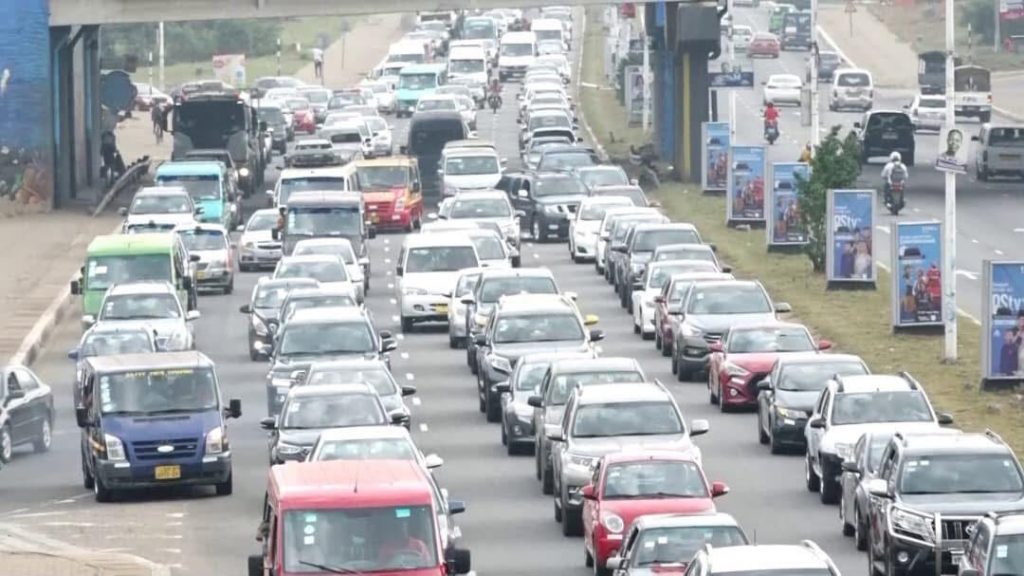
The Aayalolo contra-flow programme that began on September 29 is an intervention worth watching, but it should not be mistaken for a solution to Accra’s traffic crisis.
The government’s argument is straightforward: put high-capacity Aayalolo buses on dedicated contra-flow lanes, move more passengers at once, and encourage private motorists to abandon their cars for public transport.
The Local Government Minister, Mahama Ayariga, has specifically said the objective is to attract private-car users rather than displace trotro operators.
The question, however, is whether giving Aayalolo priority on existing roads addresses the real problem.
Accra’s traffic crisis is fundamentally a public-transport, urban-planning and commuting crisis. Every morning, thousands of workers leave homes far from their workplaces because affordable housing is often distant from employment centres.
They struggle to find reliable vehicles, endure long waiting times and unpredictable journeys, and return home after spending hours on the road.
For many of these workers, the private car is not simply a luxury. It can become a response to an unreliable transport system.
Therefore, if government wants motorists to leave their cars at home, it must make public transport sufficiently reliable, frequent, affordable, comfortable and predictable to compete with the convenience of the private car.
Contra-flow can make Aayalolo faster. But a faster bus is not automatically a better transport system.
The programme also raises a fundamental question: how many private cars will actually disappear from the roads because of it?
If the buses mainly take passengers who would otherwise use trotros, the number of vehicles removed from the roads may be relatively modest. The government itself has explained that Aayalolo will handle longer-distance journeys while trotros continue serving shorter routes.
That means the success of this policy must be measured by more than the speed of Aayalolo buses.
We should ask: How many private vehicles are removed from the roads? How many commuters are carried daily? How much time is saved? And does the intervention reduce total congestion, or simply give one category of vehicles a faster passage through it?
There is nothing wrong with experimenting with public transport solutions. In fact, Ghana desperately needs bold interventions.
But the country needs a transport system - not isolated traffic tricks.
A sustainable solution requires reliable mass transit, better interchange systems, improved pedestrian infrastructure, stronger traffic management, appropriate parking policies, coordinated land-use planning and a serious effort to bring jobs and housing closer together.
Government deserves credit for trying something different. But it should also be prepared to measure the results honestly.
Accra’s traffic problem is too important to be reduced to the question of how quickly one bus can move through a congested road.
The real test is whether the ordinary Ghanaian worker can get to work and return home faster, cheaper and with less stress.
Until that happens, we should be careful about calling the Aayalolo contra-flow programme a solution to Accra’s traffic crisis.
Author
Ebenezer Madugu \ ebenezermadugu@gmail.com
DISCLAIMER: The Views, Comments, Opinions, Contributions and Statements made by Readers and Contributors on this platform do not necessarily represent the views or policy of Multimedia Group Limited.
Tags:
DISCLAIMER: The Views, Comments, Opinions, Contributions and Statements made by Readers and Contributors on this platform do not necessarily represent the views or policy of Multimedia Group Limited.
KioskNews shows a cleaned-up reading view extracted from the publisher’s page — the original always lives on their site, not ours.