ED flags bankruptcy code frauds, ‘disproportionate’ haircuts as thrust areas
Section 29A of the IBC prohibits defaulting promoters, wilful defaulters, and connected/ related parties from bidding for their own company during insolvency.
Red-flagging frauds under the Insolvency and Bankruptcy Code (IBC), the Enforcement Directorate (ED) has identified “re-examination of collusive resolution cases involving disproportionately large haircuts through which promoters re-acquire assets” as a key thrust area.
This comes in the backdrop of the National Company Law Tribunal‘s (NCLT) August 25 order which allowed Essel Group founder Subhash Chandra to settle his personal insolvency proceedings by paying Rs 6.25 crore, against admitted claims of Rs 22,006.57 crore. On September 1, a five-member special bench of the NCLT stayed the settlement order.
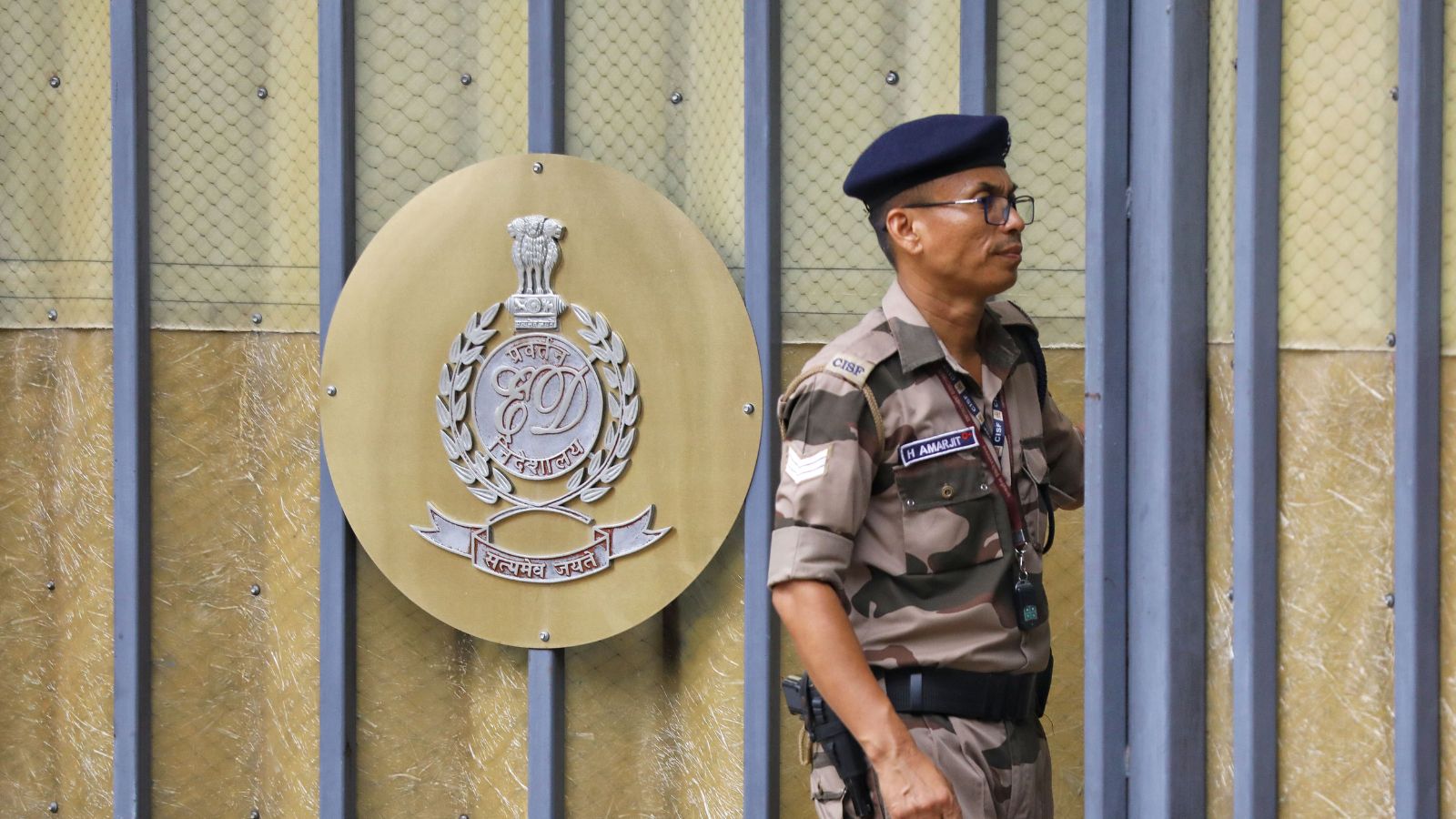
In a statement, the ED listed the identification of some “core operational thrust areas” at its 36th Quarterly Conference of Zonal Officers (QCZO), held at the Indian Institute of Management, Bengaluru, on September 14-15. “Unearthing frauds under the Insolvency and Bankruptcy Code and the PMLA (Prevention of Money Laundering Act)” headed the list.
According to the agency, it “identified recurring malpractices including circumvention of Section 29A, inflation of related-party claims, manipulation of the Committee of Creditors, asset stripping and artificially large haircuts through which promoters regain control of assets”.
Section 29A of the IBC prohibits defaulting promoters, wilful defaulters, and connected/ related parties from bidding for their own company during insolvency.
According to the agency, illustrative cases were also discussed during the conference. Asked if Chandra’s case was discussed, an ED official said, “Many cases were discussed. I cannot specifically tell which ones.”
“It is a serious problem and often clashes with our investigations. Companies often take shelter under IBC to escape prosecution. There are instances where related parties have bought back the company through resolution process, effectively handing over the company to people who sunk it,” the official said.
Story continues below this ad
The Subhash Chandra settlement highlights a larger concern over deep haircuts under the IBC, where creditors often recover only a fraction of what they are owed. Between FY2021-22 and FY2025-26, 1,077 cases were resolved under the IBC, with creditors recovering Rs 2.47 lakh crore — an average recovery of about 29% of admitted claims. In FY26, recovery fell to 20%, the lowest in five years, down from 37% in FY25, 28% in FY24, 39% in FY23 and 24% in FY22.
The ED said it also “analysed the legal tension between the moratorium under Section 14 and the immunity under Section 32A of the Code on the one hand, and attachment powers under the PMLA on the other”.
Section 14 of the IBC provides for a “moratorium”, leading to pause in legal action by agencies, while Section 32A grants immunity to a company’s assets after a new, unrelated buyer (successful resolution applicant) takes over.
Various zones of the agency “were directed to identify red flags, obtain copies of applications relating to preferential, undervalued, fraudulent and extortionate transactions from resolution professionals, file intervention applications before the tribunal, and initiate independent investigations under the PMLA against the masterminds,” the ED said.
Story continues below this ad
The central debate around the IBC is whether it should prioritise reviving distressed companies or maximising recovery for creditors. The government maintains that the Code’s primary objective is “resolution, not recovery”. Banks, however, have raised concerns about asset valuation, saying divergent methodologies, inadequate accounting of assets and opacity in valuation can lead to excessive haircuts.
The agency also flagged coordination with the state police and other law enforcement agencies; fast-tracking of trials; aggressive pursuit of restitution of attached and confiscated assets to legitimate victims; and mandatory valuation of all confirmed attached properties by government-approved valuers.
On expediting trials, the conference emphasised identification of at least 10 high-profile cases in each region for conclusion of trial and conviction within six to eight months. “Cases pending beyond 10 years are to be placed in a dedicated monitoring register for monthly review by the head of zone, with plea bargaining and non-conviction based confiscation considered in eligible cases,” the ED said.
At the conference, the ED noted that one of the cases discussed saw the agency intervening before the NCLT, following which the order initiating the corporate insolvency resolution process of a company was recalled.
Story continues below this ad
Sources said the case relates to Alchemist Limited, founded by former Rajya Sabha MP KD Singh. While the ED was probing money laundering charges in an alleged Rs 1,842-crore public financial scandal related to the company, an insolvency application under Section 9 of the IBC was filed by an operational creditor named Sai Tech Medicare Pvt Ltd to push Alchemist Limited into a corporate insolvency resolution process (CIRP).
Following the ED’s intervention, the NCLT terminated the entire insolvency process on February 3 this year. In its order, the NCLT said the ED submitted that the “Alchemist Group, under a well-hatched conspiracy, adopted the route of insolvency resolution through its group companies against its own companies and got its ex-employee appointed as RP (resolution professional) to receive the funds (proceeds of crime) through legal channel in their companies by misleading this Hon’ble Tribunal. They are misusing the insolvency resolution process to siphon off funds and to evade criminal liability under PMLA, 2002.”
“The applicant submitted that the Alchemist Group is misusing the IBC process to obtain immunity under Section 32A, thereby frustrating PMLA proceedings,” the NCLT said.
“Considering the totality of circumstances, the nature of allegations, confirmed attachments under PMLA, domination of the CoC by accused group entities, prima facie layering of funds, and the risk of misuse of insolvency immunity, this Adjudicating Authority is satisfied that the CIRP has not been initiated or conducted for the genuine purpose of insolvency resolution,” the NCLT said in its order.
KioskNews shows a cleaned-up reading view extracted from the publisher’s page — the original always lives on their site, not ours.