Chinese rail hub beats Tokyo's shinkansen with a train every 40 seconds at peak
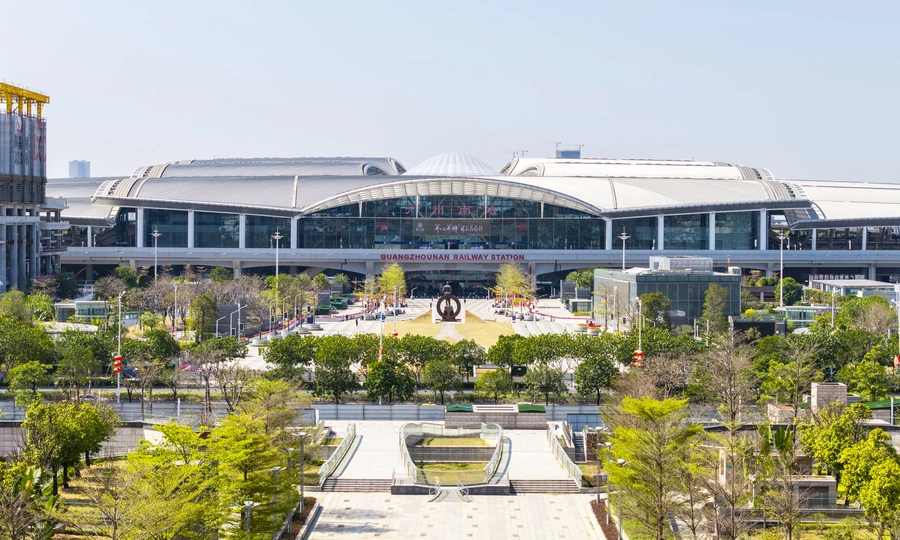
Guangzhou South Railway Station handled more than 1 million passenger trips on Oct. 1, a first for any Chinese station, with trains leaving 40 seconds apart at peak times.
The station ran 1,252 train services and recorded 1.049 million passenger trips that day, counting arrivals and departures, according to the publicity department of Guangdong Province's Communist Party Committee. Oct. 1 was the start of China's seven-day National Day holiday, known as Golden Week.
No station on China's rail network had handled 1 million passenger trips in a single day before, the department said on its WeChat account.
At peak times a train left every 40 seconds on average, an interval it described as shorter than the time many people spend on a single short video.
At Tokyo Station, by comparison, shinkansen departures reach up to 24 an hour at peak periods, or one every 2.5 minutes on average, according to the South China Morning Post.
Guangzhou South was designed to handle heavy traffic, Peng Peng, executive chairman of the Guangdong Society of Reform, a think tank affiliated with the provincial government, told the newspaper.
The station has 15 platforms and 28 tracks and is one of five main rail hubs in Guangzhou, the provincial capital with a population of about 19.1 million.
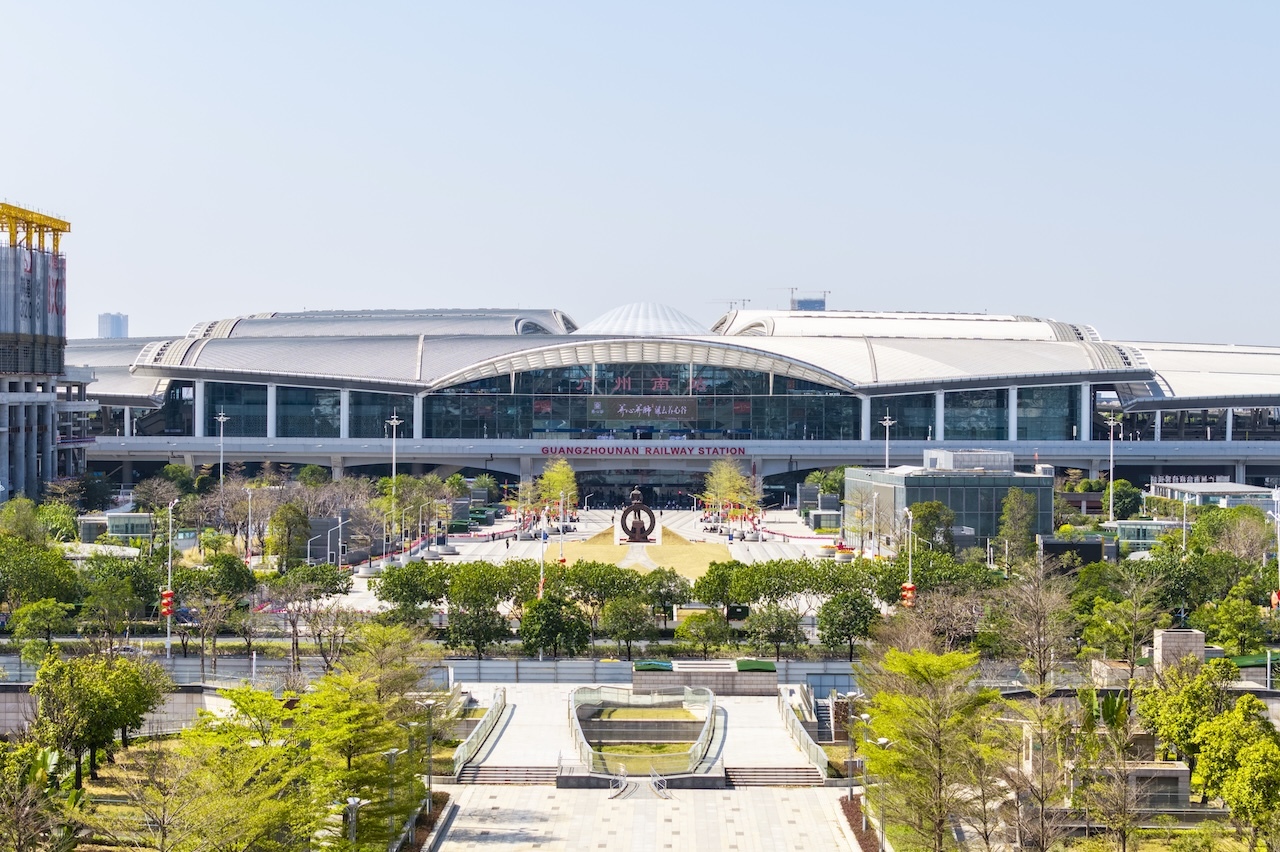 |
|
The east square of Guangzhou South Railway Station. Photo courtesy of Tim Wu |
Guangzhou moved early to integrate its metro, intercity rail and high-speed rail networks to make travel relatively seamless, Peng said.
The station also ran 202 overnight high-speed services on Oct. 1, about one-sixth of the day's departures, according to the publicity department.
China State Railway Group expects 284 million passenger trips nationwide over the 16-day travel period from Sept. 23 to Oct. 8, which covers the Mid-Autumn Festival and the National Day holiday, Xinhua reported.
To prepare for the holiday rush, Guangzhou South expanded its transfer areas and departure lanes, improved passenger information services and added trains based on ticket wait-list data, the department said.
The extra services increased capacity to major cities including Shenzhen, Changsha, Nanning, Zhuhai, Zhengzhou and Chongqing. Trains from Guangzhou South reach 196 cities, including Beijing and Hong Kong.
"When you add all this together, it's not rocket science to see why Guangzhou South is as busy as it gets," independent railway specialist David Feng told the South China Morning Post.
KioskNews shows a cleaned-up reading view extracted from the publisher’s page — the original always lives on their site, not ours.