Iran buries victims of reported US wedding attack, fires on Kuwait
Already have Rappler+?
to listen to groundbreaking journalism.
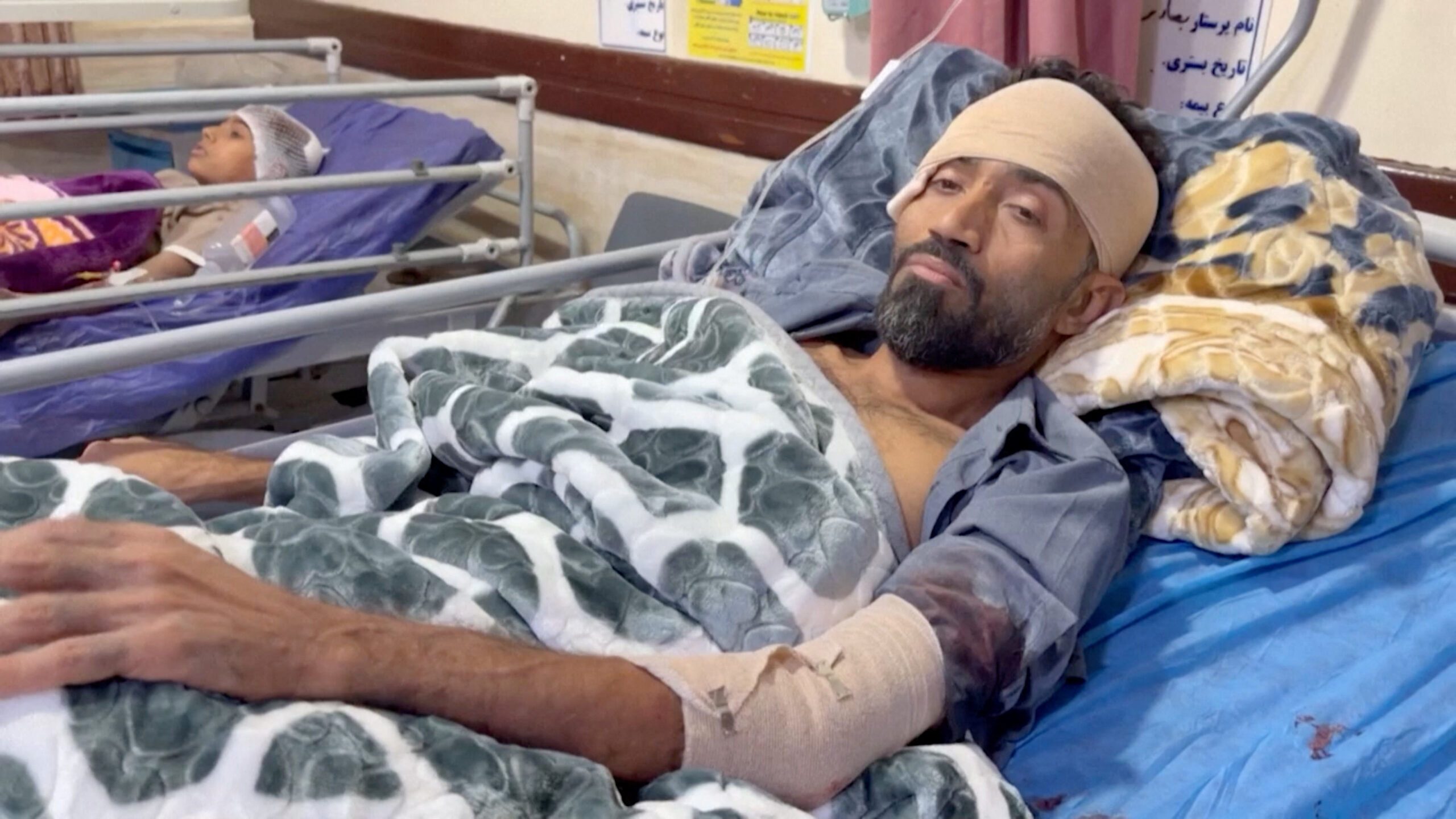
INJURED. An injured victim lies in a hospital bed following an attack at a wedding near Sirik, a coastal area on the Strait of Hormuz, the Iranian Red Crescent reported, as the United States and Iran engaged in the most significant exchange of fire in weeks, in Sirik, Hormozgan province, Iran, September 2, 2026, in this screen grab taken from a handout video.
via REUTERS
The US is investigating the incident and would learn from any mistakes made by its military, says Vice President JD Vance
AT A GLANCE
- Iranian mourners held a funeral for victims of a US airstrike that reportedly struck a wedding party, resulting in five deaths and nearly 70 injuries.
- In retaliation, Iran launched missiles and drones at a US base in Kuwait, marking the largest escalation in the conflict in over a month, while US officials stated they were investigating the incident.
- The airstrikes have caused a spike in oil prices, and despite the recent violence, the month of August had been relatively quiet in the Gulf following a halt in US airstrikes.
This is AI-generated. Read the article for full context. Report any errors.
DUBAI, UAE – Iranian mourners carried caskets at a funeral on Thursday, September 3, for victims of a US airstrike said to have struck a wedding party, and Tehran launched missiles and drones overnight at a US base in Kuwait, after the war’s biggest escalation in more than a month.
Mourners assembled in the late afternoon outside the village of Kuhestak in Sirik County, along a stretch of the Strait of Hormuz coast that was hit by heavy US airstrikes late on Tuesday, September 1.
Iranian state television on Thursday said that a 22-year-old woman had died in hospital following the strike that hit a home during a wedding, taking the total reported death toll to five. Iranian officials said that nearly 70 were wounded.
US Vice President JD Vance told reporters on Thursday that the United States was looking into the incident.
“We’re investigating it because obviously we care. We want to know,” he said. “If we do make mistakes, again, this is a big difference between us and Iran, when our military makes mistakes, they learn from them to try to get better from them,” Vance added.
The US military said it was aware of the Iranian reports but it “never targets civilians.”
At the funeral for four victims from the wedding, Iran’s Mehr news agency video showed a pickup truck carrying a flag-draped coffin beneath a canopy of palm fronds. A reporter in front of the truck said, “This is the body of Martyr Amir-Mohammad Karimi, a 4-year-old child who was martyred in an attack on the country’s south by the criminal American regime.”
In other footage of the funeral, mourners threw petals into the air as doleful music played from a loudspeaker. A casket was carried past a row of soldiers standing at attention with rifles.
“If it was a military location, it wouldn’t be so painful. This was a wedding ceremony, but they turned people’s joy into mourning,” the semi-official Tasnim news agency quoted a local man as saying.
US heavy bombardments
Washington launched the airstrikes on Tuesday, hitting what it said were military targets along the coast in retaliation for Iranian attacks on shipping in the Strait of Hormuz.
The sudden escalation of the Iran war has caused a surge in oil prices to levels unseen since July. Prices rose for a fourth straight day on Thursday, taking Brent crude futures LCOc1 over $96 a barrel.
Iran reported 18 dead in the last US assault. It responded on Wednesday to the US strikes with attacks on US bases in Iraq, Jordan, Qatar, Kuwait and Bahrain, and carried out further attacks early on Thursday, saying it was targeting another US base, in Kuwait.
Kuwait’s military said its air defenses had intercepted missiles and drones. But following that, the war’s biggest flareup since July appeared to subside, with no more major attacks from either side reported as Thursday wore on.
The month of August was largely quiet in the Gulf after US President Donald Trump abruptly halted two weeks of intensive airstrikes in July, having been warned by his military that Washington was running low on munitions.
Trump has yet to achieve the aims he set out when he launched Operation Epic Fury in February: to end Iran’s nuclear program, halt its ability to attack its neighbors and create conditions for Iranians to topple their leadership.
Iran’s economy has suffered severely from a US blockade. But its clerical rulers remain in power and aim to emerge from the war stronger than before, demanding the lifting of sanctions and hoping to collect fees from ships that use the strait, which carried a fifth of global oil and gas shipments before the war. – Rappler.com
KioskNews shows a cleaned-up reading view extracted from the publisher’s page — the original always lives on their site, not ours.