Global debt worries grow as Trump promises $1 trillion in handouts
The federal Treasury is war-gaming the financial fallout from a surge in global interest rates on government debt, oil prices and inflation amid fears it could drive the Australian and global economies into a recession and force some countries into austerity.
This masthead can reveal growing internal concerns that runaway spending by Donald Trump, high inflation and demand by big tech companies to spend trillions on data centres is at the centre of developing global turmoil that on Thursday contributed to a 1 per cent drop in the ASX200.
The fallout is already hitting taxpayers with a rise in the interest rates on Australian government debt not seen since the tail end of the global financial crisis 15 years ago. And it is likely to cause a headache for the Reserve Bank as it considers its own rate rises that may run directly into an economic downturn.
Treasury last carried out so-called “scenario planning” on an economic threat in March, when oil prices pushed above $US100 a barrel, while it also examined the potential fallout from Trump’s “liberation day” tariffs of 2025.
Now, the department is worried that a rapidly developing confluence of financial headwinds, led by the blowout in interest rates on US government debt, could derail the Australian and global economies.
Interest rates on US debt, which is on track to reach a record $US41 trillion ($57 trillion) by the end of the year, have soared by more than 22 per cent since late February. On Thursday, interest rates pushed higher after markets reacted coolly to a plan by US Treasury secretary Scott Bessent to buy $US6 billion in government debt.
A key factor for the lift in US interest rates is its large budget deficits. This year, despite strong economic growth, the deficit is expected to top $US2 trillion, or more than 6 per cent of US GDP.
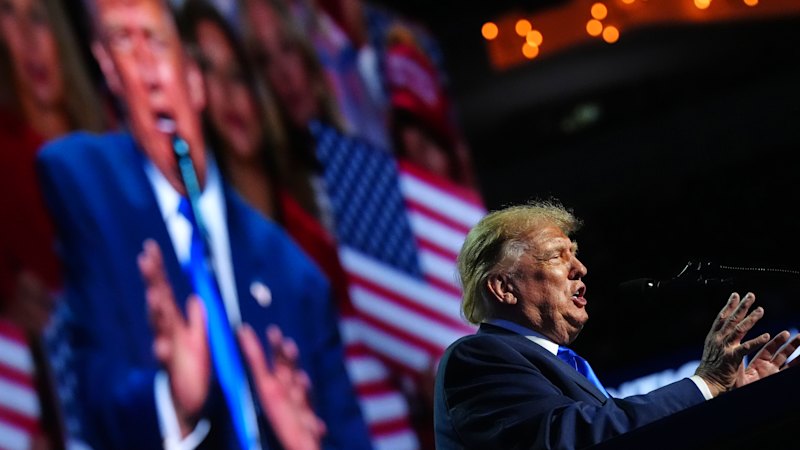
The deficit could widen. On Thursday, Trump promised to give every adult American a cheque for $US5000 should the Republican Party win both the Senate and the House of Representatives at the November midterm elections.
All of that money, estimated to cost at least $US1.3 trillion ($1.8 trillion), would have to be spent within America, adding to the country’s existing inflation issues. Financial markets expect the Federal Reserve to raise interest rates later this month.
Interest rates, both on government debt and those set by central banks, are also climbing, fuelled by concerns inflation will be higher for longer. Oil reached $US101 on Thursday, its highest level since May. Some analysts tipped that it could hit $US120 in weeks.
The rise in interest is directly felt in Australia.
Federal government debt, which has reached $1 trillion, is sold by the Australian Office of Financial Management. At its past three sales, for $2 billion worth of debt that will be repaid between 2034 and 2037, the interest rate was above 5 per cent.
It was the first time since 2011 that three consecutive government bond sales had attracted an interest rate above the 5 per cent mark.
The increase in interest rates on government debt will directly affect taxpayers, who ultimately have to pay the higher interest through taxes.
It’s not just Australia. This week, interest rates on German debt reached a 15-year-high, while rates on British debt reached their highest level since 2007.
The run-up in rates is hitting equity markets. After Thursday’s drop, the ASX200 is now down almost 5 per cent over the past month.
Treasury is looking not only at the fallout from soaring debt and inflation, but also the impact of austerity policies that could be introduced by other countries.
In the 2010s, nations including Britain sought to cut government spending with the hope that it would boost economic growth. In almost all cases, total economic activity slowed.
Treasurer Jim Chalmers, pressed on the higher interest rates on Australian debt during question time, said they were climbing around the world in a development that was a concern for the global economy.
“This is something that the world is watching closely,” he said.
Westpac chief economist Luci Ellis said it was clear there were substantial global economic headwinds, caused in part by America’s “fiscal incontinence”.
She said that while there were concerns in Australia about a budget deficit that was less than 1 per cent of GDP, in the US the deficit was between 6 and 7 per cent.
But she doubted the US would rush to embrace austerity to repair the budget.
“The one country that really needs to fix itself and end its fiscal profligacy is the United States, and that’s hard to see,” she said.
Interest rates on government debt are also being pushed up by the global data centre building boom, with AI companies expected to spend $US1 trillion this year. Private firms are seeking loans around the world, including within Australia, increasing competition for investors’ cash.
But there are concerns that the AI boom itself could collapse upon itself.
Pablo Hernández de Cos, general manager of the Bank for International Settlements, which is the central bank to the world’s central banks, used a speech in India on Thursday to argue the “scale and speed” of the current boom warranted “some caution”.
He said there was a risk that AI firms could overinvest in data centres just as companies had previously spent too much on canals in the US during the 1830s, British railways in the 1840s, and the late-1990s dotcom surge.
“All drew in more capital than eventual returns could justify,” he said. “In each of these cases, the eventual correction that followed had economy-wide implications.
“The consequences of such a correction could be larger than in the past. Households now hold more wealth in equities, so a sharp repricing could pass through more forcefully to consumption.”
Cut through the noise of federal politics with news, views and expert analysis. Subscribers can sign up to our weekly Inside Politics newsletter.
KioskNews shows a cleaned-up reading view extracted from the publisher’s page — the original always lives on their site, not ours.