The Grinch is stealing this Christmas from NAB workers, AI comes next
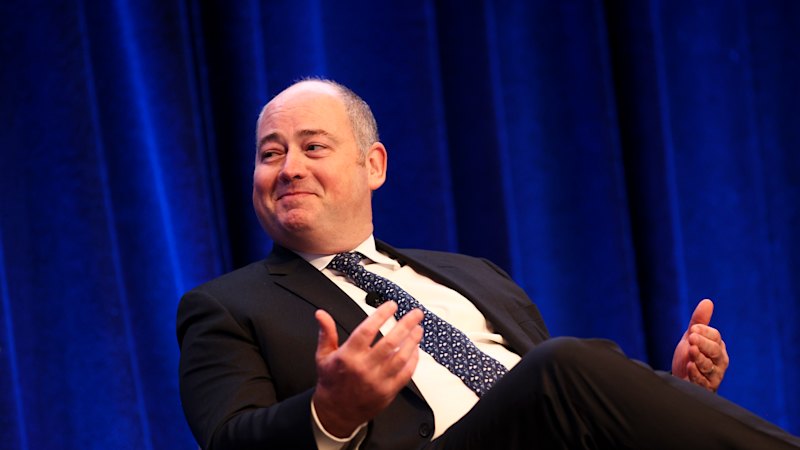
Westpac boss Anthony Miller thought he was issuing a hairy-chested war cry to his fellow employees in August when he bragged – while laying off hundreds of their colleagues – he worked every day of the year, including Christmas.
The comment was later clarified to mean he chatted to his dad about the bank over Christmas lunch, but by then his reputation as the Grinch who stole Christmas was solidly in place.
On Tuesday, his NAB counterpart Andrew Irvine showed us all what a real Grinch looks like.
Barely two months before the holidays, he announced that 1500 employees would be either jobless by Christmas or departing the week after.
The next 60 days will be utter chaos for NAB’s 42,000 staff, given the short timeframe for so many job losses. Another 1000 jobs will disappear by September next year.
Irvine’s clear message was that the bank’s bloated head office bureaucracy would be taking the biggest hit, both here and overseas, with its Melbourne HQ suffering most of the damage.
You don’t lay off 2500 staff and consultants in less than a year without relying on a significant level of successful AI adoption to cushion the impact.
NAB says customer-facing roles will be protected. This is similar to the promise that ANZ made last year when its new broom, Nuno Matos, announced 3500 jobs would be slashed in a similar exercise of simplification of the business to lower costs and focus on growth.
To hear Irvine tell it, there’ll be upside for NAB’s customers from these job losses.
“These changes are expected to improve outcomes for customers by reducing duplication and speeding up decision-making,” he said. “We will improve productivity, risk outcomes and execution to be a simpler and more efficient bank.”
The timing of NAB’s cuts is clearly an overdue reaction to the economic climate and the intensifying competition.
Rising interest rates, slumping property prices and falling productivity – and their collective impact on an economy on the decline – demanded a strong response from NAB, which generates most of its business in Australia.
So does the rising threat of competition from traditional and new digital competitors.
But you don’t lay off 2500 staff and consultants in less than a year without relying on a significant level of successful AI adoption to cushion the impact.
Commonwealth Bank is leading the charge locally in terms of AI adoption, but overseas banks offer a clear example of where things are headed.
Standard Chartered plans to cut around 7000 corporate roles by 2030, using AI and automation. Singapore’s DBS is targeting 4000 roles being outsourced to AI.
But the issues for NAB are more pressing than the need to be an AI leader.
As Jarden’s team of banking analysts, led by Matthew Wilson, point out, traditional banks such as NAB cannot afford to sit still while their business gets disrupted by an advancing wave of fintech rivals and the nadir of a credit cycle looms.
“Being reliant on low-/ no-cost deposits to underpin returns in a world of advancing technology may not be sustainable. A business that fundamentally makes money from customer inertia, inattention and information asymmetry appears misguided and under threat,” was their brutal verdict.
The question from some quarters is why has it taken so long for NAB to cut costs and re-invest in growth areas? Jarden puts NAB two years behind ANZ in transforming its business.
Keep in mind, Irvine has been with NAB since 2020, and has been CEO since 2024. Matos joined ANZ just last year and clearly knew what was needed from day one.
One thing is clear – the message that Irvine has been spreading this year about “Peak Australia” and the dangers of not lifting our productivity and adopting AI strongly applies to his bank.
“Lifting productivity must be the No.1 priority for government at all levels. It must also be the No.1 priority for businesses including NAB,” he told the bank’s business summit conference in August.
“One area that will help with our productivity gap is artificial intelligence,” he said. “Organisations that do not adapt quickly to AI will fall behind.”
The question for local NAB employees that survive this round of job cuts is whether AI will save NAB and kill their careers.
Barely a week ago, Commbank chairman Paul O’Malley warned his staff that there were no guarantees about their future as the bank adopted AI and tried to fend of a new breed of competitors.
“There’s no ability to give a blanket commitment to any individual or to the nation. We are seeing competition today come from tech firms outside of Australia, who are deploying AI and taking Australian businesses out of the value chain,” he told investors at the bank’s AGM.
Bank workers are not the only ones who should take heed of the warning.
The Market Recap newsletter is a wrap of the day’s trading. Get it each weekday afternoon.
KioskNews shows a cleaned-up reading view extracted from the publisher’s page — the original always lives on their site, not ours.