North Korea’s latest provocations look familiar, but the dynamics have changed: Analysts
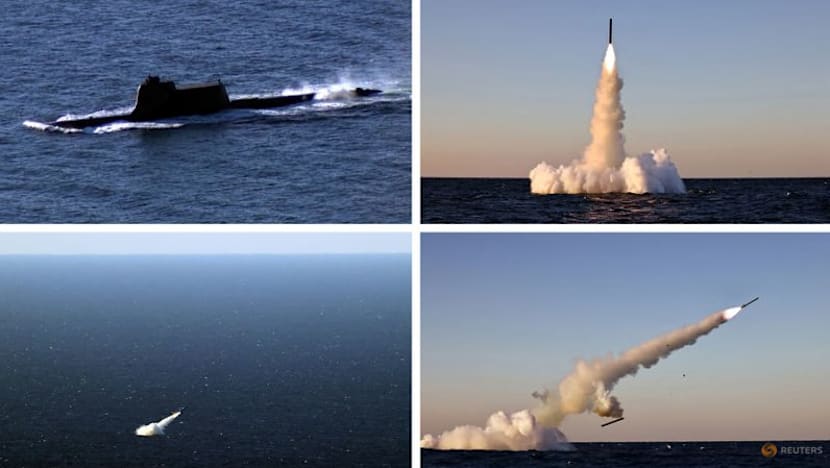
SINGAPORE: Tensions between North and South Korea have been running high in recent weeks - with a fresh wave of weapons tests and cross-border disputes fuelling concerns about the risk of an unintended military confrontation that could spiral into a wider conflict.
Relations between the two Koreas have entered a “fundamentally different phase”, experts told CNA.
“We are not in a conventional cycle of provocations, but nor is the situation fundamentally more dangerous than it has been in the recent past,” said Christopher Greene, senior consultant on the Korean Peninsula at International Crisis Group (ICG).
Lami Kim, Korea Chair in advanced technologies, national security and defence at the International Institute for Strategic Studies (IISS) believes “neither side wants a war, which will be hugely costly for both”.
But heightened tensions also “create a risk that events could spiral out of control”, Kim said.
“With Pyongyang seemingly determined not to engage with Seoul, the absence of reliable communication channels increases the danger that a minor incident or miscalculation could escalate into war.”
WHAT’S DRIVING THE LATEST ESCALATION?
North Korea has stepped up military activities in recent weeks, firing around a dozen short-range ballistic missiles off its east coast on Oct 29 and subsequently announcing tests of cluster-bomb warheads intended for tactical ballistic missiles.
On Monday (Nov 2), Pyongyang accused Washington and Seoul of conducting a nuclear war rehearsal during recent joint military drills, vowing to accelerate efforts to strengthen its nuclear deterrent.
The developments also follow weeks of mounting friction along the border.
Landmine explosions on Sep 21 left three South Korean officers severely injured, including one who lost his foot.
Pyongyang has also subsequently threatened to resume propaganda loudspeaker broadcasts and positioned artillery pieces near the frontier, while Seoul proposed military talks on Oct 23 to address border tensions.
Separately, a South Korean army staff sergeant died after suffering injuries at a frontline unit near the North Korean border on Monday, according to the Ministry of National Defense.
Inter-Korean relations have entered a “fundamentally different phase” since North Korea “abandoned its more than 50-year reunification policy and redefined South Korea as a separate, completely hostile state”, said Rachel Minyoung Lee, senior fellow for the Stimson Center's Korea Program and 38 North.
North Korea has treated South Korea as a hostile state since late 2023.
In March this year, North Korean leader Kim Jong Un again called Seoul the "most hostile state", while Pyongyang removed all references to reunification from its Constitution.
“This is not simply another cycle of escalating tensions intended to extract concessions or bring Seoul back to the negotiating table,” Lee said.

North Korea's immediate priority appears to be “completing the work to fortify” what it now considers its “southern border”, without interference from South Korea, Lee added.
Since April 2024, North Korea has been constructing permanent fortifications along the Demilitarised Zone (DMZ), including wire fences, minefields, tactical roads and anti-tank barriers.
It is also estimated to have planted some 960,000 landmines along the inter-Korean border since 2024, according to lawmakers in Seoul citing South Korean military figures.
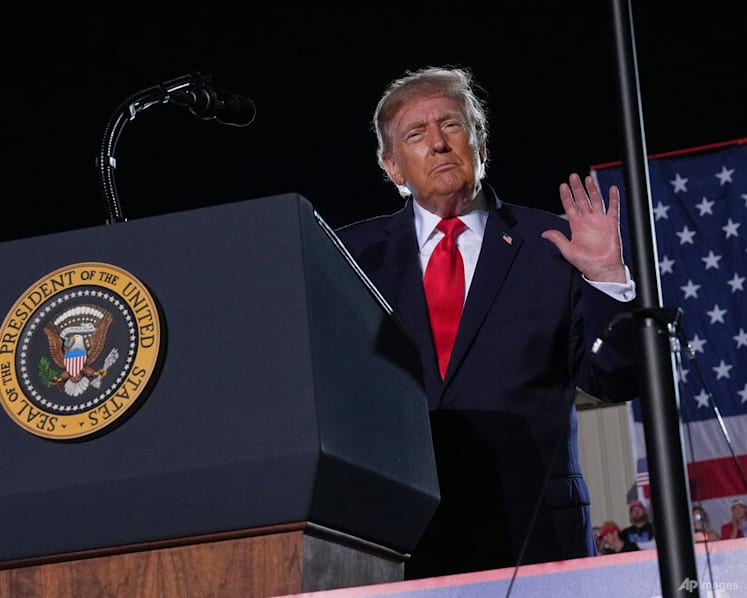
Kim from IISS said Pyongyang’s latest provocations are aimed more at Washington - while seeking to strengthen its bargaining position ahead of possible future talks.
North Korea may hope that heightened tensions will increase demand for risk-reduction measures, she added - creating an opening to seek US recognition of its nuclear-weapon status and security guarantees against attack.
But Stimson Center's Lee cautioned against drawing a direct connection between the latest military activities and potential US-North Korea talks.
North Korea's weapons demonstrations are also part of its ongoing military modernisation efforts, she said.
“There is therefore insufficient evidence to conclude that the latest missile launches were specifically intended to strengthen Kim's negotiating position ahead of a meeting with Trump.”
A SHIFT IN STRATEGIC CALCULATIONS
Analysts note that the latest developments also come as North Korea finds itself in a different strategic position from previous decades - with stronger ties to China and Russia as well as greater confidence in its nuclear deterrent.
"Today, North Korea has reliable allies and is making money through trade with them and through cybercrime," said ICG's Green, referring to news of the Binance crypto heist.
"It has also conducted enough nuclear tests to feel relatively confident in its deterrent capabilities, even if some delivery mechanisms still need work."
In the past, Pyongyang frequently alternated between military provocations and periods of relative calm, using the latter to pursue diplomatic and economic concessions from other countries.
Green said these cycles allowed North Korea to advance its weapons programmes before engaging in negotiations, while replenishing its resources through trade and assistance.
Today, however, North Korea has less incentive to follow that pattern.
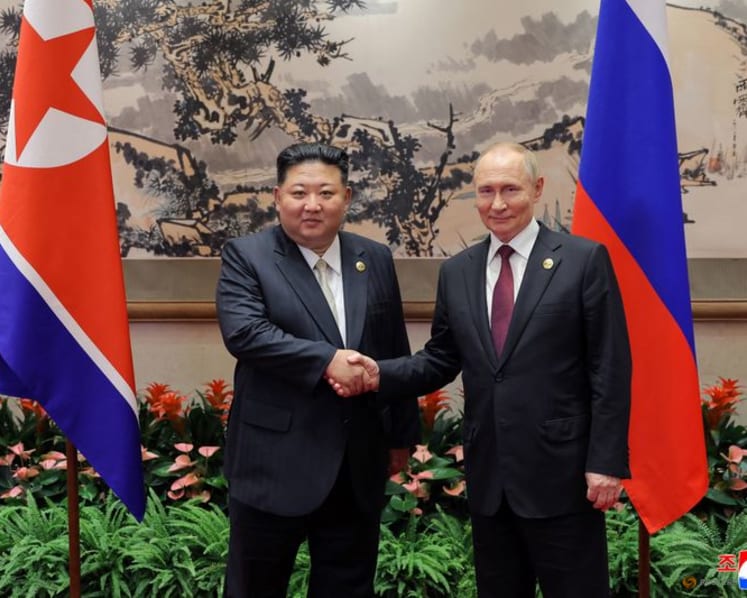
Pyongyang has a mutual defence treaty with Russia and has sent troops and artillery shells to support Moscow’s war against Ukraine.
Green pointed to uncertainty over the conflict’s future as a potential concern for Pyongyang.
Should the conflict ease and Moscow's interest in its relationship with North Korea diminish, Kim may seek to diversify his country's diplomatic and economic partnerships, including by exploring renewed engagement with Washington.
But Green cautioned against interpreting every North Korean military action as an attempt to gain negotiating leverage with the United States.
"We have a bad habit of assuming everything North Korea does is about acquiring leverage for negotiations with the US, and this is not generally the case," he said.
The latest activities could serve several purposes simultaneously, including reinforcing Pyongyang's anti-South Korea policy and signalling the importance it attaches to its relationship with China, he added.
For South Korea, meanwhile, the challenge is to maintain credible deterrence while avoiding an escalation that could lead to armed conflict.
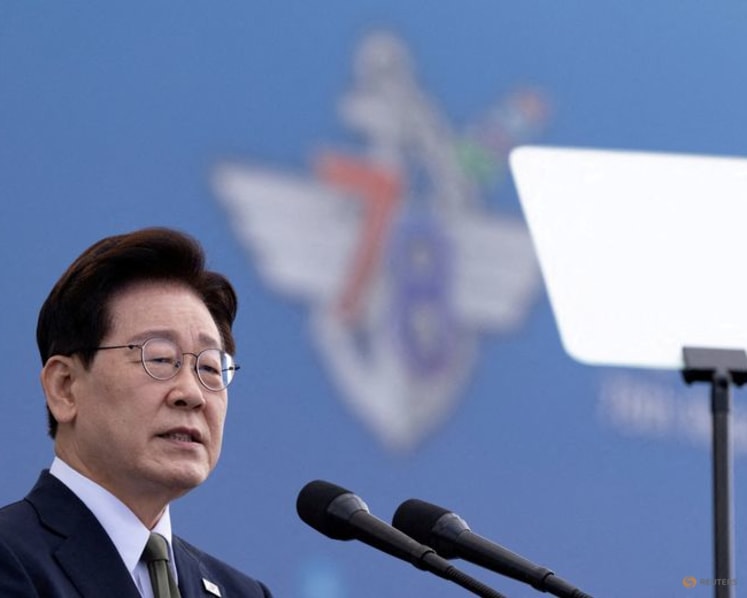
Kim from IISS said the administration of President Lee Jae Myung faces pressure to demonstrate resolve following the September landmine incident, particularly after pledging further retaliatory action over what Seoul said was North Korea's placement of mines south of the Military Demarcation Line (MDL).
The government may feel compelled to demonstrate its military capabilities to Pyongyang while reassuring the South Korean public that it is taking a firm stance, she said.
But Seoul also faces a diplomatic dilemma.
While the Lee administration would welcome a reduction in US-North Korea tensions, it would be wary of Washington pursuing an arms-control agreement with Pyongyang instead of denuclearisation, Kim said - potentially leaving South Korea exposed to the North's nuclear threats.
ECHOES OF THE 2015 LANDMINE CRISIS
The latest confrontation has drawn comparisons with a similar incident that occurred more than a decade ago - when landmine explosions, propaganda broadcasts and military threats brought the two Koreas close to armed confrontation.
In August 2015, two South Korean soldiers were seriously injured by landmines in the Demilitarised Zone (DMZ).
Seoul blamed Pyongyang for planting the mines, an accusation which it denied, and also resumed loudspeaker propaganda broadcasts along the border.
Tensions escalated further when the two sides exchanged artillery fire, raising fears that a localised border incident could spiral into a wider conflict.
But after several days of high-level negotiations, the two Koreas reached an agreement that eased tensions.
North Korea expressed regret over the injuries to the South Korean soldiers, while Seoul agreed to suspend its loudspeaker broadcasts under normal conditions.
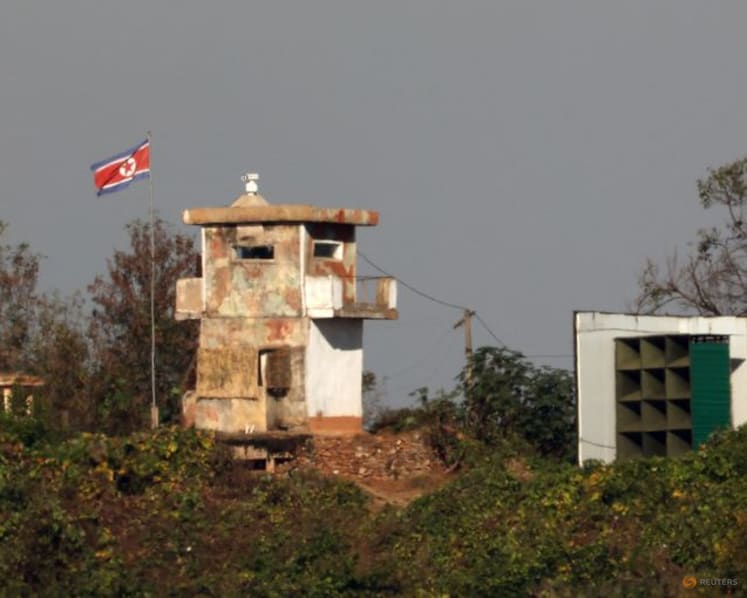
While both crises began with landmine explosions that injured South Korean soldiers, Green from ICG highlighted several key differences.
In 2015, South Korea was led by a conservative government, and there was stronger evidence that North Korea had deliberately planted mines hundreds of metres south of the MDL, he said.
The latest incident, by contrast, occurred much closer to the disputed boundary, making Pyongyang's denial of responsibility more plausible.
He also assessed that North Korea was now more inclined to adopt a hardline response than it was a decade ago.
“These make it hard to use the 2015 case to predict how the current crisis will unfold,” he said.
The 2015 confrontation was ultimately defused partly because South Korea had responded more forcefully than Pyongyang may have anticipated, creating an incentive for the North to pursue diplomacy, Green added.
The political landscape has since changed considerably.
North Korea has explicitly abandoned its longstanding goal of reunification and increasingly treats its southern neighbour as a separate adversary.
Lee warned that this shift also has potentially serious implications for the use of force, as treating South Korea as a separate hostile state removes a longstanding political constraint on the possible use of nuclear weapons against it.
RISK OF MISCALCULATION
One immediate concern is the possibility of an accidental military clash along the MDL, where disagreements over the precise location of the boundary have created competing interpretations of what constitutes a border incursion.
“This creates the potential for a cycle of action and retaliation, even if neither side initially intends to escalate,” said Stimson Center’s Lee.
The “absence of functioning inter-Korean military communication channels have increased the risk of miscalculation on both sides”, Lee added.
The two Koreas effectively abandoned a 2018 military agreement designed to reduce the risk of accidental clashes, while direct military communication channels have remained largely inactive.
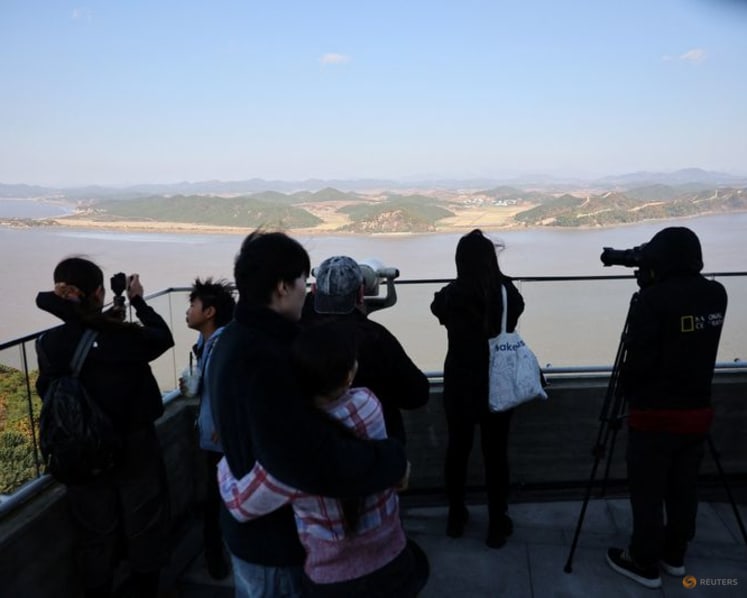
For Seoul, analysts said the challenge is to distinguish between symbolic displays of military force and actions that pose a genuine threat to South Korean personnel or territory.
ICG's Green argued that South Korea's response to the September landmine incident had been too weak, potentially encouraging further brinkmanship from Pyongyang.
“It is important to remain measured, but maintain deterrence against more serious actions that could escalate into war,” he said.
Lee, meanwhile, said Seoul's proposal for military talks to clarify the MDL and restore communication channels was an important first step towards reducing the risk of accidental confrontation, although Pyongyang has shown little interest in engaging.
She urged the United Nations Command to play a more active role, given its responsibility for overseeing the 1953 armistice and monitoring the MDL.
The Korean War ended in an armistice in 1953, but no peace treaty was ever signed, leaving North and South Korea technically still at war.
Despite the recent military activities and increasingly hostile rhetoric, analysts said there are few indications that North Korea is preparing for a major armed confrontation.
Stimson Center's Lee noted that Pyongyang's recent threats over the border dispute have largely been conditional, suggesting it may be seeking to preserve room for manoeuvre rather than escalate tensions further.
She also pointed out that North Korea's official media targeting domestic audiences have not reported on the latest border tensions, with relevant statements appearing only on platforms accessible internationally.
More significant warning signs would include unusual deployments of frontline troops, sustained changes in military readiness or rhetoric aimed at preparing the North Korean population for conflict, she said.
KioskNews shows a cleaned-up reading view extracted from the publisher’s page — the original always lives on their site, not ours.