Tensions erupted between two Sydney councillors. They might have to attend mediation
An inquiry into allegations of dysfunction and maladministration at a Sydney council is poised to urge state government intervention that would require councillors to lift their performance, but has stopped short of recommending they get the sack.
Draft recommendations from the Office of Local Government’s long-running inquiry into Liverpool City Council suggested Local Government Minister Ron Hoenig should consider issuing the organisation with performance improvement orders – a mechanism that gives councils the chance to resolve governance, performance or financial problems before actions such as suspension.
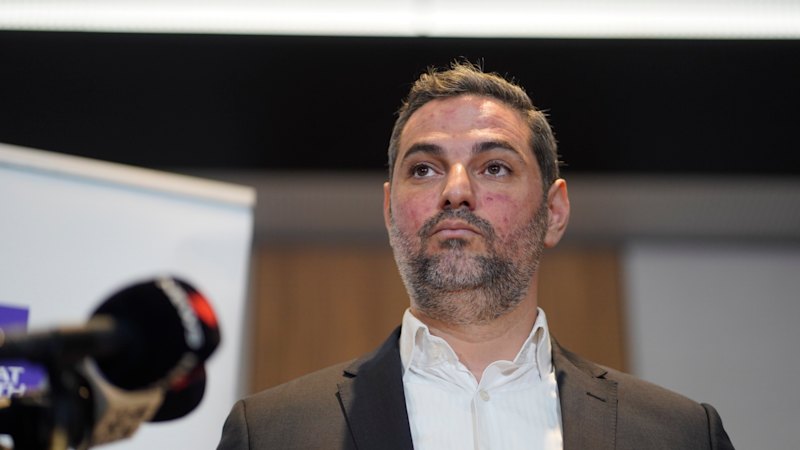
Commissioner Ross Glover, whose report from last year’s hearing is due to be released imminently, also suggested in his draft recommendations that Liberal Mayor Ned Mannoun and his long-time political rival, councillor Peter Ristevski, attend mediation to repair their fractious relationship.
The tensions between Mannoun and Ristevski, who was a Liberal and independent before joining the Family First Party last month, were among matters scrutinised during the 52-day public inquiry.
It examined councillors’ conduct as well as the council’s handling of finances, property purchases, more than $150 million in state government grants for infrastructure, and staff employment – including its revolving door of 10 acting or permanent chief executive officers in eight years.
A spokeswoman for Hoenig said on Thursday the minister had received the final report from the inquiry and was closely considering its recommendations.
Glover distributed more than 40 draft recommendations – related to elected officials, council staff and the Office of Local Government – to parties to the inquiry for their feedback in late August.
The draft document does not include a recommendation for the council to be sacked or suspended; however, the commissioner’s findings and final recommendations are contained in the final report.
Among the draft recommendations is a suggestion that Hoenig consider whether performance improvement orders be issued and, if so, whether a temporary adviser should be appointed to help the council meet its requirements. Councils can be suspended if they fail to comply with the orders.
The draft document also recommends that Mannoun and Ristevski participate in a “structured mediation process” conducted by a person “with appropriate skills and experience in resolving interpersonal conflict, including in the workplace environment, the cost of which is to be borne by the council” within three months of the commissioner’s final report being tabled in parliament.
He suggested changes to legislation that would require a council’s governing body to have a two-thirds majority when deciding to pursue a no-fault termination of the general manager.
The commissioner also recommended the council implement a process to audio-visually record parts of council meetings held in closed session; review recruitment processes and policies to include guidance as to when it would be appropriate to make direct and temporary appointments; and arrange training for councillors on conflicts of interest and respectful debate in meetings.
Liverpool Council declined to comment on the draft recommendations.
Hoenig told a budget estimates hearing this month the cost of the inquiry was $4 to $4.5 million.
The inquiry was triggered by an interim report that was provided to Hoenig in 2024 and prompted him to describe the allegations against council as “the worst I’ve ever seen”. He signalled his intent to suspend councillors and tried to postpone that year’s election until the inquiry was completed.
The report was part of a broader investigation into the council’s recruitment and staffing processes, which the government said unearthed “matters sufficient in seriousness and volume” to warrant an immediate public hearing.
The council launched action against Hoenig in the NSW Land and Environment Court in a bid for the election to go ahead as scheduled.
Judge John Robson found the interim report failed to observe the requirements of procedural fairness as it was published without giving named individuals an opportunity to respond. But he said the government had not unduly influenced the probe, clearing the path for the inquiry to go ahead.
Start the day with a summary of the day’s most important and interesting stories, analysis and insights. Sign up for our Morning Edition newsletter.
More:
KioskNews shows a cleaned-up reading view extracted from the publisher’s page — the original always lives on their site, not ours.