Singapore steps up efforts to turn research into real-world impact under S$37 billion RIE2030 plan
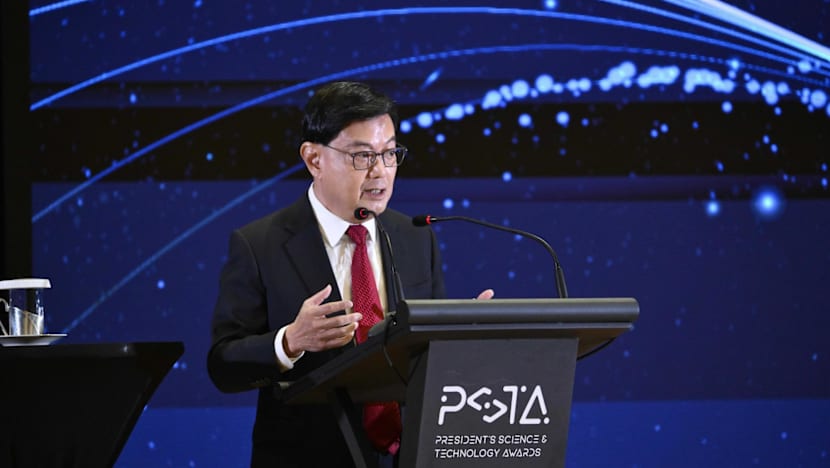
SINGAPORE: Singapore will step up efforts to translate research into real-world outcomes under its RIE2030 plan, with a new grant to help develop early-stage technologies from public research so the private sector can invest in and further develop them.
The National Research Foundation (NRF) released the full five-year plan on Monday (Aug 31), which will channel a record S$37 billion (US$29 billion) in research, innovation and enterprise spending towards national economic and strategic priorities through 2030.
Part of the spending will go to a new Research Translation Grant, which was created to provide a more direct way of working with universities and the Agency for Science, Technology and Research to grow the pipeline of "commercialisable assets", said NRF Permanent Secretary Tan Chorh Chuan.
The move follows findings in a report on the past five years of research spending that commercialisation of research could be improved.
The grant can fund up to S$2 million per project, while projects that have secured early involvement of investors can receive up to S$3 million.
"This helps ensure that commercial considerations are incorporated early in the translation process, improving the prospects of translating promising research into globally investible deep-tech ventures," said NRF.
The 2030 plan also sets out new and enhanced schemes to nurture research and entrepreneurial talent, including an attachment programme for young researchers and scholarships for local students pursuing a PhD.
An additional S$1 billion has also been set aside for the Startup SG Equity scheme to continue investing in early-stage startups.
GRAND CHALLENGES AND FLAGSHIPS
Under the plan, S$3 billion will be set aside for large-scale initiatives dubbed "flagships" and "grand challenges". Semiconductors and longevity were announced as the first two focus areas last December, followed since by transport and connectivity and decarbonisation.
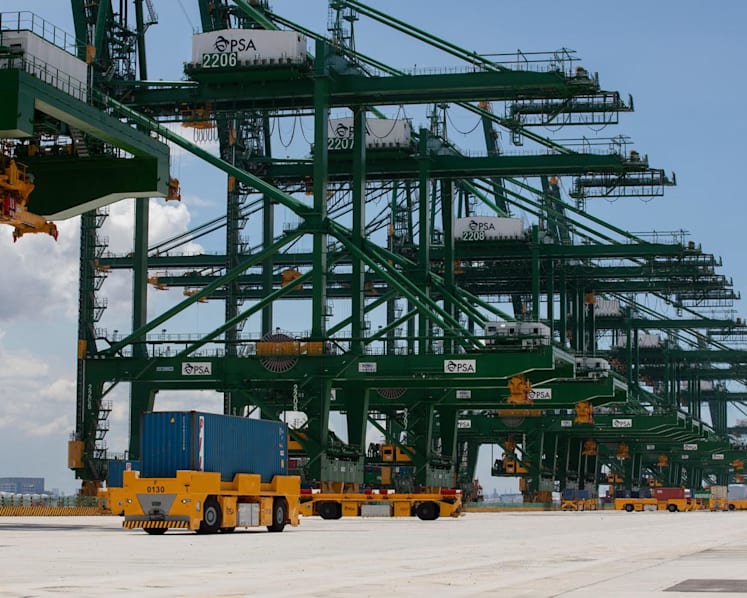
Research into transport and connectivity will cost an estimated S$800 million and aims to strengthen Singapore's status as a global connectivity innovation hub. The Ministry of Transport, which will lead the initiative, said in July that it will support the planning and management of the movement of goods and passengers in, out and through Singapore as a "single, connected system".
Decarbonisation research is also estimated to cost S$800 million, aimed at advancing low-carbon technologies for Singapore's industry and power sectors. It will begin with a programme to co-fund and accelerate low-carbon technology pilots in these sectors.
Semiconductor research will receive S$800 million and longevity research S$350 million. The remaining S$250 million will serve as "a buffer for future, unanticipated needs", said NRF.
PAST FIVE YEARS' RESULTS
The report also detailed outcomes from the S$28 billion invested in research, innovation and enterprise over the past five years, which was S$3 billion more than initially projected.
Research and development intensity in the economy has risen, with more private-sector participation.
Business expenditure on research and development rose from S$5.5 billion in 2018 to S$9 billion in 2023, an increase of about 64 per cent. Industry research and development jobs grew 33 per cent, from more than 24,000 in 2018 to more than 32,000 in 2023, with over 70 per cent filled by Singapore residents.
Singapore's deep tech startups have attracted at least S$1 billion in venture funding annually over the past four years, but the number of deals has declined since 2023.
"This mirrored broader global trends driven by macroeconomic uncertainty, higher borrowing costs and tighter financial conditions," the report said.
To address this, the 2030 plan will forge more public-private funding partnerships to ensure adequate capital for deep tech startups, particularly at the growth stage.
The report also highlighted contributions to national priorities such as the fight against COVID-19 and climate change, with more than 250 research findings resulting in improved outcomes between 2021 and 2024.
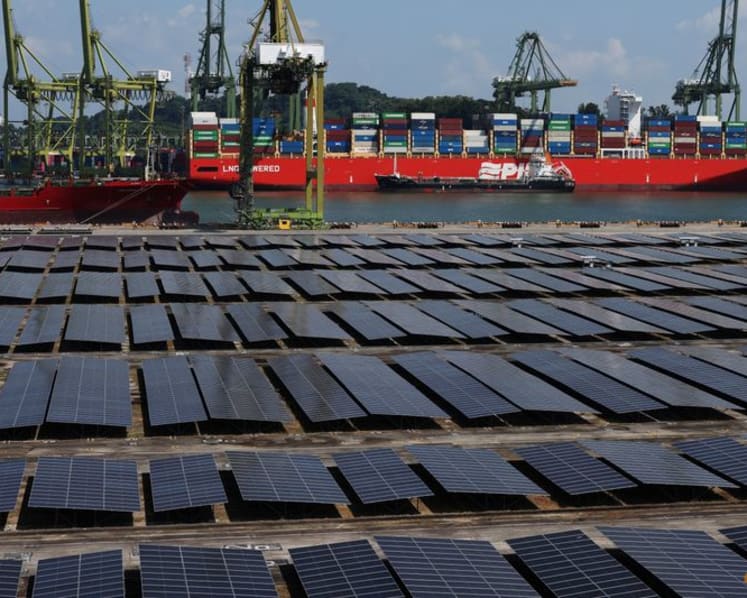
Modelling and simulation studies, for instance, improved windflow in new residential precincts by up to 15 per cent, while research on floating solar farms paved the way for large-scale deployment that could generate energy for 100,000 four-room public housing flats.
NRF chairman Heng Swee Keat said the past five years had shown how research and innovation can improve lives and Singapore's future.
Advancements in key sectors such as healthcare and climate change require more demand-informed research programmes and clear pathways from scientific research to everyday solutions, the report noted, adding that artificial intelligence, data and "leading-edge computational capabilities" are transforming research globally.
Sustained investment over long timeframes remains crucial, as domains such as AI and quantum technologies require decades of prior investment.
"In the coming years, science, technology and innovation will have an even bigger impact on the world, research, innovation and enterprise 2030 plan will build on this momentum to catch the new waves of this technological shift," said Mr Heng.
"We will stay focused on keeping Singapore competitive and resilient on the global stage while creating real impact here at home."
KioskNews shows a cleaned-up reading view extracted from the publisher’s page — the original always lives on their site, not ours.