‘Shane was rascality personified’: the Pogues on their late frontman, anti-Irish prejudice and the feud over Fairytale of New York
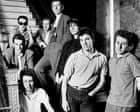
The Pogues earned a reputation early on as a ferocious live band. What does it feel like to be in the middle of that whirlwind? VerulamiumParkRanger
Spider Stacy [co-founder, tin whistle, vocals]: Last Christmas, we did a secret gig in a pub in Nunhead [in London] and it reminded me of those early days when we were so close to the audience, who were practically on top of each other. The venue that most sticks in my mind is the Hope & Anchor [in Islington, London]. We played there to about 35 people [in 1983], but when we went back a month later the match had been struck and it was absolutely roaring. After that, at gigs, there were clothes landing on stage …
James Fearnley [co-founder, accordion]: Medical equipment, crutches …
Stacy: On the reunion tour, someone in Sydney threw a prosthetic leg. It still had a boot on.
On the first single [1984’s Dark Streets of London], Shane MacGowan talks about his experience of electroconvulsive therapy. Did he ever talk about what effect it had on him? Benko
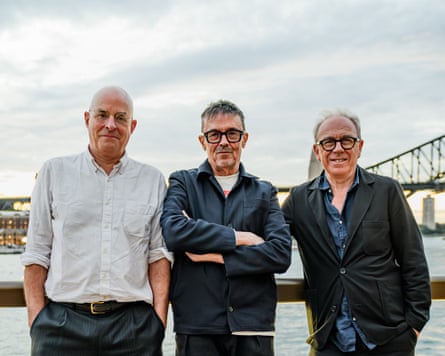
Stacy: He didn’t go into detail. As a teenager, it was probably enormously distressing, but Shane had a mordant humour about it. That single drew on personal experience, but an aspect of his genius was to see the unseen and what goes on in people’s hearts. Walking down the street with Shane, he’d be dishing out pocketfuls of change – banknotes if he had them – to homeless people. He was always aware that “there but for the grace of God go I”. A lot of Irish people had come over to London as builders, or whatever, and fallen into the abyss of drink and chronic unemployment, and there was a lot of anti-Irish prejudice. It could get nasty. Then attitudes became less hostile. I don’t know how much that had to do with us, but I’ve a feeling that we played a part.
My favourite Pogues’ song is Summer in Siam. Do you each have your own? Philip_Larkin_Fan
Fearnley: Lorca’s Novena, about Federico García Lorca [the 20th-century Spanish poet and playwright]. It’s all about freedom of speech and expression.
Stacy: The Broad Majestic Shannon. Such a beautiful song about people leaving Ireland and looking back, but it’s so evocative about love and loss. As with so many of Shane’s songs, it speaks to everyone.
What was the process when Shane brought a new song to the band? MissIdahoPotato
Fearnley: It depended on the song. When he came in with A Rainy Night in Soho, we knew it was complete because he’d dressed for the occasion. He had his nice suit on and these latticed sandals and had the whole thing in his head: “You play this; this little hook goes there.” It was an amazing experience. Other times, he’d have the tune and lyrics, but it could be infuriating having to wring the harmonic structure out of him. Then he’d suddenly say: “That’s how it’s supposed to go.”
Were you part of the panel discussion with Noel Hill [in which the Irish musician described the Pogues’ music as a “terrible abortion of words”] and what was the reaction? RiverboatCaptain
Stacy: When we went to Ireland for the first time [the band formed in London], we were invited on to RTÉ radio for an audience Q&A with people like Noel Hill, an extremely accomplished concertina player who had very strong opinions about how Irish music should and shouldn’t be played. The traditional Irish music establishment basically thought we were a bunch of chancers who didn’t know what we were doing. It backfired because people like Christy Moore and Paddy Moloney from the Chieftains understood what we were trying to do and felt we’d been shabbily treated. The Dubliners took to us like dogs to a bone, because they’d had similar stick when they started. In the studio, we returned fire with fire. Then we titled an instrumental Planxty Noel Hill, which in that particular context means “fuck off, Noel Hill”.
Fearnley: But a gorgeous, fantastic concertina player. He’d be most welcome at our shows.
The Pogues have been through so many changes and challenges. Is there a particular period that you think of as the peak, when the songwriting was soaring and the behavioural and substance issues were under control? RadioFreeNewport
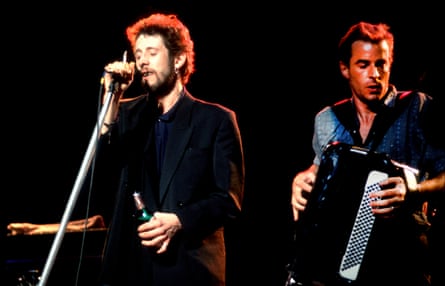
Stacy: Probably ’86 to ’88, until after If I Should Fall from Grace With God. It’s pretty peak now – we’ve no Shane, but we have the songs! – but the wheels always had an amount of wobble. Even at the peaks, you can run out of oxygen or a rope can get frayed.
Fearnley: Or like Jon Krakauer says in Into Thin Air, his book about Everest: you go into the death zone, where everything conspires to your demise.
How was your relationship with Shane after he left the Pogues in 1991 and how did the reunion come about? PalaceCeltic
Stacy: Shane plainly didn’t want to do it any more and his way of letting us know – which I think reflects really well on Shane – was to get drunk or fucked up. With hindsight, we should have suggested he take a year off, but we gallantly got Darryl [Hunt, bass] to tell him he was sacked. Shane’s relieved response was: “What took you so long?” Then we all went out to dinner.
But both Jem [Finer, co-founder, banjo] and I played on the Shane MacGowan and the Popes album [1994’s The Snake] and I saw Shane quite a lot over those years. In 2000, the band’s accountant asked the promoter Simon Moran about a Pogues reunion. My understanding is that other promoters told him: “God no, don’t go near.” So Simon’s very Mancunian response was to think: let’s do it. It was fucking great. Then Shane went: “I don’t wanna do this any more. It was only meant to be one Christmas. It’s been 14 years.”
I saw a fabulous show in Osaka in the early 90s with Joe Strummer singing. Did that experience help to convince you that it was possible to carry on without Shane? Namelessreader
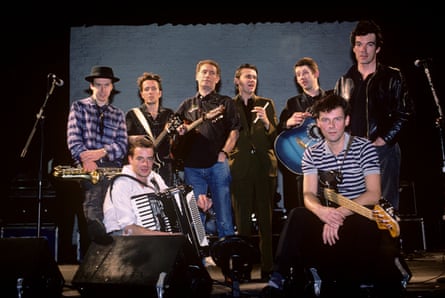
Stacy: Yes. Joe was a real shot in the arm because of his enthusiasm. When he’d previously stood in for Phil Chevron [guitarist and songwriter] on tours in the late 80s, Joe Sellotaped the chord sheets around the body of his guitar, then his eagle eyes would glance down and he’d absorb a lot of information very swiftly. We didn’t announce him. Joe just walked on stage and people thought: “Who’s that? Oh fuck …!”
Your band fell off my radar when Shane wasn’t involved until I woke up hungover one morning in the early 90s and heard Tuesday Morning on the radio. What a great song. Do you regret not pushing on more without MacGowan? shedexile
Stacy: By the time we got to Pogue Mahone [1996], we’d driven ourselves into the ground creatively and it increasingly wasn’t the Pogues. We got dropped [by their record company]. I think there was just Jem, Andrew [Ranken, drums] and myself left, so we thought: “Nah.” We’d had our time.
How close did you get to writing or recording any new material with Shane in the 2001-14 era and do you have any plans for new releases? TheSeamenBand
Stacy: Shane came round to Jem’s house, then Jem and Shane came to mine with the idea of writing new songs, but nothing came of it. We’ve just done Gabrielle for Shane’s tribute album [20th Century Paddy, released in November], but I don’t think it would be right to do new original music. Possibly some Irish stuff. I haven’t given any thought to it.
Was there ever a lyric where you told Shane he should probably change it? AngryTomato

Stacy: No, and we never would have. The BBC asked Shane to change a line in the rereleased Fairytale of New York for Top of the Pops [in 1992] and he did. [Later, in 2020, the BBC censored the song on Radio 1.] One thing that caught my eye was a guy saying that he loved the song, but hearing drunk guys bellowing: “You cheap, lousy faggot,” every Christmas reminded him of being persecuted or beaten up for being gay. So I wasn’t going to complain to the BBC. Then Laurence Fox chimed in on Twitter, saying: “Wouldn’t it be nice if we sent the (proper) version to the top of the charts?” and I replied: “Fuck off you little herrenvolk shite” – a line from Brendan Behan’s Borstal Boy – which went viral.
But we perform the original, bearing in mind that Phil Chevron was proudly gay in Ireland since 1977 and we had loads of gay friends and gay fans who had no problem with the lyric, because they understood the context. It’s two people having a vile argument, flinging whatever abuse they can at each other. It’s interesting that all the focus was on “faggot”, but “old slut on junk” gets a complete pass.
In a TV special about the late Gerry Rafferty, one of his brothers remarked: “Aye, he was a rascal, but he was our rascal.” Would you say Shane was your rascal? ShaunfromWigan
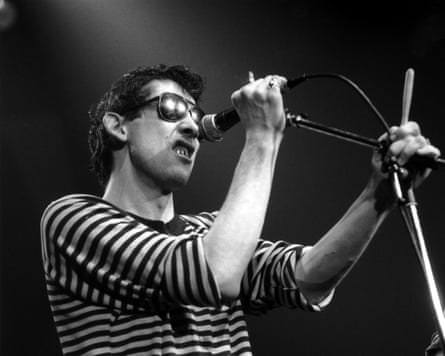
Fearnley: Shane was rascality personified, but one of the most inspiring people I ever came across. The life I have lived because of him … jeez.
Stacy: There was so much going on in his head that he could get cantankerous, but I’m sitting here in New Orleans because of Shane.
Fearnley: And I’m in Los Angeles. In a way, I couldn’t get further away from him, but in a weird way we’re all manacled to Shane.
It’s great to see a new generation of Irish bands like the Mary Wallopers and Lankum coming through. How much of an influence do you feel you have had? RaithRaver
Fearnley: What took them so long?!
Stacy: There’s so much great music coming out of Ireland. The first time I saw Lankum was at Shane’s 60th in Dublin. They did The Old Main Drag and I was mesmerised. Lisa O’Neill is a generational talent. One Leg One Eye and ØXN are dragging some HP Lovecraftian God up from the nether depths. John Francis Flynn is utterly fantastic. Mary Wallopers. Junior Brother. Lucy O’Connell is extraordinary. We’ve been having a blast playing with some of these people and we’ve got some huge talents performing with us now.
Fearnley: On stage, they’ll tolerate this trio of 70-year-olds blithely fumbling around in the middle of people half our age. It’s like taking uncle to the playground, but wonderful.
KioskNews shows a cleaned-up reading view extracted from the publisher’s page — the original always lives on their site, not ours.