South Sudan pushes back elections amid violent flare-ups
South Sudan on Saturday pushed back its first national elections from December to February next year, as the country faces flare-ups of violence and political strife.
Why were the elections pushed back?
Presidential and legislative elections are now slated for February 11, 2027.
"We didn't postpone the elections. We have just adjusted the time to allow other processes to be implemented and that is according to the law," National Elections Commission spokeswoman and Commissioner Josephine Achiro said.
"Article 57 of the National Elections Commission gives us authority to adjust the elections timelines," she added.
Achiro said the postponement of the election date is for voter registration and civic education purposes.
According to the World Bank, the vast majority of South Sudanese lack state-recognized ID, creating challenges for voter registration. Thousands of centers have been established across the country to register voters.
What is the political situation in South Sudan?
South Sudan became independent from Sudan in July 2011 following a referendum. The country has some 12 million people and is one of the impoverished nations on the planet.
From 2013 to 2018, forces backed by President Silva Kiir, a member of the Dinka ethnic group, fought against troops supported by Vice President Riek Machar, who hails from the Nuer tribe. More than 400,000 people died in that conflict.
A fragile peace agreement was achieved between the two sides in 2018, with a national unity government established in 2020.
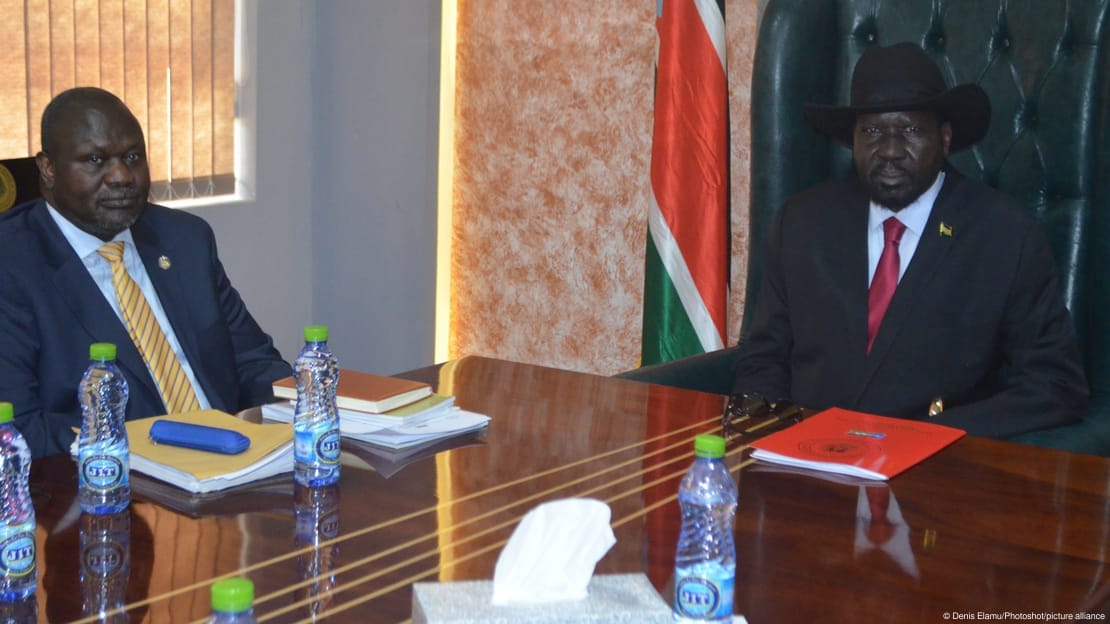
Kiir dissolved South Sudan's transitional government in September ahead of elections, and has since ruled by decree in a caretaker administration. He fired Vice President Machar, who had earlier been charged with treason and is under house arrest.
Despite the peace deal, there are also frequent clashes between the Dinka and Nuer groups loyal to Kiir and Machar.
Growing violence
The head of the UN Mission in South Sudan, Anita Kiki Ghebo, said earlier in the week that violence is increasingand added that approximately 10 million people in South Sudan need some form of humanitarian assistance. She also noted that 1.4 million people have entered South Sudan due to an ongoing conflict in Sudan.
"If left unaddressed, political, security, and humanitarian challenges risk reinforcing one another, further exacerbating tensions adn vulnerabilities across the country," she said.
She has urged renewed dialogue "to focus on establishing clear and credible roadmap for completing the outstanding provisions of the Revitalized Peace Agreement," the formal name for the 2018 peace deal.
KioskNews shows a cleaned-up reading view extracted from the publisher’s page — the original always lives on their site, not ours.