Ghana eyes flower export boom as government moves to build full horticulture industry
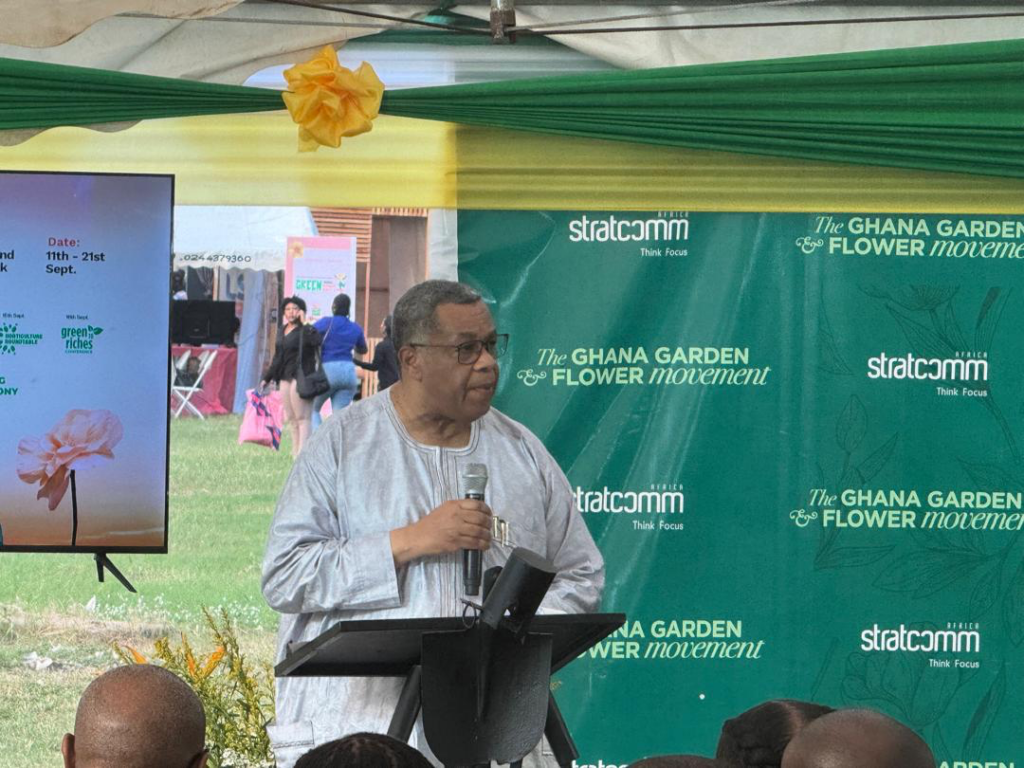
Ghana is positioning its horticulture sector for a major export push, with government working on a cut-flower corridor aimed at connecting local producers to markets in Europe, West Africa and the Gulf.
Presidential Advisor on the 24-hour Economy, Augustus “Goosie” Obuadum Tanoh, said the country must move beyond growing horticultural products to building the full industry around them.
“Producing is not the same as building an industry,” he said.
“An industry exists when production connects to aggregation, processing, logistics, and markets, supported by finance, standards, skills, and technology.”
Speaking on Friday at the opening of the 14th Ghana Garden and Flower Show, Mr Tanoh said Ghana already has evidence that its horticultural products can compete internationally.
He cited Ghana’s $75 million mango exports to 42 markets in 2024, making the country Africa’s second-largest mango exporter.
“Yet, we continue to import horticultural products that we can competitively produce ourselves,” he said.
Mr Tanoh said there is both domestic and international demand that Ghana can tap, including a local market for flowers.
“On Valentine’s Day, we import roses from all over the place to be able to give to our loved ones. So we do have a domestic market. We do have domestic demand.”
He said the government is working through the 24-Hour Economy and Accelerated Export Development Programme to connect production to processing, logistics and markets.
Under the programme, the peri-urban agricultural initiative, Shiqpon, will connect greenhouses and micro-irrigated food production to aggregation, cold storage and markets.
The Tamale Air Cargo Hub, he said, is also expected to strengthen logistics for high-value agricultural exports, including cut flowers, vegetables and fruits.
Mr Tanoh disclosed that the 24-Hour Economy Secretariat is working with a private sector investor to develop a cut-flower corridor along the Daboya-Singa pathway.
The flowers are expected to be airlifted through the Tamale Air Cargo Hub to Europe, Ghana and West Africa, the Gulf and other potential markets.
He pointed to Kenya’s success as evidence of the scale of opportunity available to Ghana.
“Last year, on February 14th, Valentine’s Day, the Kenyans had to contract additional 17 wide-body cargo planes to be able to lift flowers to European markets to meet the demand for Valentine Day flower gifts,” he said.
“We can do the same.”
Mr Tanoh said Ghana’s ambition must also include building an environmentally sustainable horticulture industry.
He said the sector depends on healthy soils, water, land and functioning natural systems, while responsible production can improve water efficiency, protect soils, support biodiversity and strengthen climate resilience.
“Ghana does not have to choose between growing industries and protecting the environment,” he said.
“We can produce more, create jobs, and expand exports while strengthening the natural systems that make that that make our environment grow and thrive.”
He said the goal should be to build an industry that creates jobs and exports while protecting the natural resources on which horticulture depends.
“Green means business, green means beauty, and when we build the systems that allow both to flourish, green can mean so much more for Ghana,” Mr Tanoh said.
DISCLAIMER: The Views, Comments, Opinions, Contributions and Statements made by Readers and Contributors on this platform do not necessarily represent the views or policy of Multimedia Group Limited.
Tags:
DISCLAIMER: The Views, Comments, Opinions, Contributions and Statements made by Readers and Contributors on this platform do not necessarily represent the views or policy of Multimedia Group Limited.
KioskNews shows a cleaned-up reading view extracted from the publisher’s page — the original always lives on their site, not ours.