Ecostani| SIR Politics: A loss of trust for the Election Commission
On Sunday, September 27, the chief ministers of all Bharatiya Janata Party (BJP)-ruled states came out in support of Chief Election Commissioner (CEC) Gyanesh Kumar in a synchronised offensive, accusing the opposition of running a defamatory campaign against him.
For the BJP, such an overdrive is usually organised when the opposition attacks senior echelons of the government such as the prime minister, home minister or finance minister. CMs have never before defended the CEC in this manner, blurring the line between the independent constitutional body and the party.
The opposition has claimed for months that Gyanesh Kumar runs the Election Commission of India (EC) to help the BJP to retain power and accused him of partisanship. Rahul Gandhi, the leader of opposition (LoP) in Lok Sabha, has repeatedly alleged that Kumar has acted at the BJP’s behest, a charge denied by Kumar and the BJP.
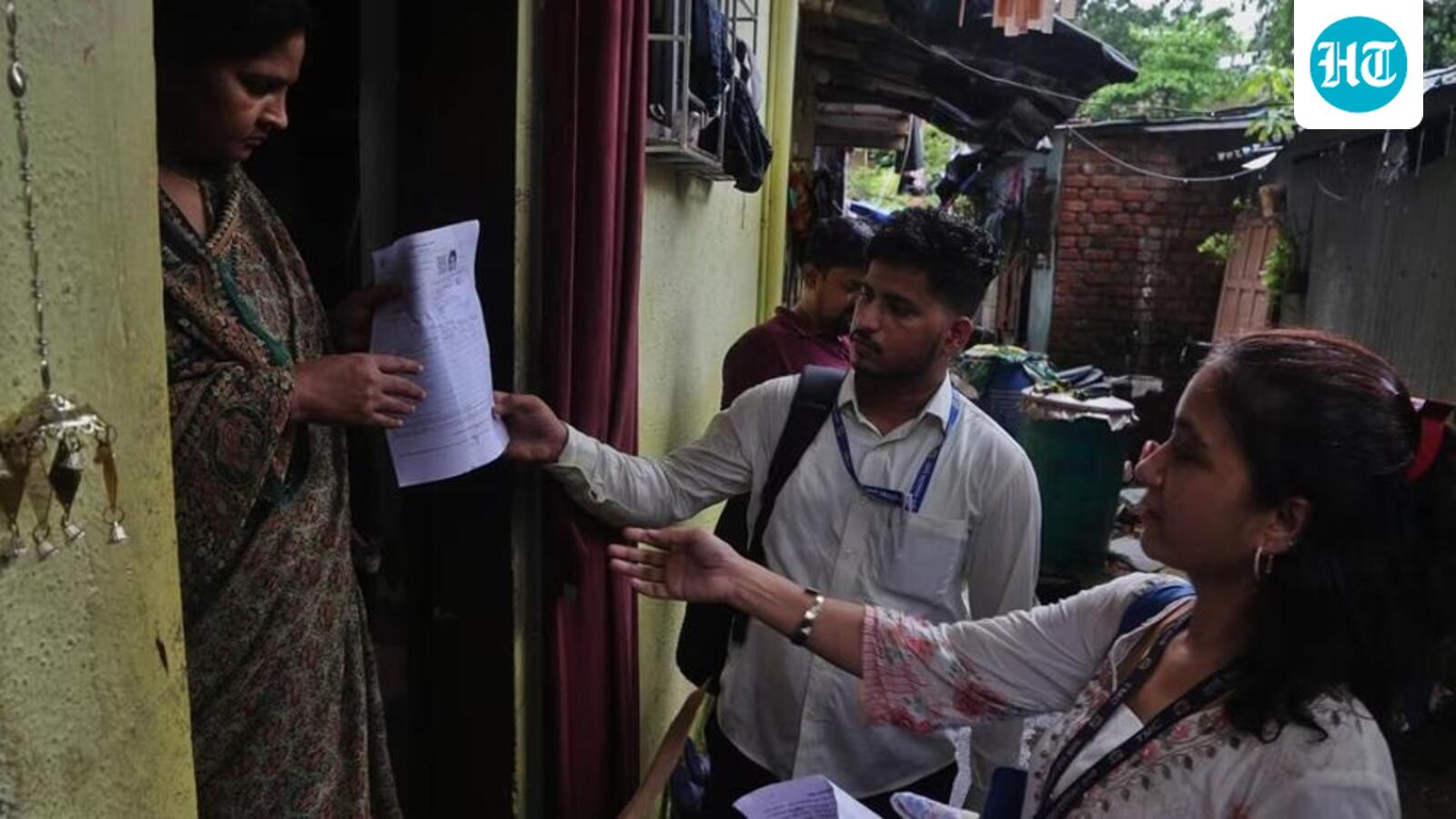
The latest stand-off between the opposition and the CEC arises from the implementation of the Special Intensive Review (SIR), which resulted in the deletion of nearly 13 crore voters, equal to the combined population of France and the United Kingdom.
The EC had invoked its residual powers under Article 324 of the Constitution to conduct the SIR of the electoral rolls across the country.
The powers under the Article are usually invoked in extraordinary circumstances such as banning a leader from campaign for a prolonged period for repeated violation of the electoral laws to maintain sanctity of polls or stopping elections for use of state machinery to help a particular candidate; it is normally not invoked for creating a new electoral roll.
The EC is within its right to use its residual power to conduct the SIR, even though section 21 of the Representation of People’s Act, 1951, mentions intensive review only for part of a constituency. “Notwithstanding anything contained in sub-section (2), the Election Commission may at any time, for reasons to be recorded, direct a special revision of the electoral roll for any constituency or part of a constituency in such manner as it may think fit,” the provision states.
It is clear from a reading of the section that the law does not provide a special revision for entire state or the country as the EC implemented. This could be the reason for the EC to invoke its residual powers to conduct such an extensive exercise beyond its mandate to have a new electoral roll.
As per rules, the EC can undertake yearly revision of electoral rolls and summary revision to remove absent, dead, shifted and duplicate voters, which it did before Assam assembly election this year as the SIR could not be conducted through because of legal issues.
This time, as per the EC, the SIR conducted was to check citizen credentials because the Constitution states that only citizens can vote. So far, the EC has not clarified whether whose names have been deleted are Indian citizens or not.
A look at the three phases of the SIR indicates arbitrariness. In Bihar, from where the SIR started, the absent, dead, shifted and duplicate voters were removed, and it did not result in huge purge in the voters’ list.
In West Bengal’s case, the EC introduced logical discrepancy in the electoral data, and used it to remove about 20% of voters in the draft SIR, which had already purged about 12% of the state’s voters.
The notices issued under the logical discrepancy category were not issued by electoral registration officers (ERO) but by the software in the ERO’s name. The EC also introduced automated form 7 for deletion of voters who failed to submit documents against notices issued under the “logical discrepancy” category.
The EC gave the software (ECINET) power to issue notices and remove voters with the electoral registration officer being used only as a validator. As per the Registration of Electors Rules, 1960, the ERO is the final authority to decide on inclusion or exclusion of person from the voter list, and is not a validator.
By the time, third phase of SIR was started in 19 states including Delhi, the EC had altered Form 6 for inclusion of names in the electoral rolls by incorporating a declaration form linking inclusion with the SIR. It meant that if someone’s or their parents name is not in the previous SIRs, getting into the electoral roll would be an impossible task. On September 26, the EC restored the old form 6 for non-SIR period, enabling many genuine voters to get back their right provided they have prescribed documents such as birth certificate or school leaving certificate.
In all this --- from conducting the SIR to making changes --- the EC did not consult the most important stakeholders, the political parties and elected representatives, a concern raised by them several times. In fact, the EC, in recent years, had restricted its interaction with major political parties by imposing conditions such as only a nominated representative of a political party can meet election commissioners and not more than five members of a party can come inside its headquarters, Nirvachan Sadan, on Ashoka Road in New Delhi.
During the entire SIR process, the EC did not explain its rationale for holding the SIR or making subsequent changes. BJP leaders have said the SIR was being done to identify infiltrators – the EC has so far not said how many infiltrators have been identified through SIR.
The EC introduced logical discrepancy in West Bengal and people learnt about it only when they received notices for the same, reflecting opaqueness of the exercise. In many places, many Booth Level Officers (BLOs), a link between voter and the EC, were themselves clueless about the SIR manual and mapping as they were not adequately trained to conduct the exercise. Amid all this, reported from across India emerged, alleging that the BJP’s Booth Level Agents (BLAs) have submitted application for deletion of voters (form 7) in bulk.
As people struggled to map themselves or their ancestors with earlier SIRs, fill nomination forms and search for documents, a narrative was built that the only beneficiary of the SIR exercise was the BJP. Hence, it had no option but to come out in support of the EC as the narrative was harming the party more than the EC. Therefore, it would not be wrong to say that BJP is not defending Gyanesh Kumar but is trying to deflect negative publicity it received because of messy SIR implementation.
In all this, the casualty is the reputation of the EC. People’s trust in the EC has eroded and political parties appear determined to impeach the CEC for seemingly aiding the ruling party. Voices of dissent against the CEC have also emerged from election commissioners, who are his partners in running the Constitutional body -- a damage that a vibrant democracy like India cannot afford.
KioskNews shows a cleaned-up reading view extracted from the publisher’s page — the original always lives on their site, not ours.