Agri losses from dry spell in Agusan del Sur hit P3.5B
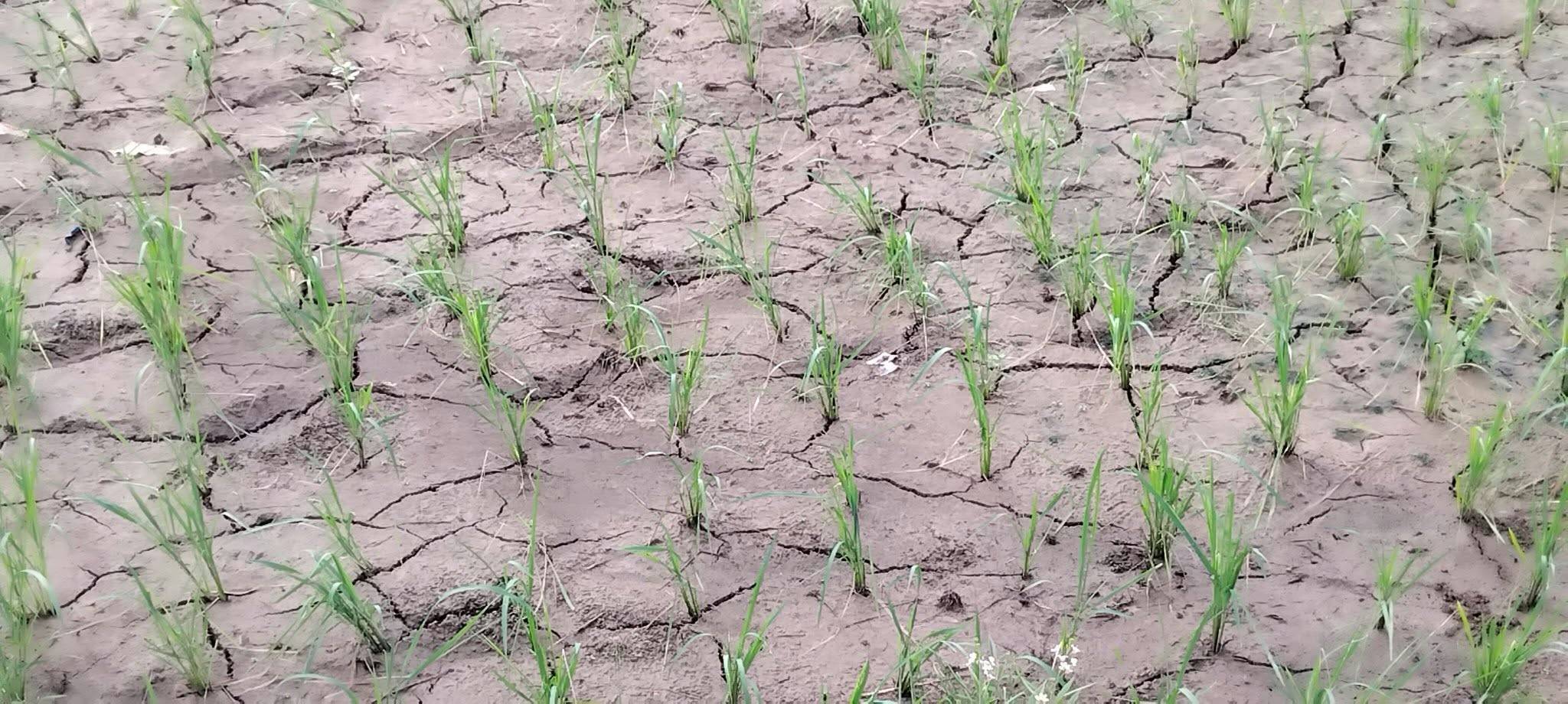

SAN FRANCISCO, AGUSAN DEL SUR, Philippines — Agusan del Sur is now under a state of calamity as prolonged El Niño conditions resulted in P3.5 billion worth of agricultural damage amid reduced water supply, officials said.
Gov. Santiago Cane Jr. approved the state of calamity declaration across the province on Sept. 24, after its approval by the Sangguniang Panlalawigan on Sept. 14. The resolution was made public only on Wednesday.
The Provincial Disaster Risk Reduction and Management Council had recommended placing the province under a calamity state due to the severe impact of the dry spell.
Article continues after this advertisement
READ: Provinces brace for drought, farm losses
FEATURED STORIES
NEWSINFO
NEWSINFO
NEWSINFO
The state of calamity resolution pointed out that 36.4 percent of the province’s agricultural commodities had been affected by the El Niño phenomenon.
Provincial agriculturist Armando Valiente earlier estimated agricultural losses at nearly P3.5 billion, with rice farmers among the hardest hit as water shortages disrupted planting and irrigation services.
READ: Two phases, one crisis: Floods and drought under super El Niño
Over 35,000 hectares (ha) of rice lands had been affected by the prolonged dry spell, leaving about 21,600 farmers unable to plant at the start of the July cropping season.
Article continues after this advertisement
Valiente said the province normally plants about 45,000 ha during the period, but only around 8,000 ha had been planted by August, as farmers abandoned planting due to irrigation water shortage.
Henler Amador of the Lapinigan Farmers Association said July was normally a productive planting period, but many farmers were unable to proceed because irrigation canals operated by the National Irrigation Administration could not supply enough water.
Article continues after this advertisement
Alex Moreno of the Sta. Ana Farmers Association in San Francisco town said he skipped planting palay for this season.
“I was supposed to plant last July, but I decided not to continue because of the effects of El Niño. I should have harvested it this September,” Moreno said.
Water shortage
Other crops, including corn and vegetables, have also been affected by the prolonged dry conditions.
Farmer Senen Maglente said he had to spend about 40 liters of diesel to operate a water pump and tractor for land preparation, adding to the cost of farming during the drought.
The impact of the prolonged dry spell has also extended to communities dependent on surface and watershed sources.
Elmer Luzon, general manager of the San Francisco Water District, said the Magdiwata watershed and the water system in Barangay Mate had recorded “no rainfall sufficient to replenish their sources.”
Cane warned that the prolonged dry conditions could further reduce farm production.
“The prolonged dry conditions are already affecting our farmers. Their harvest will certainly be affected,” the governor said.
He also warned that the dry spell could continue into the first quarter of 2027.
“There is already an impending crisis. We need to prepare for the worst that could happen,” Cane said.
The provincial estimate of P3.5 billion in agricultural losses, however, is substantially higher than the figure reported separately by the Department of Agriculture (DA) in Caraga region.
In its Sept. 23 El Niño damage-and-loss bulletin, the DA Caraga Disaster Risk Reduction and Management Operations Center placed the region’s total agricultural losses at P197.4 million, of which P151 million was attributed to Agusan del Sur.
Your subscription could not be saved. Please try again.
Your subscription has been successful.
The DA bulletin reported only 4,800 ha of rice lands affected across Caraga, involving 2,688 farmers, with the loss estimated at P178.5 million. /cb
KioskNews shows a cleaned-up reading view extracted from the publisher’s page — the original always lives on their site, not ours.