Thai pitch for bridge role
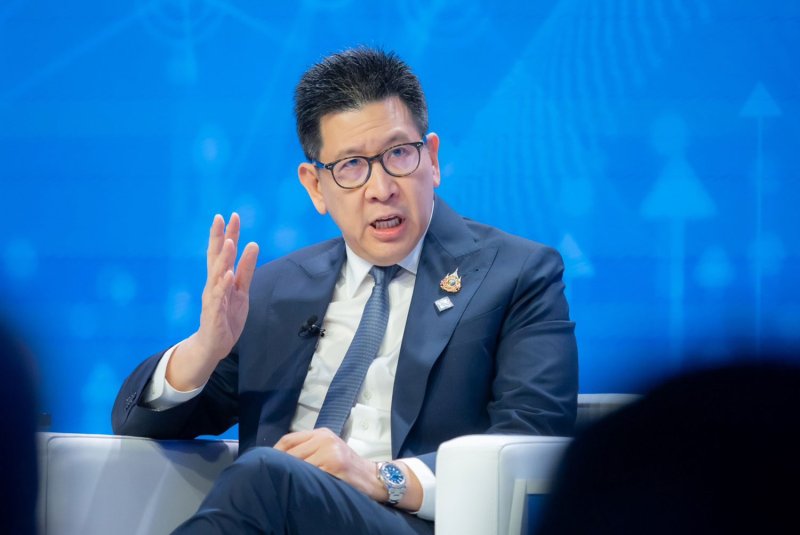
Thailand is committed to serving as a bridge in an increasingly fragmented global economy, standing by international rules and cooperation even as major powers retreat from established frameworks.
Speaking on the theme “Building Resilience in a Fragmented World,” Deputy Prime Minister and Finance Minister Ekniti Nitithanprapas said global challenges had contributed to a “K-shaped” recovery, in which major economies and multinationals thrive while smaller economies and businesses struggle to adapt.
“We believe in international order and a rules-based system, even though the big guys don’t trust that,” Mr Ekniti said on Tuesday, describing Thailand as a middle-sized economy seeking to be a “trusted connector” between major powers and smaller economies.
He said Thailand’s position enabled it to connect diverse economies, globally and across Asean, turning regional diversity into collective resilience. He cited its role in Southeast Asian energy cooperation as a bridge between energy-rich countries such as Laos and high-demand markets such as Singapore.
However, international credibility must be built on domestic trust, and foreign direct investment must bring tangible benefits to local communities and businesses, he said.
“To build trust internationally, you cannot do it alone. You have to do it locally,” he said, stressing the need to integrate local suppliers into global value chains and equip workers with skills for emerging technologies, including artificial intelligence.
International Monetary Fund managing director Kristalina Georgieva warned that economic fragmentation posed a serious threat to global stability and could reduce global GDP by as much as 7 percentage points.
The hidden cost, she said, lay in the “opportunity cost of foregone cooperation”: costly duplication when countries and regions replicate efforts rather than collaborate; stifled innovation when fragmented research and restrictions on cross-border collaboration limit the exchange of knowledge; and the erosion of trust, which weakens international relationships and the cooperation essential to shared prosperity.
She said macroeconomic and financial stability was the first line of defence because it gave countries security as they navigated economic disruption, and the IMF had been urging members to keep their fiscal health in order and their monetary policy in the right place.
Every country faced a choice between diversifying cooperation and self-sufficiency, she said, strongly encouraging members to diversify their partnerships. If European countries integrated their energy grids, all would benefit from lower energy costs, while Asia could grow 1.8% faster over time if it removed non-tariff barriers to trade.
“In other words, cooperation, integration should not be something in a fragmented world we forget about. On the contrary, we have to work even harder toward it,” Ms Georgieva said.
World Bank Group president Ajay Banga said developing economies were increasingly trading with one another, with such trade now accounting for about 50% of their total, reflecting new regional trade networks. Private capital mobilised for emerging markets had recently reached US$112 billion, supported by investors seeking higher returns.
However, developing countries still struggled to turn their abundant human talent into growth, as a lack of local opportunities held skilled workers back.
KioskNews shows a cleaned-up reading view extracted from the publisher’s page — the original always lives on their site, not ours.