Do you literally need to jump out of bed to be healthy?
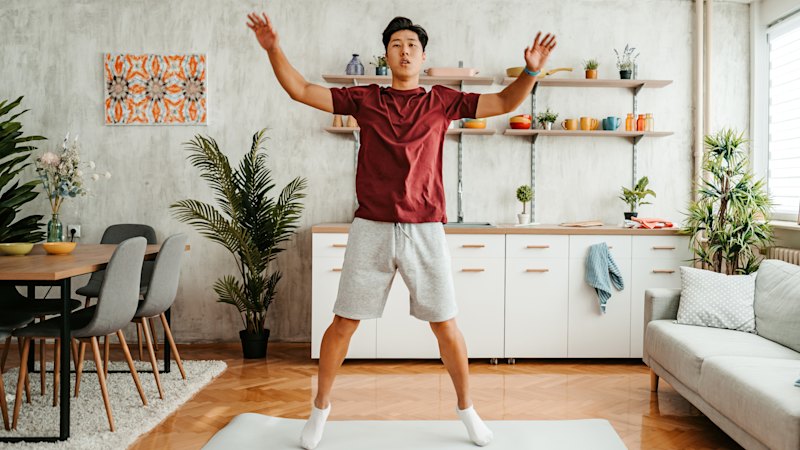
Lymphatic drainage workouts are the latest fitness trend to take over social media.
One circulating workout includes walking while breathing deeply and swinging your arms to drain fluid. But the most popular exercise involves jumping up and down on the spot 50 times first thing in the morning, promising to increase motivation, improve energy and help with lymphatic drainage.
We asked experts whether jumping out of bed has any benefits and whether the lymphatic system needs active drainage.
What are lymphatic drainage exercises?
The lymphatic system is a highway of tiny pipes that transports a protein-rich fluid called lymph, which is similar to the clear liquid in a blister, around our bodies.
Accredited lymphoedema practitioner Nadia Walton explains that the lymphatic system supports your immune system and also manages fluid levels in tissue.
“Your body produces about eight to 12 litres of this fluid each day, which needs to be returned to your bloodstream. Muscle movement helps lymph flow, but your muscles aren’t the lymphatic system’s only pump,” Walton says.
Like many bodily functions, lymphatic drainage is a normal and healthy process that occurs without us knowing. Exercise can help with drainage, but it will occur regardless.
“We do know that movement, as well as deep breathing, assists with lymph transport,” Walton says.
“Deep breathing can help lymphatic flow, so even five deep belly breaths can be an easy way to get things moving ... Walking is great, as is using your arms and doing some arm pumping. If you are sitting at a desk for long periods, even small movements such as ankle pumps or seated marching can help.”
Hands-on treatments, like deep or lymphatic massages, may also move lymph.
However, for a healthy person who isn’t experiencing chronic swelling, it isn’t a necessary concern.
“You don’t need to think about or actively ‘drain’ your lymphatic system,” Walton says.
So, should you hop to it?
Overall, jumping is a healthy way to get some exercise, and if it improves your mood, why not?
There is just no specific evidence to say doing 50 jumps can help with lymphatic drainage, says Walton.
“It gets your muscles working, gets you moving, and is likely to help lymphatic flow as part of that movement,” says Walton.
If jumping is not a viable exercise, Walton says that any form of safe and appropriate movement for your body is a great way to start the day.
“If you are very sedentary, starting with small amounts of movement and building up can be really useful. Think of these as little ‘exercise snacks’ throughout the day,” says Walton.
Sydney physiotherapist and exercise physiologist Laith Cunneen agrees.
Cunneen says that research on exercise snacks has found improvements in cardiorespiratory fitness and muscular endurance.
“Short bouts of exercise can still produce meaningful benefits, particularly when they’re repeated regularly,” he says.
Jumping is also a good exercise in general with benefits to the bones and muscles.
“A 2024 review found jump training improved femoral neck bone density, with about 50 jumps four times a week being the median training dose,” Cunneen says.
If jumping isn’t accessible, Cunneen suggests doing another form of low-impact weight-bearing or resistance exercise, such as a gentle bounce on the toes or heel-raises.
“There’s nothing particularly special about doing them first thing in the morning, though. The best time is whenever you’ll consistently exercise. In fact, one major positive is that this is the kind of activity that can be scattered throughout the day,” Cunneen says.
Overall, Cunneen is a fan of a fitness trend if it works as motivation to get people moving.
“The main thing is not to mistake novelty for magic. Most effective trends work because they use familiar exercise principles in an engaging way,” he says.
Do I have excess fluid?
Lymphatic drainage has become almost synonymous with de-bloating in wellness terms. However, excess lymph fluid in the body could be a medical concern, like lymphoedema, lipoedema and vascular disease.
“Lymphatic overload can sometimes cause swelling that pits when you press your finger into the skin, or you may notice heavy or swollen limbs or a feeling of fullness or tightness in the skin,” says Walton.
She says building healthy foundations – eating well and moving regularly – is what’s most crucial.
“Once these foundations are in place, we can add more specific lymphatic management where it is needed. This might include lymphatic drainage, compression and other strategies to help manage swelling and support the movement of lymph and blood.”
Make the most of your health, relationships, fitness and nutrition with our Live Well newsletter. Get it in your inbox every Monday.

KioskNews shows a cleaned-up reading view extracted from the publisher’s page — the original always lives on their site, not ours.