Grad student finds New Mexico’s first Canada lynx in 25 years
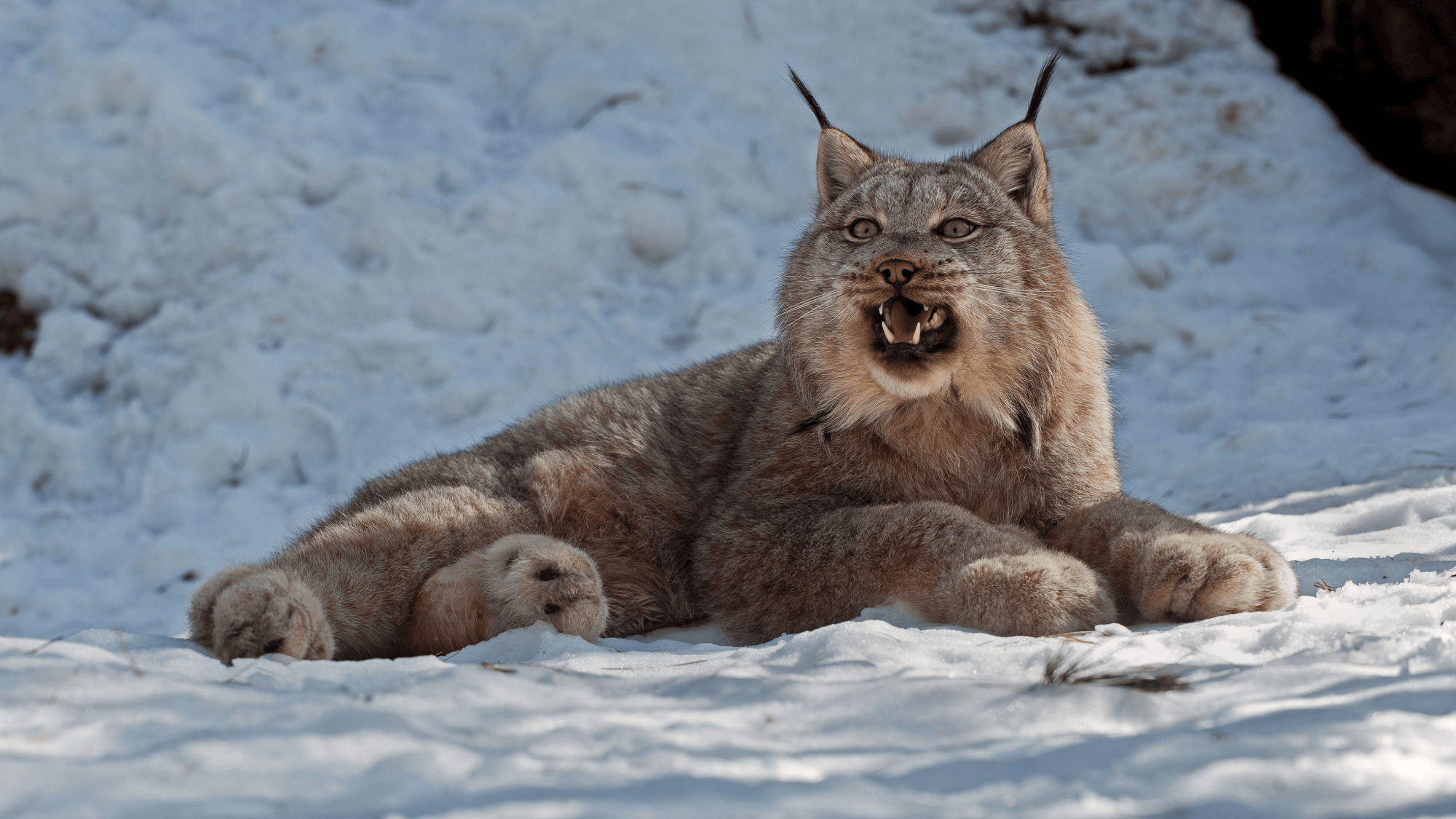
In June, New Mexico State University graduate student William Grooms was using motion-sensing cameras to investigate wildlife in Carson National Forest in northern New Mexico. And when he looked through his first images, he spotted something flabbergasting.
His cameras had captured a series of photographs of a Canada lynx (Lynx canadensis)—a wild cat that hasn’t been documented in the state for around 25 years. But Grooms had to make sure it wasn’t actually a bobcat (Lynx rufus), which is a similar-looking species.
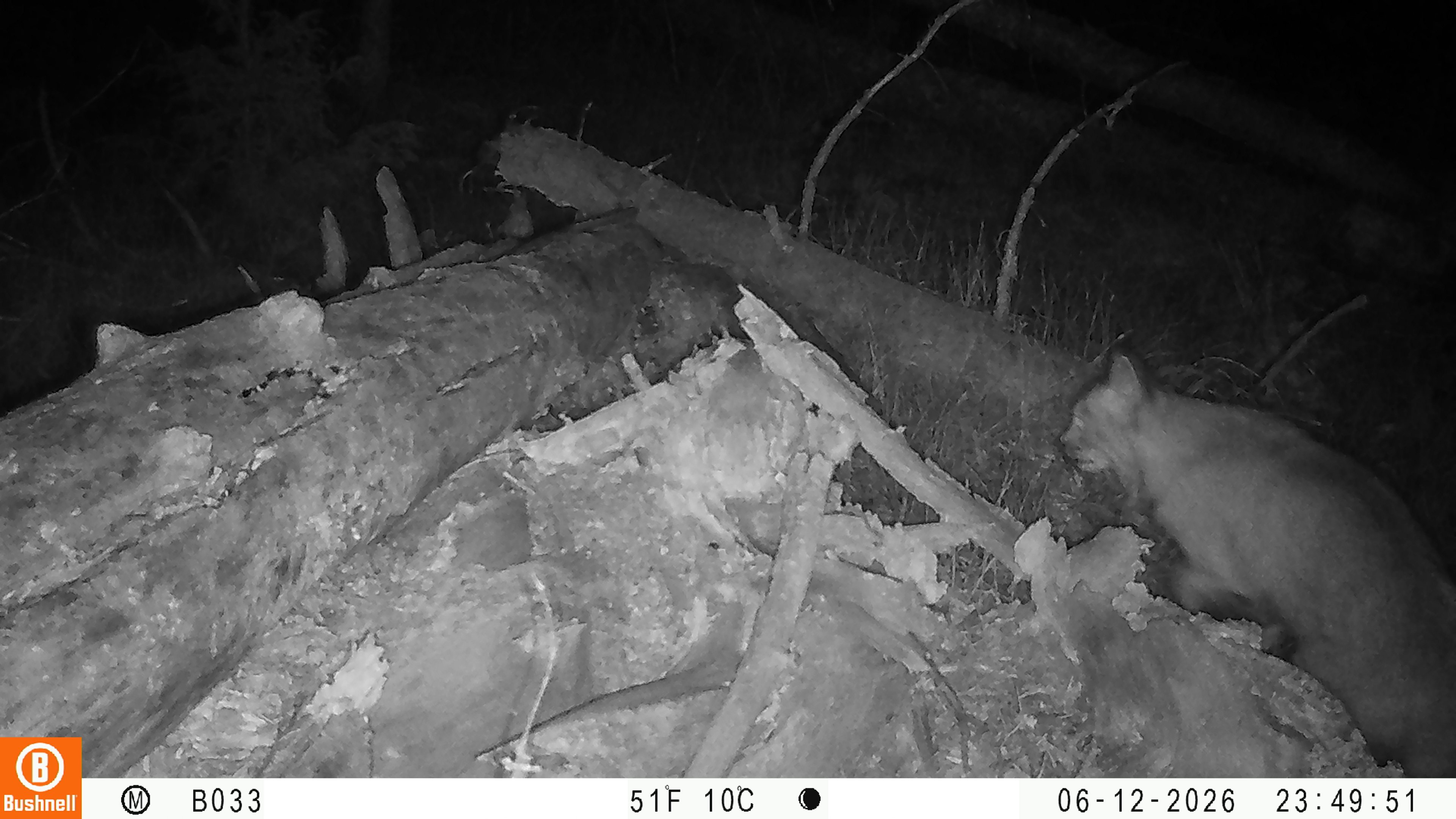
“It caught my eye because the cat in the image had the characteristic ear tufts and facial ruff [of bobcats], but it was lacking the black spots that are typical of bobcats,” Grooms, who is studying in the department of Fish, Wildlife and Conservation Ecology, tells Popular Science. “We also have a good image of the tail, which on lynx has a solid black tip compared to a bobcat whose tail has white on the underside, so my confidence grew.”
He and his team also showed the image to other researchers for confirmation. Ultimately, there’s no doubt about the fact that the big cat slinking through the dark was indeed a Canada lynx. The species lives in dense boreal and subalpine forests and woodlands throughout much of Canada and Alaska. They have long legs, grayish or yellowish-brown coats, and wide fur-lined paws.
Their main prey are snowshoe hares (Lepus americanus), which they follow into the forest understory—the ground-level area of downed trees and dense vegetation beneath which the hares hide and live. The problem is that these kinds of habitats are fire hazards. Recent forest fire mitigation efforts include decreasing dangerous fuel loads via thinning, prescribed burning, or timber harvesting.
“While these tactics reduce the risk of severe fires, they also remove important habitat features,” Grooms explains. “Our objective is to provide managers with practical, science-based advice regarding what effects fuel reduction treatments and timber harvesting have on wildlife in the Southern Rocky Mountains so that they can make well-informed decisions as they go about their task of managing our nation’s forests.”
Simply knowing that at least one Canada lynx was in the area provides more data for this mission.
KioskNews shows a cleaned-up reading view extracted from the publisher’s page — the original always lives on their site, not ours.