Only 4 Steamy Thrillers Are Considered Among the Best Films of All Time

Sign in to your Collider account
The steamy thriller is the most disreputable genre in film. Too sexy for critics, too dark for mainstream audiences, too smart for exploitation labels. In fact, most of them deserve the reputation. However, these four do not.
These four used heat, specifically the suffocating closeness of a room with no breeze, the sticky discomfort of clothes clinging to skin, and the feverish exhaustion of a sleepless summer night, to pull the thriller inside out and build something that has never quite been replicated. They are uncomfortable to watch. Despite this, they belong on any honest list of the best films ever made.
1 'Body Heat' (1981)
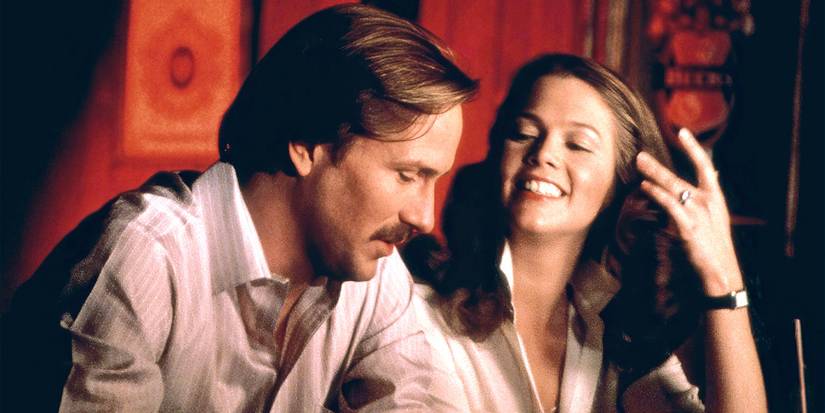
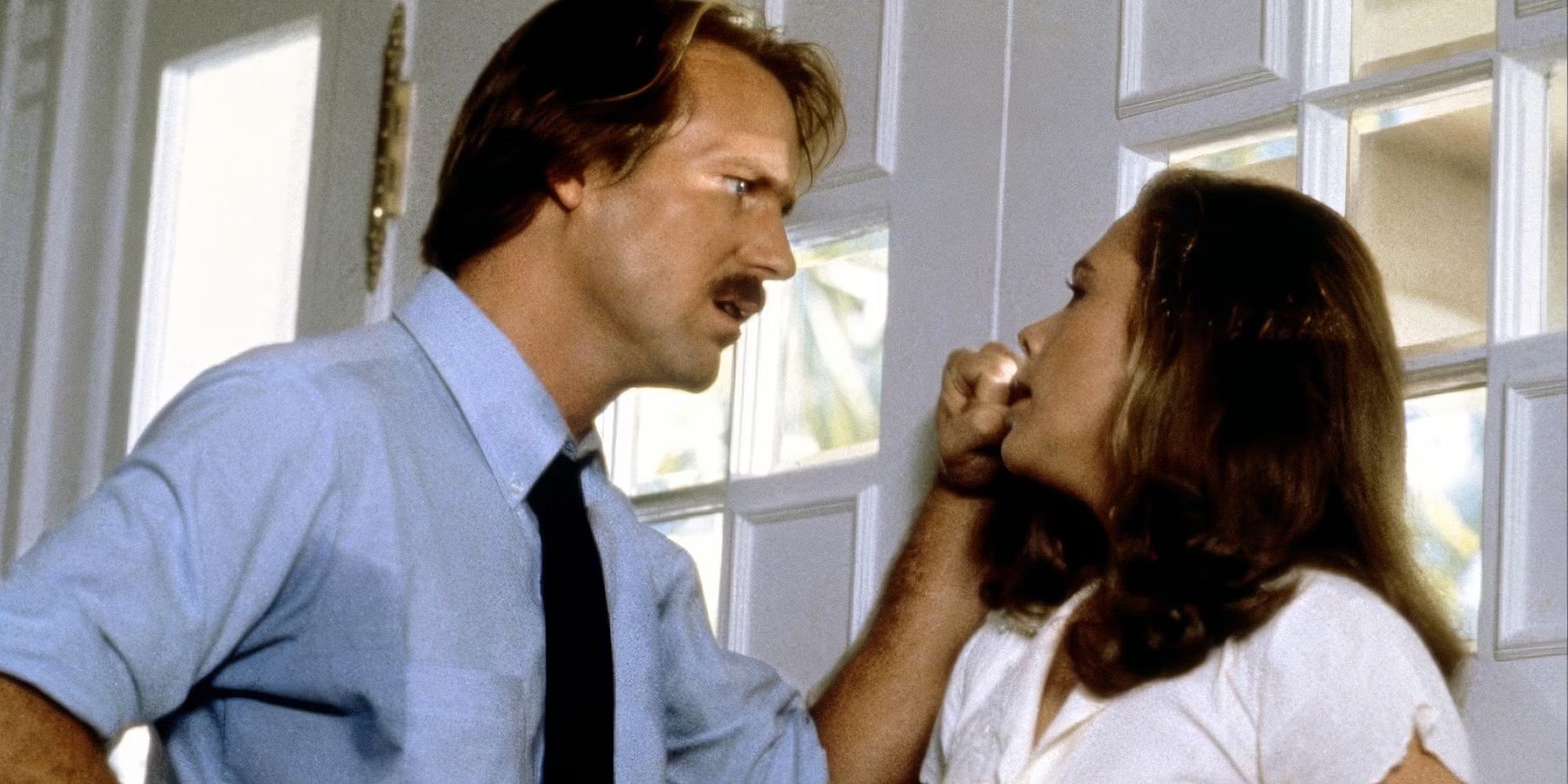
The femme fatale and the mark are noir's oldest equation. Body Heat acknowledges that immediately but doesn't care, because it has Kathleen Turner. Her perfect target, Ned Racine (William Hurt) is a sweating, small-town Florida lawyer with not enough ambition and too much ego. The moment Matty Walker (Kathleen Turner) drifts into his orbit during a heatwave, he is already finished. He just doesn't know it yet. The film traps you in the same Florida humidity he's trapped in with the clinking of ice in glasses, the eerie chime of wind chimes, and the constant uncomfortable sheen of sweat on everyone's skin.
Inevitably, the murder plot, targeting Matty's husband, Edmund Walker (Richard Crenna), is where the film gets its teeth. Seriously, Ned's meticulous, doomed scheme to make a death look like an accident while dodging his own friends in the local police force is a masterclass in watching someone walk into a trap they built with their own hands. And it's the reason Body Heat perfectly walks the tightrope between scorching erotic romance in one scene and razor-sharp legal paranoia in the next. The genius is that both tracks run at full intensity simultaneously. Turner is the engine of both.
2 'Crash' (1996)

Car crashes kill people. This masterpiece immediately strips away that fear and makes you watch what happens next. Trust me, this movie doesn't even try to warm you up first. It follows James Ballard (James Spader) and his wife Catherine Ballard (Deborah Kara Unger), who exist in a marriage that has become an open, permissive, and wholly numb performance. Then a head-on collision throws him into a hospital room with Helen Remington (Holly Hunter), and through her, into Vaughan (Elias Koteas)'s underground world where survivors seek the wreckage out again, deliberately.
The real magic is the atmosphere. I mean, Cronenberg constructs a world of chrome, scar tissue, and orthopedic braces worn like lingerie. Fingers tracing surgical incisions. Knuckles white on a steering wheel at speed. Because of this, the cold, mechanical eroticism is so precisely calibrated that the film builds its own airtight logic. These people are damaged, detached, and the only sensation that breaks through the numbness is velocity and impact. Bottom line, Crash remains wholly unreplicable because this exact blend of clinical detachment and transgression only works once, at this temperature, in this light.
Collider Exclusive · Villain Personality Quiz Which Criminal Mastermind Would Be Your Nemesis? Lecter · Joker · Moriarty · Chigurh
Four of the finest criminal minds ever put on screen. One of them would look at you and see something worth their time. Eight questions decide which one comes for you, why they picked you, and what they would want when they arrived.
🍷Lecter
🃏Joker
♟️Moriarty
🪙Chigurh
01
What would a criminal mastermind notice about you first? Great villains choose their opponents carefully. Something about you got their attention.
02
How do they make first contact? The introduction tells you everything about what is coming next.
03
What do you actually believe about right and wrong? Every nemesis is really an argument about the thing you believe most.
04
What finally gets under your skin? Everybody has a pressure point. Finding yours is the whole plan.
05
They have made their move. How do you fight back? This is the part of the film where the audience finds out who you are.
06
What would they use against you? A good villain never brings a weapon you have not already handed them.
07
What do they actually want from you? The money is never the point. Something else always is.
08
How does it end between the two of you? Eight questions in, this is the one that decides who comes for you.
The Case File Is Complete Your Nemesis Is…
Four criminal masterminds. One of them was always going to be yours. Here is who comes for you, why they picked you out of everyone available, and what they want from the encounter.
Hannibal Lecter
Your nemesis does not want to beat you. He wants to know you completely, and he is patient enough to wait for it. The frightening part is how good the conversation is.
- Lecter is the most dangerous kind of opponent: the one who finds you interesting. He never raises his voice, because he has never needed to.
- You keep a great deal to yourself and you are careful about what you show. That reserve is exactly the door he would knock on.
- The films understood something other thrillers missed. The horror is not the violence. It is being perfectly understood by the wrong person.
- He would be unfailingly polite about all of it. That is the worst part.
The Joker
Your nemesis is not after money, territory or revenge. He is after a demonstration, and you are the person he has chosen to prove his point on.
- The Joker only picks opponents who believe in something. Your decency is not a defence against him. It is the entire reason he showed up.
- He has no plan you can predict and nothing you can take away, which removes every tool you would normally reach for.
- His whole argument is that you are one bad day away from being him, and you would spend the rest of your life proving him wrong.
- He would call it a magic trick. You would call it the worst night of your life.
Moriarty
Your nemesis respects you, which sounds flattering until you work out what it means. He chose you because nobody else was worth his time.
- Moriarty is the original criminal mastermind, the template every later one borrows from: a mind the equal of the hero's, pointed the wrong way.
- You enjoy being the cleverest person in the room. He is counting on exactly that, and he has already built the room.
- This is the rare nemesis who would be genuinely disappointed if you lost badly. He needs the game to be worth playing.
- It ends the way these things always end. Two people, one problem, and only one way down.
Anton Chigurh
Your nemesis has no personal interest in you whatsoever, and that is precisely what makes him unsurvivable. You are not a rival. You are a stop on the way.
- Chigurh does not negotiate, gloat or explain. He arrives, he asks one question, and the answer was decided long before you opened your mouth.
- You trust yourself to handle things. He is the one problem in the world that has no interest in how capable you are.
- No Country for Old Men rewrote the screen villain by removing the thing audiences quietly rely on: the sense that talking might work.
- Call it. He will wait.
3 'Don't Look Now' (1973)
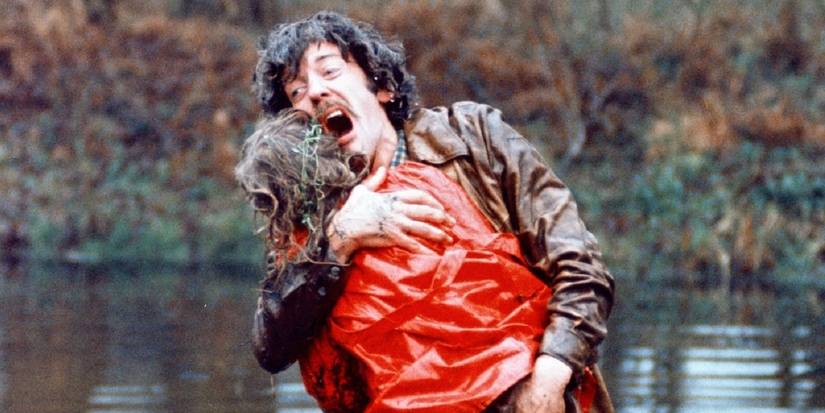
Don't Look Now is the absolute blueprint for the grief thriller, and it established the rules before anyone else had thought to break them. The story starts with John Baxter (Donald Sutherland) and Laura Baxter (Julie Christie), who arrive in winter Venice, already gutted by the drowning of their daughter and immediately the city gets into the wound. Off-season Venice is the right location for grief. The canals are gray. The alleys dead-end. The damp gets into everything. And that is before things even get weird.
The blind psychic Heather (Hilary Mason) and her sister are an intrusion. The red coat flashing in the murky canal water is a torment. Still, what instantly makes this film unbearable and what holds it above everything it influenced is how completely it grounds its supernatural machinery in the reality of a marriage under the strain of child loss. John and Laura are not functioning people. In reality, they are two individuals processing devastation in completely incompatible directions, and the ghost story runs right through that crack. When that final image finally arrives, fear is the least of your problems. It destroys everything.
4 'Mulholland Drive' (2001)

Neo-noir gives you hardened detectives, dead-end bars, and men who have seen too much. But, this movie hands you Betty Elms (Naomi Watts), a bright-eyed actress fresh off the bus from Canada, and a terrified woman calling herself Rita (Laura Harring). Rita is hiding in Betty's aunt's Hollywood apartment with no memory and a purse full of cash. The mystery should feel reassuring. It does not.
What completely separates Mulholland Drive from every film that orbits it is the slow drip-feed of information. The script withholds the nature of reality itself, giving you just enough coherence to follow the story while systematically dismantling your trust in what you are watching. It is pure psychological torture. Club Silencio. The blue key. The box. The film patiently builds an entire emotional world just to completely shatter it. When the movie finally pulls the rug out, it reveals that the dream was the escape and the waking truth is infinitely worse. The starry-eyed Hollywood fantasy eventually outgrows its amnesia premise to become a devastating, nightmarish autopsy of what the city does to people who arrive believing it has anything real to give. It eats them alive.

Mulholland Drive
- Release Date
- June 6, 2001
- Runtime
- 147 minutes
- Director
- David Lynch
- Writers
- David Lynch
-

Laura Harring
Rita / Camilla Rhodes
-

Naomi Watts
Betty Elms / Diane Selwyn
KioskNews shows a cleaned-up reading view extracted from the publisher’s page — the original always lives on their site, not ours.