AMABHUNGANE: UPDATE: Eskom admits to R3-billion in payments ‘outside of contractual terms’
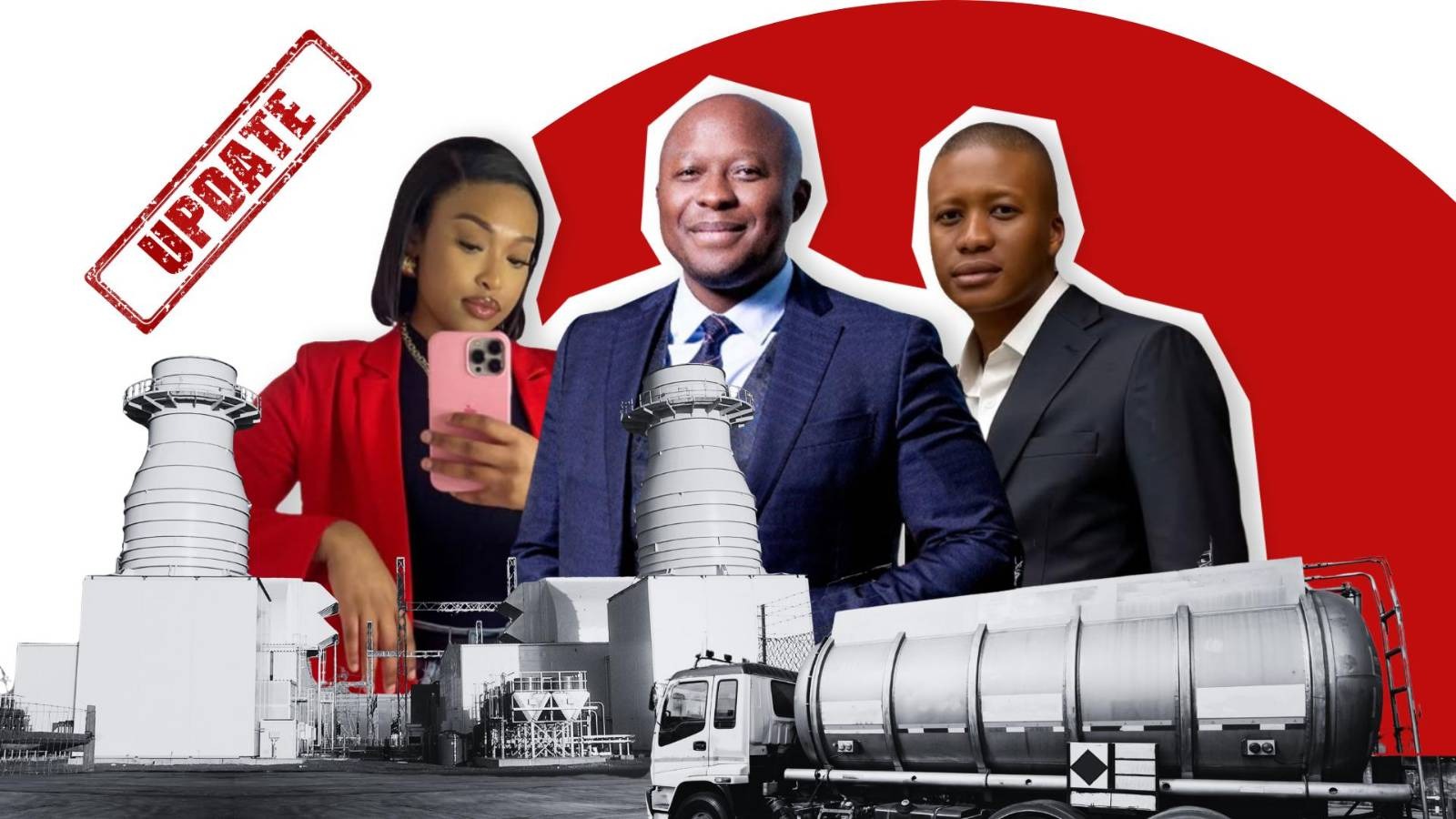
In a seven-page press release on Thursday night, 27 August 2026, Eskom conceded it had made R3-billion in irregular payments to its diesel suppliers. It stopped short of calling these prepayments – as amaBhungane’s investigation has alleged – instead referring to “advanced payments” and “payments outside of contractual terms”.
The flurry of payments was made to three suppliers between January and April 2025, when Eskom was faced with a return of load shedding.
“The period between January and March 2025 placed significant demands on the power system and required rapid operational responses and difficult decisions by employees and executives to maintain security of supply and protect grid stability,” Eskom CEO Dan Marokane said in the statement. “However, operational pressures do not diminish our obligation to comply fully with internal controls and governance requirements.”
Eskom said that it had occasionally made prepayments to diesel suppliers in the past to stave off load shedding, adding: “This may have contributed to advance payment being viewed as an available operational mechanism. However, previous use did not remove the requirement to obtain the prescribed approval or, where action was taken before approval, to complete the required ratification promptly thereafter as per governance processes for handling emergencies.”
What made the prepayments more controversial in this case is that they were channelled to three relatively obscure suppliers who were already struggling to deliver fuel at the pace Eskom needed.
In its statement, Eskom stressed that it was between a rock and a hard place: “Eskom faced a choice between enabling suppliers to rapidly source and move fuel into Eskom’s diesel supply chain or accepting a materially greater risk of prolonged higher stages of load shedding.”
Yet amaBhungane’s latest investigation suggests that prepayments were ineffective at guaranteeing a reliable supply of diesel to Ankerlig.
Minutes from a high-level meeting on 23 February 2025, when Eskom was in the grip of stage 6 load shedding, quote Eskom’s head of generation, Bheki Nxumalo, as saying: “Obviously we’re not happy… these current contractors are just not performing at the levels that we want to see… It’s just too slow.”
By this point, Eskom had already made four prepayments to its diesel suppliers. In the days that followed, one provider, Severino Industries, received another two prepayments: for R379-million and R473-million.
Eskom has not addressed this contradiction, one of many issues glossed over in the press release.
Eskom said that aside from the R3-billion in what appear to be irregular payments made on the current contract, it had also identified R38-billion in irregular expenditure on the previous diesel contracts, which came to an end in December 2024.
“The irregular expenditure relates to expenditure incurred without obtaining approvals from the relevant delegated authority. Whilst no financial loss has been identified, however the matter has been referred to Eskom’s Group Security & Investigation for investigation,” it said.
Eskom added that it had reported both the R38-billion (previous contracts) and the R3-billion (current contracts) to its auditors and the National Treasury.
Yet our latest investigation suggests that the irregular payments on the current contract went on for much longer than Eskom has so far admitted.
While the press release repeatedly refers to the tough operating environment that Eskom faced between January and March 2025, it does not explain why Eskom seemingly continued to make lavish upfront payments to suppliers after load shedding came to an end.
In July 2025, for instance, Eskom made two payments of R360.5-million to one of its suppliers, Lanele Resources, and recorded 40 million litres of diesel as “received” in its SAP accounting system. A year later, only a fraction of that diesel has actually been delivered, making this, in effect, a R721-million prepayment.
In its press release, Eskom repeatedly stressed that “no evidence was found that diesel paid for by Eskom is missing”. Instead, Eskom maintains that the outstanding diesel – which is currently worth more than R1-billion – “is in storage or available on demand when scheduled”.
The last part is crucial: the tender and contracts were clear that payments would only be made after the diesel had been delivered into the suppliers’ storage tanks, which are located a short drive from Ankerlig power station. Vesquin, the local subsidiary of fuel trader Vitol, currently holds five million litres of fuel in storage earmarked for Eskom. The rest – roughly 34 million litres – exists as the equivalent of an IOU: an obligation to deliver fuel when it is needed.
In short, Eskom has shifted the goalposts: while the tender said that diesel had to be “in storage” before payments could be released, Eskom now seems willing to accept that the diesel is merely “available on demand when scheduled” and from a third party (Vesquin) that has no contractual relationship with Eskom.
Eskom also appears to have backtracked on whether the R21-billion tender was improperly awarded.
In May this year, after it received an interim report from its investigators, Eskom said: “As a result of the findings contained in the interim report, Eskom will commence with disciplinary proceedings against several employees who breached our procurement processes. We expect that more employees may be charged once the final report has been issued to Eskom.”
Yet in Eskom’s latest press release, it says that a separate legal review of the forensic report “did not sustain allegations that the procurement award process under Tender MWP2197GX was compromised”. The statement does not mention disciplinary action against any employees. DM
This story was produced by the amaBhungane Centre for Investigative Journalism. Sign up for their newsletter.
KioskNews shows a cleaned-up reading view extracted from the publisher’s page — the original always lives on their site, not ours.