What does the IIT-Bombay suicide tell us? Don’t make learning a test of worth
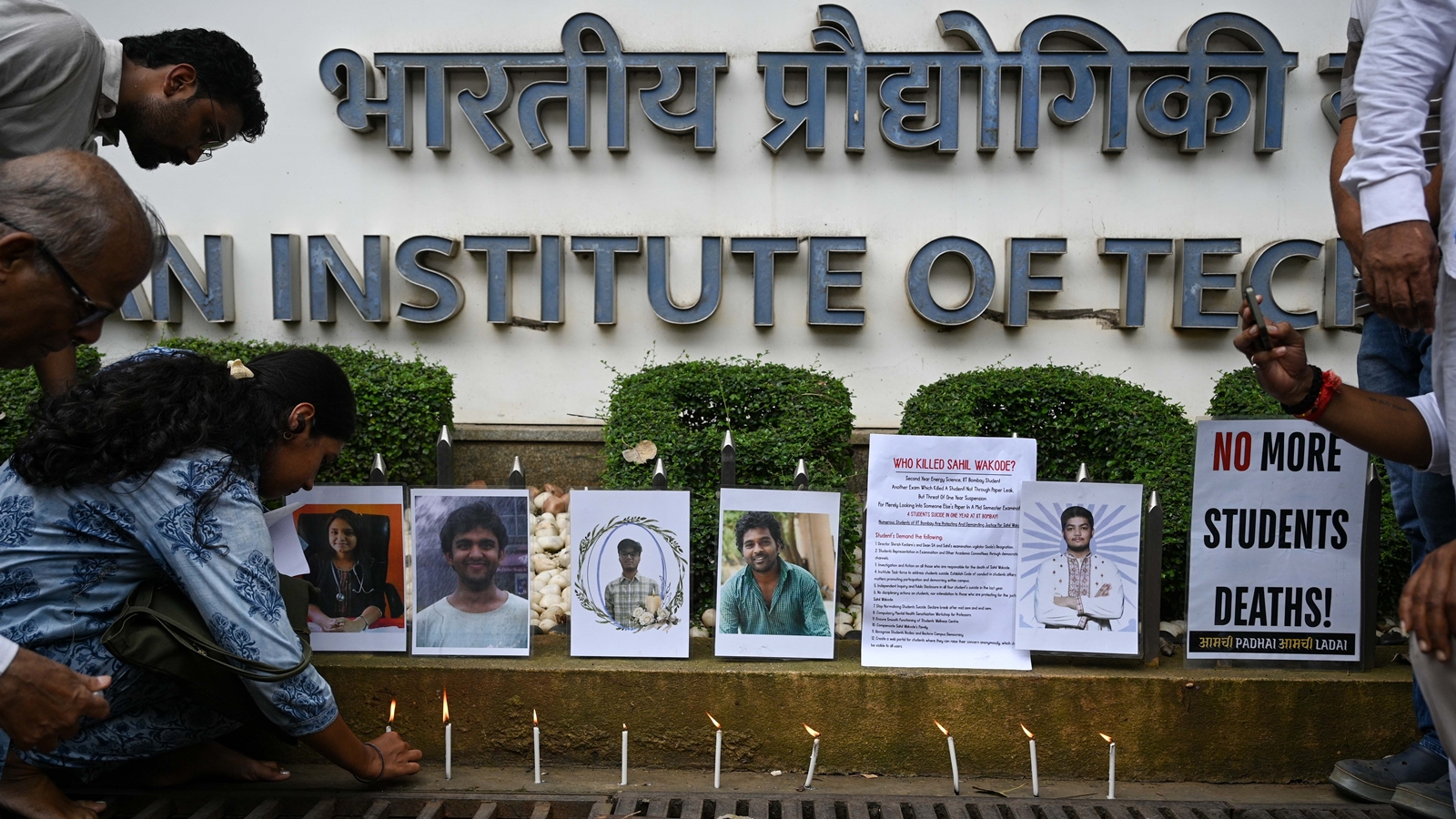
Sahil Wakode died by suicide last Friday after he was caught using his phone in an examination hall (File photo)
5 min readSep 25, 2026 06:14 AM IST First published on: Sep 25, 2026 at 06:14 AM IST
Last week, a young man who might have gone on to become an energy expert — and who knows, contributed to finding answers to some of the vexed questions on oil, fossil fuels, renewables — took his life. The circumstances surrounding his death at one of India’s premier technical institutions, IIT-Bombay, are being investigated. But the sharply polarised accounts of what happened suggest that establishing the immediate cause will not answer the larger questions raised by the tragedy. In the last decade, IITs have seen over 170 deaths by suicide, a large number of them by students from SC and ST communities. What is it about these institutions and the experiences of students within them that can make them feel so isolated and overwhelmed?
Prestigious institutions are, of course, not immune to the strains, power structures, hierarchies and discriminatory practices of society at large. Students arrive from very different social backgrounds and enter a system where the pressure to excel can acquire an outsized importance. For those from marginalised communities, admission does not ipso facto guarantee equality. The burden can be greater still if they also have to negotiate subtle prejudice or the persistent feeling that they do not quite belong.
The immediate response to such tragedies is often to frame them as mental health crises. More counsellors, helplines, wellness centres and greater awareness of distress are all necessary. However, individualising suicidal tendencies and attributing them to personal difficulties or failure of students to cope can obscure the need for institutions to ask difficult questions of themselves, especially relevant in light of the findings of an interim report of the Supreme Court-appointed task force on student suicides, led by retired judge Justice Ravindra Bhat. The report, issued in June, noted that students often see institutional complaint mechanisms as difficult to access, ineffective, or operating in tokenistic ways. For students from marginalised communities, the barriers can be even greater: The fear of not being believed or retaliation may make them hesitant to report discrimination in the first place.
As access to higher education becomes more democratic, its growing diversity is still not adequately reflected in the composition of faculties. The Ravindra Bhat panel described this as a “social mismatch” between the backgrounds of a large number of students and those of their teachers. More than 65 per cent of faculty in IITs, NITs and private institutions are from non-SC, ST and OBC communities. The issue is not just about representation. A more diverse faculty can help campuses understand social differences from within, rather than leaving it to the good intentions of individual teachers. It can foster a stronger sense of belonging and ensure that students facing vulnerability find support as a matter of institutional culture.
The larger question before the country’s higher education system is this: Are institutions willing to examine whether all students have the same space to enjoy the full experience of campus life — friendships, freedom and intellectual discovery — as part of the opportunities that higher education promises? It would be naïve to dissociate education from students’ career ambitions. In a country with a large aspirational class, the promise of social mobility is an important part of pursuing a university degree. At the heart of academic life, however, is something more than examination grades, degrees and the job market: The process of gaining knowledge. The purpose of an institution of learning should be to intertwine the two — preparing students for their futures while allowing them to experience the curiosity that makes learning worthwhile.
But when academic performance becomes an unrelenting measure of worth, the pleasure of learning can itself be overwhelmed. A student who is constantly thinking about grades, rankings, deadlines, evaluations and the consequences of falling behind peers may have little room to follow ideas and engage deeply with what they are taught in the classroom. Today, the ease with which AI can become a shortcut to learning should also prompt institutions to ask what their systems are rewarding: The acquisition of knowledge, or simply the ability to produce the right answer under relentless pressure.
IITs and other elite institutions cannot be expected to insulate students from the vagaries of the economy. But they can decide whether those uncertainties are amplified within the classroom and campus, or whether education gives students, especially those from marginalised sections, the intellectual confidence to confront them. If learning becomes an endless endeavour to prove oneself, the promise of a better future can begin to feed the very insecurity it is meant to ease. The outcomes can be tragic.
The writer is senior associate editor, The Indian Express. kaushik.dasgupta@expressindia.com
KioskNews shows a cleaned-up reading view extracted from the publisher’s page — the original always lives on their site, not ours.