Chemicals to capital goods: What is driving India’s push to indigenise 100 critical items
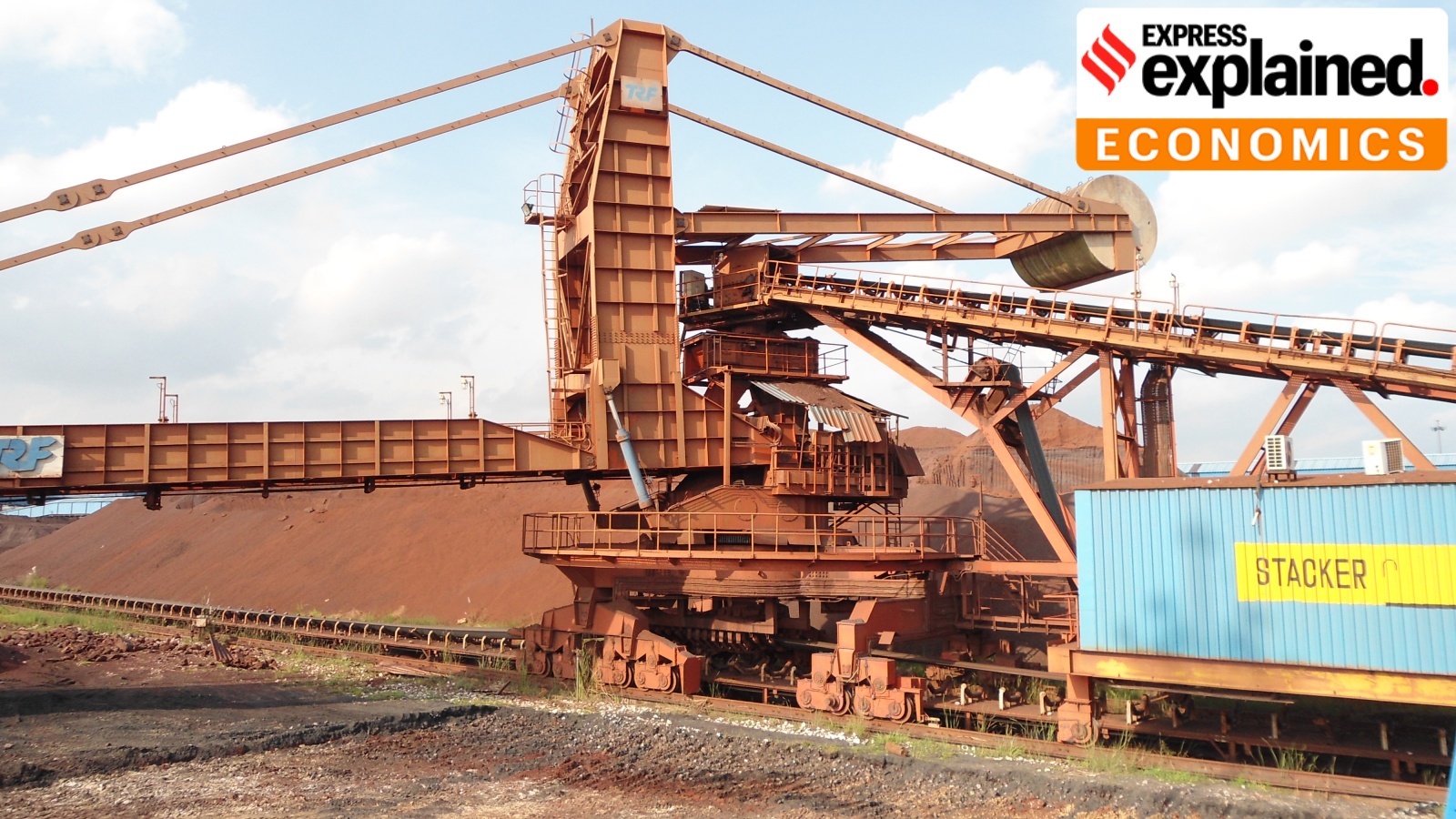
Amid China’s plans to introduce an export licensing regime from this month for capital goods used in key sectors such as solar equipment and heavy machinery, including tunnel boring machines, the Department for Promotion of Industry and Internal Trade (DPIIT) has begun a fresh push to indigenise 100 items spanning intermediates and capital goods across sectors. It has also begun discussions with the respective ministries on ways to boost their domestic production, a senior government official said.
The official said plans to begin domestic production of tunnel boring machines, which China’s Ministry of Commerce is expected to bring under a licensing mechanism from November 18, are also taking shape. A plant has been set up in Tamil Nadu, and production is expected to begin soon. Similar plans to indigenise select petrochemical products, drawn up against the backdrop of the West Asia crisis, have also begun to move forward.
As China proposed restrictions on exports of solar manufacturing technologies last month, the government has not only announced plans to expand domestic solar manufacturing capacity and reduce import dependence but is also preparing guidelines for recycling solar module waste. The Indian Express reported last week that the Ministry of New and Renewable Energy has already held stakeholder consultations on module recycling.
Curbs on solar production
The proposed restrictions by China’s Ministry of Commerce come as India seeks to expand its domestic solar manufacturing capacity and reduce dependence on imports across the value chain.
According to industry estimates, India has around 233 gigawatts (GW) of annual solar module manufacturing capacity, but its solar cell manufacturing capacity remains relatively limited at around 30 GW. With the country adding about 50 GW of solar power capacity annually, much of its module manufacturing industry continues to depend on imported cells.
The gap is even wider further upstream. India has only around 2 GW of installed ingot and wafer manufacturing capacity, leaving a significant part of this segment dependent on imports.
The solar manufacturing value chain begins with polysilicon, which is processed into ingots and then sliced into wafers. These wafers are used to manufacture solar cells, which are subsequently assembled into modules.
Story continues below this ad
“China has proposed certain export curbs, and we are expecting final provisions to come out by the end of November. Two things are important from our point of view. One, our cell capacity expansion is already complete, so we don’t have any exposure to cell technology imports. Second, the existing operations of the company are not expected to be affected because the proposed restrictions focus mainly on capital goods and technology for new plants. The main challenge is for people setting up new cell and ingot-wafer plants, but the Chinese capital goods manufacturers are likely to resist these changes as they will severely affect their business,” Vinay Rustagi, Chief Business Officer (CBO) at Premier Energies, told The Indian Express.
“There is limited availability of equipment outside of China. The cost of technology is higher, and in many cases, quality is also a compromise. Moving away from China and sourcing capital goods from Europe or Japan, etc., can push up costs by 20-40%,” Rustagi said.
Petrochemicals dependence
With global trade tensions on the rise, the government has been particularly pushing for domestic production of core petrochemical products, given their use across several industries, including textiles, pharmaceuticals and fertilisers, as well as in urea production.
Key petrochemicals targeted for domestic manufacturing include PVC, polyethylene (LDPE and LLDPE), polypropylene, polystyrene and ABS. These are the backbone of products such as packaging films, pipes, containers and consumer goods.
Story continues below this ad
The list of critical items also includes high-value imports such as phosphoric acid, ammonia, acetic acid and toluene, which are used in agriculture, food production and industrial manufacturing. It also covers plastics and resins such as polypropylene, polycarbonates and propylene copolymers, which go into automotive components, packaging materials and medical devices.
In August, the Commerce and Industry Ministry imposed a minimum import price (MIP) of $0.766 per kg on PVC Suspension Resin (S-PVC).
While the Adani Group has announced plans to enter the sector and is setting up a PVC plant in Mundra, Gujarat, through its subsidiary Mundra Petrochem Ltd, Reliance Industries, which controls 51% of domestic manufacturing, currently produces PVC through the oil-derived ethylene route. It plans to expand its capacity to 1.5 million metric tonnes (MMT) per annum by 2026-27.
Trade imbalance
The renewed push for domestic production of critical items comes amid rising imports from China. While India has been imposing anti-dumping measures on Chinese goods at a record pace, its trade deficit with China has crossed $100 billion during the current fiscal year.
Story continues below this ad
China’s global trade surplus reached $1.2 trillion in 2025 and is expected to surpass $1 trillion again this year.
According to a report by Rhodium Group last month, an increase in China’s share of global exports implies a decline in the share of other economies.
“We find that the countries that bear the greatest costs are those that are large trading economies in general, and have export profiles most similar to China’s. By 2030, we estimate that the US will lose 1.2 percentage points (pp) of its share of global trade, Indonesia 0.8pp, Canada 0.5pp, Germany 0.4pp, and the Netherlands 0.4pp. The rest of the world combined is projected to lose 4.6pp. Combined, these figures account for China’s estimated \~8pp gain,” the report said.
KioskNews shows a cleaned-up reading view extracted from the publisher’s page — the original always lives on their site, not ours.