Light, camera … razor blades?! How photography became an art form – in pictures
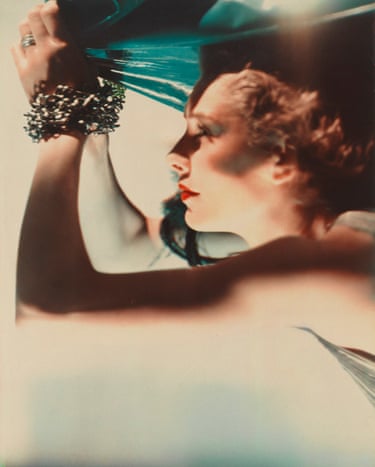
Yevonde: Mrs Richard Hart-Davis as Ariel, 1935
Yevonde (1893-1975)is perhaps best known for her vibrant, stylised society portraits. Working in her studio over the 1930s, Yevonde transformed her models into goddesses and mythical beings using elaborate props and costumes. In this image Edith Hart-Davis portrays the spirit Ariel from Shakespeare’s The Tempest. Light and Magic: The Birth of Art Photography runs at Tate Modern until 21 February 2027Photograph: National Portrait Gallery, London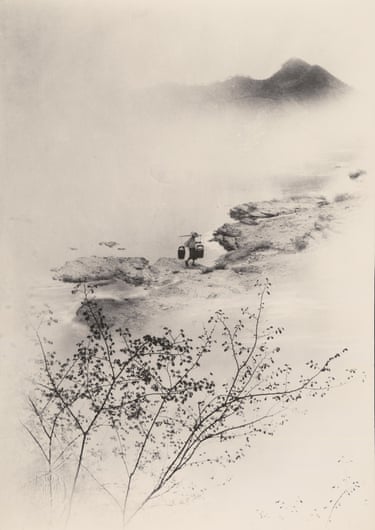
Long Chin-San: Riverside Spring 1942
From the late 19th century, photographers embraced pictorialism, not as a style but as a shared ambition: to claim photography as an expressive art form equal to painting, printmaking and sculpture. These photographers experimented with subject matter, printing processes and exhibition formats to assert the creative agency of the photographer. Their works were circulated through an extensive network of photographic societies, salons and journals across Europe, Asia, the Americas and beyondPhotograph: The Royal Photographic Society Collection at the V&A/Courtesy the Estate of the Artist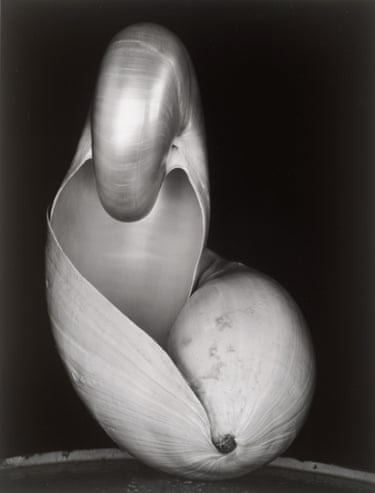
Edward Weston: Shells, 1927
Edward Weston (1886–1958) was an influential American photographer who moved away from pictorialism’s painterly effects towards a sharp, precise and modernist style, becoming a leading figure in straight photography and later a member of the influential collective Group f/64. This image, taken in his California studio, depicts a nautilus shell balanced within an abalone shell, using dramatic contrasts of light and shadow to emphasise their sculptural forms and abstract, organic beautyPhotograph: Tate, DACS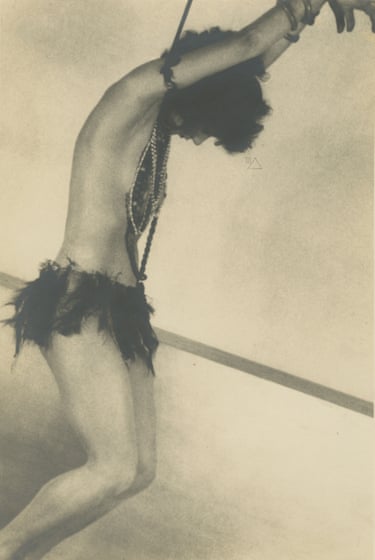
William Mortensen: Nymph 1920s
William Mortensen (1897–1965) was once one of Hollywood’s leading portrait and glamour photographers. Yet his expressionist aesthetics, influenced by the paintings of Goya, Friedrich and Bosch, led to an increasing fascination with the strange, the gothic and the occult; and it took him down a different path. His 1920s photo Nymph showcases his intense command of chemical and physical manipulation. Mortensen routinely altered his prints by hand using razor blades, inks, texture screens and mirror distortions to strip away the ‘mechanical’ look of the cameraPhotograph: David Knaus collection, Palm Springs/Estate of William Mortensen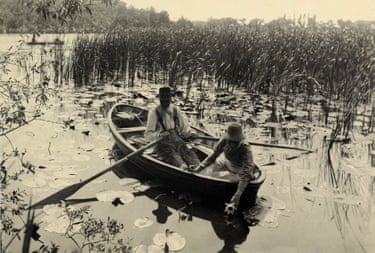
Peter Henry Emerson and Thomas Frederick Goodall: Gathering Water-Lilies, 1885
The British photographer and naturalist Peter Henry Emerson (1856 –1936) established himself as an authoritative voice in photography in the late 19th century. Reflections and symmetry were important aspects of Emerson’s photographs. In works such as Gathering Water-Lilies, the use of reflection creates an atmospheric balance between light and darkPhotograph: Wilson Centre for Photography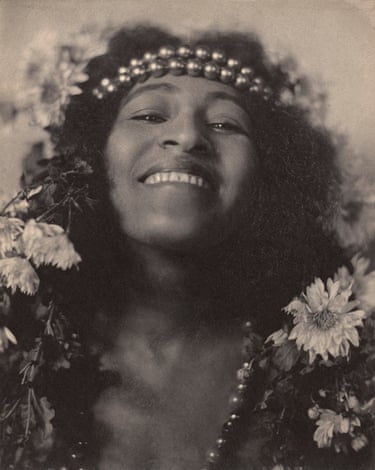
Cavendish Morton: Lizzie Avery in In Dahomey, 1903
Cavendish Morton (1874-1939) specialised in portraits of stage actors and society’s elite. This photograph depicts actor Lizzie Avery. Alongside fellow actor Mattie Edwards, Avery starred in In Dahomey, the first musical comedy written and performed by an entirely Black cast and crew. They made significant contributions to the performing arts throughout the late 19th and early 20th centuries in the US and UKPhotograph: National Portrait Gallery, London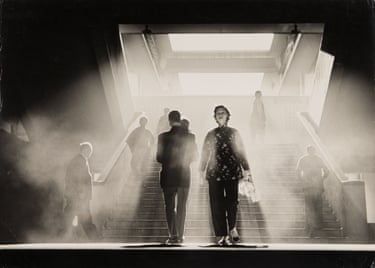
Ho Fan: Smoky World, 1959
Ho Fan (1931–2016) was an accomplished street photographer, capturing the rapid modernisation and restless energy of his home town, Hong Kong, in quietly poetic form. He transformed everyday street life into scenes shaped by dramatic light, disciplined composition and a cinematic sense of narrative. In works such as Smoky World, we sense a theatre of fleeting encounters as silhouettes and shadowy figures emerge through the haze and light. Much of his work reveals his ability to elevate the ordinary, offering a timeless portrait of Hong Kong. See more herePhotograph: M+, Hong Kong, Estate of Ho Fan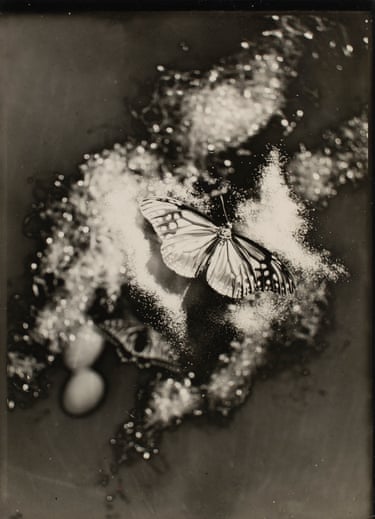
Iwata Nakayama: Composition (Butterflies), c 1941
Iwata Nakayama (1895–1949) was a central figure in the Japanese New Photography movement, which mixed abstraction with a commitment to ‘pure art photography’, a term Nakayama coined in 1928. He captures the poetic beauty typical of pictorialism by combining film negatives and magazine cutouts through an experimental photomontage technique. He wrote: ‘I have a deep appreciation for beauty. But in moments where beauty may seem elusive, I am driven to create it’Photograph: Tate/Estate of Iwata Nakayama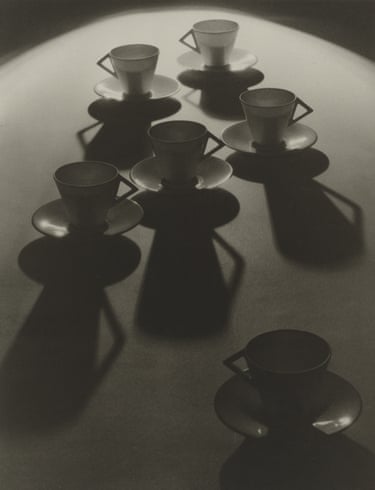
Olive Cotton: Teacup Ballet, 1935
Olive Cotton (1911–2003) was a celebrated member of the Sydney Camera Circle, alongside her husband, Max Dupain (see below). Her studies of light and form helped shape Australian art photography in the 20th century. One of Cotton’s best-known photographs, Teacup Ballet was created using teacups and saucers purchased from Woolworths. Inspired by the angular handles, Cotton saw a resemblance to ballet dancers. Arranged beneath a spotlight, the cups’ limb-like forms create a striking modernist compositionPhotograph: Sir Elton John and David Furnish Collection/DACS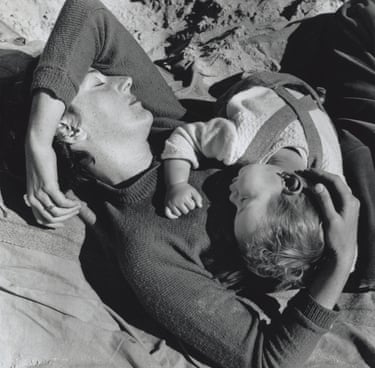
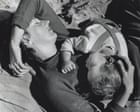
Max Dupain: Mother and Child, 1952
Max Dupain (1911–1992) joined the Photographic Society of New South Wales while still in high school, and from 1930–1933 was an apprentice in the studio of commercial and art photographer Cecil Bostock in Sydney. Dupain’s diverse and creative output helped shape Australia’s visual identity in the mid to late 20th century. Identified by the artist as one of his career highlights, this is a portrait of his second wife and first child, Danina, dozing together in a cocoonPhotograph: Sir Elton John and David Furnish collection/DACS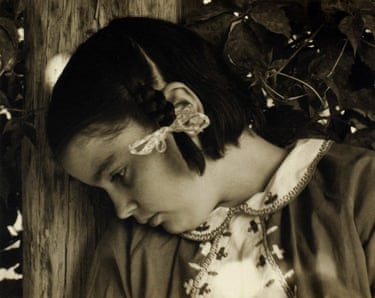
Paul Strand: Miss Thomson, New Mexico, c 1922
Paul Strand (1890 –1976) was an American photographer and film-maker who, along with fellow modernist photographers such as Alfred Stieglitz and Edward Weston, helped establish photography as an art form. Miss Thomson, New Mexico serves as an important evolutionary piece in Strand’s career. It bridges his early roots in pictorialism – approaching photography with a painterly and highly creative touch – with his transition into the sharp, structured modernism that came to define his practicePhotograph: Wilson Centre for Photography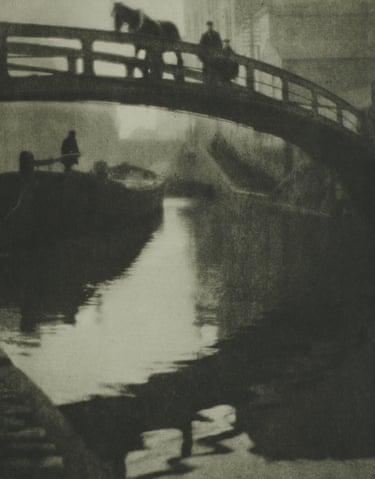
Alvin Langdon Coburn: Regents Canal, 1909
Born in Boston, Massachusetts, Alvin Langdon Coburn (1882–1966) began taking photographs at the age of eight, quickly demonstrating technical skill and aesthetic sensitivity. He learned the photogravure process at the London County School of Photo-Engraving and settled in London in 1909, setting up two hand-operated printing presses in his home. In this series, he depicts the landscape of London in deliberately compressed tones, creating the foggy atmosphere of an industrialised cityPhotograph: Wilson Centre for Photography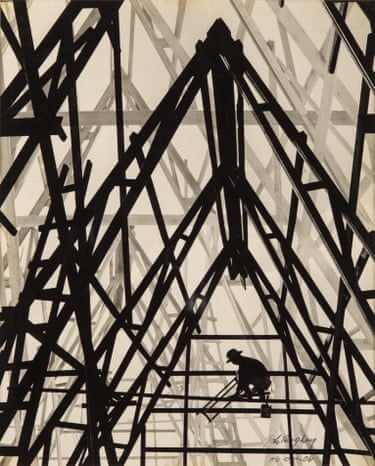
Wu Peng Seng: Construction, 1958
Wu Peng Seng (1915-2006) was among Singapore’s foremost photographers. A self-taught artist, and deeply engaged in Singapore’s photographic scene, Wu eventually became a prominent member of the Photographic Society of Singapore. His expressive use of geometric lines and experimentation with composition, form and tone, transform scenes of postwar Singapore into rich aesthetic images, rather than strict documentary photographsPhotograph: National Gallery Singapore/National Heritage Board, Singapore/Wu Peng Seng family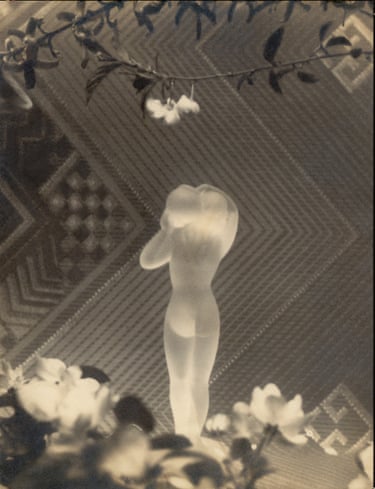
Luo Bonian: Drawing Water from a Well, May 1932
A banker by profession, Luo Bonian was a prolific amateur photographer in China during the 1930s and 1940s. He engaged with Chinese pictorial traditions in ink painting and calligraphy, while also readily embracing art deco, design aesthetics and the modernist experiments of the photographic avant garde from the west. For this image, Luo arranged an enigmatic scene with flowers, art deco-patterned fabric and the back view of a glass female nude figurinePhotograph: Luo Bonian Art Foundation/Three Shadows +3 Gallery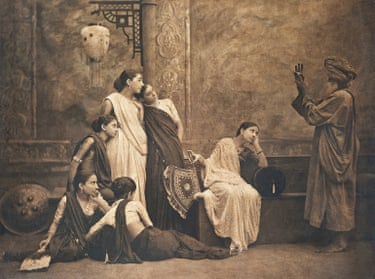
Shapoor N Bhedwar: The Mystic Sign from Art Studies Album c 1890s
Shapoor Nusserwanjee Bhedwar was born to a wealthy Parsi family in Bombay (Mumbai) and studied briefly at the Polytechnic School of Photography in London. Best known for his elaborate Pre-Raphaelite tableau photographs, Bhedwar won awards and recognition across the world in the 1890s. Around 1890 he was commissioned by a local art patron to produce an album of his work; entitled Art Studies, it contained 31 theatrically stylised photographs, some organised into narrative series. Read our review of Light and Magic herePhotograph: The Alkazi Collection of PhotographyKioskNews shows a cleaned-up reading view extracted from the publisher’s page — the original always lives on their site, not ours.