Watch: NASA’s pencil-thin X-59 supersonic jet spotted flying across US skies
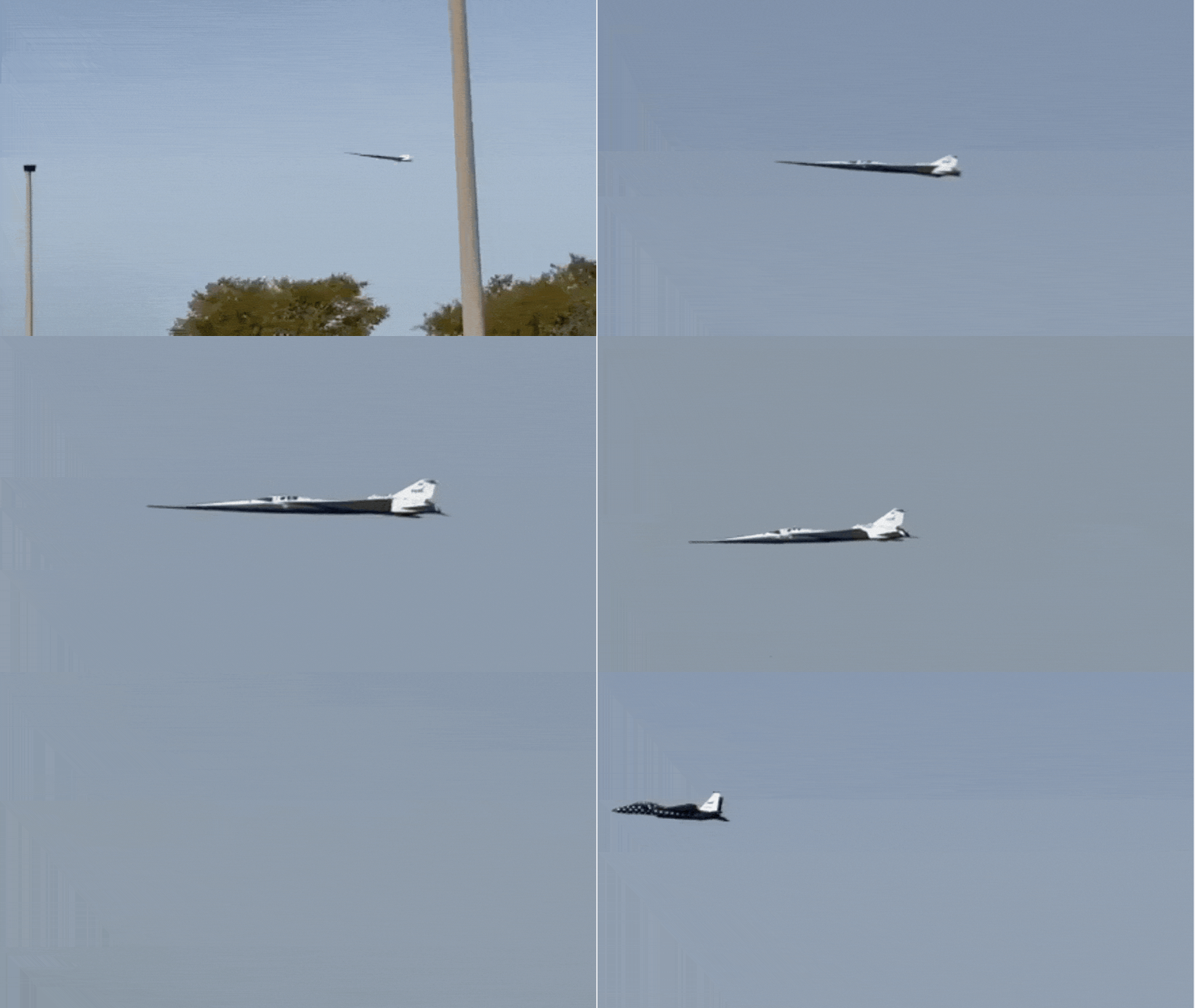
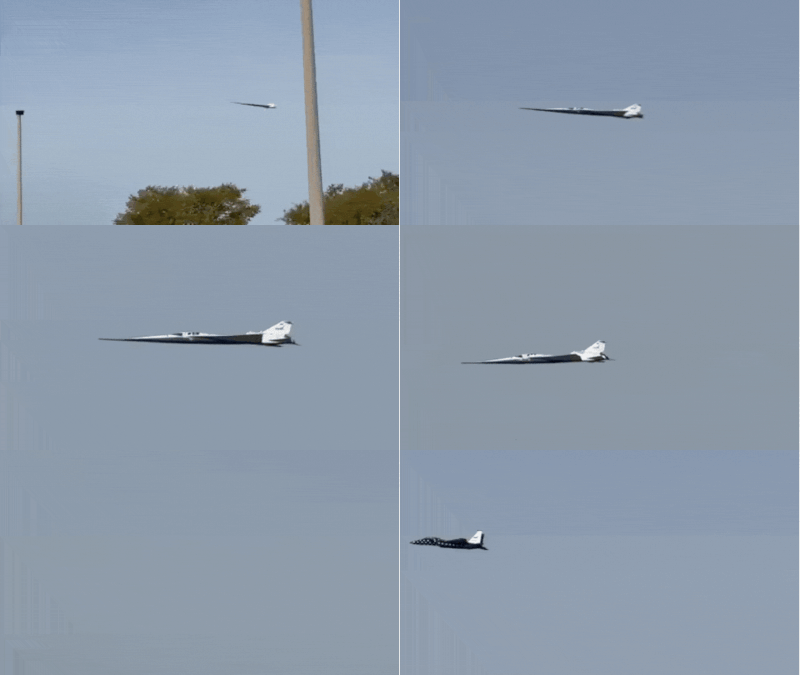
NASA’s experimental X-59 jet
NASA’s pencil-thin X-59 experimental supersonic jet was captured flying over the United States on Wednesday, exactly one year after its maiden flight, as the aircraft began a cross-country journey from California to Florida.Videos of the distinctive aircraft have since surfaced on social media, drawing attention to the milestone. NASA Administrator Jared Isaacman responded to one such video on X, writing: “Great catch... X-59 making her way to @NASAKennedy”.
The aircraft was en route to NASA’s Kennedy Space Center in Florida when it was spotted by people across the US. Videos of the unusual-looking jet were subsequently widely shared on X, drawing attention to its distinctive pencil-thin design.
Its journey comes as the space agency marks a year of flight testing for the experimental aircraft, which is the centrepiece of its Quesst mission.The aircraft traveled escorted by an F-15, an F/A-18 and a Gulfstream C-20.NASA Aeronautics also marked the anniversary in a post on X, saying, “One year. New heights. Faster speeds. Since its first flight on Oct. 28, 2025, NASA's X-59 has continued pushing the boundaries of aviation. See how far we've come in just one year!”The agency shared a comparison of the aircraft’s performance on its first flight and one year later.
On October 28, 2025, the X-59 reached an altitude of 12,000 feet, clocked a speed of 230 mph and remained airborne for 67 minutes. It had completed just one flight at the time.
By October 28, 2026, the aircraft had reached a maximum altitude of 56,000 feet and a top speed of Mach 1.53. Its longest flight lasted 102 minutes, while its flight count had risen to 41, according to the figures shared by NASA Aeronautics.
What makes NASA’s X-59 different?
According to NASA, the X-59 is 99.7 feet long and 29.5 feet wide.
Its most striking feature is its exceptionally long, narrow nose, which accounts for almost a third of the aircraft’s length. The shape is designed to distribute the shock waves generated during supersonic flight, preventing them from merging into the loud sonic boom commonly heard on the ground.The aircraft is powered by a single engine mounted on top of its fuselage. NASA says this positioning directs engine noise upwards, while the aircraft’s smooth underside helps prevent shock waves from combining.The cockpit is positioned almost halfway along the aircraft and has no conventional forward-facing window. Instead, pilots use NASA’s external vision system, which combines cameras and high-resolution displays to provide a view ahead and below the aircraft.
NASA designed the X-59 to fly at Mach 1.4, or approximately 925 mph, at an altitude of 55,000 feet. It is an experimental research aircraft, not a prototype passenger plane, and will never carry passengers.NASA said the X-59’s first flight, piloted by test pilot Nils Larson, took place from the Lockheed Martin Skunk Works assembly site in Palmdale, California, to the agency’s Armstrong Flight Research Center. The initial flight focused on low-speed and low-altitude systems checks.The aircraft is not a prototype for a passenger airliner and will not carry passengers. NASA plans to use it to gather data on the sound generated during supersonic flight and residents’ responses when it flies over selected US communities.NASA said the programme will now move towards acoustic validation, studying the sound produced by the aircraft. The findings are expected to help regulators assess noise standards and the possibility of allowing commercial supersonic flights over land.
KioskNews shows a cleaned-up reading view extracted from the publisher’s page — the original always lives on their site, not ours.