7 Greatest Agatha Christie Miss Marple Books, Ranked

At any given moment, Scott Simone has at least three books jockeying for his attention. He’ll never turn down a campus novel with a literary bent, nor will he hesitate to add yet another mystery to his Leaning Tower of Pisa-inspired to-be-read pile — which is built upon the bedrocks of too many short story collections, how-are-these-real true crime books, and classics waiting to be cracked open again. Topics that have him ripping through pages the fastest include closed-circle murders, unhappy professors, life-questioning philosophical deep dives, so long as they feature sharp sentences, a dark sense of humor, and at least a little malice.
He’s spent so much time in book shops over the years he is, to his wife’s chagrin, continuing to build a library that doesn’t quite respect the dimensions of the apartment meant to contain it.
Sign in to your Collider account
There's a certain comfort that lulls you into a Miss Marple mystery. You're in a sleepy country village, or cozy hotel. Everyone knows each other by name. The kind of British Bake Off-meets-Mister Rogers vibe where peace and friendship pair with soft lighting and a steaming cup of tea; and then, the dead body shows up. It lies there muddying the bucolic scene, and suddenly no one is who they seem. Everyone has a secret to hide.
That's Miss Marple country. Neighbors and friends vanish, or are murdered with poisoned cocktails. Anonymous letters are secretly delivered and gunshots rip through the quiet air of darkened rooms. But what makes these Agatha Christie mysteries so enthralling is much quieter. It's gossip and memory threaded through class structures and family resentments. And, of course, Jane Marple. The eponymous spinster-cum-sleuth drives 12 Christie novels — the best of which knit afternoon tea, village gossip, and old grudges into the most complex tapestries.
7 '4.50 from Paddington' (1957)

4.50 from Paddington is basically The Girl on the Train of the Marple universe. In the fleeting seconds that two trains slide alongside each other, Elspeth McGillicuddy, friend to Miss Marple friend, sees a man strangling a woman as she glances into the neighboring car. But when the tracks split and the carriage disappears, so, too, does the murder. There's no body and no other witnesses. Despite that, Marple believes her friend.
4.50 from Paddington steams ahead trying to find concreteness in that vision. It chugs along to Rutherford Hall, the estate of the wealthy (but, of course, deeply dysfunctional) Crackenthorpes. Marple sends Lucy Eyelesbarrow — a frighteningly capable housekeeper — in her stay. And Lucy nearly runs away with the novel, going places Marple never could as she becomes something of an undercover agent. Marple spends much of the book sitting outside that action, so this is a slightly unusual Marple mystery, but few Christie books open with such a pointed hook.
6 'The Mirror Crack'd from Side to Side' (1962)

Movie star Marina Gregg moves into Marple's gossip-filled village of St. Mary Mead. She instantly becomes its focal point. Everyone watches her every move and hangs on every word. When local resident Heather Badcock corners Marina at a charity party, she chatters away as Marina smiles — until something over Heather's shoulder makes her face go cold. A few frames later, Heather drops dead from a poisoned cocktail.
That look is the freeze-frame upon which Christie hangs The Mirror Crack'd from Side to Side. Marple tries to work out what Marina saw. She ponders whether Heather was ever supposed to be the victim. It's a mystery that turns the voyeuristic celebrity worship on itself, exploring the effects of one person becoming the dominant focus of so many people's lives. The villagers never blink their gazing eyes, while Marple continues staring at the starers from a distance. What's constantly reflected back is that one frozen expression, with everyone trying to come to grips with what could ever cause a woman's face to change so completely in a crowded room. It's a biting Hollywood satire Gawker in its heyday would've killed for.
5 'The Moving Finger' (1942)

Ink stains the village of Lymstock before blood. It all starts when Jerry Burton moves to the sleepy village to recover from an accident. He receives an anonymous letter suggesting that his sister Joanna is in fact his lover. But they're not the only ones being poked by a poison pen. There are letters accusing residents of affairs and letters exposing illegitimate children; and then suddenly, Mrs. Symmington commits suicide.
Lymstock starts turning on itself. Every new envelope adds to the paranoia, and the faltering sense of what's true and what's false. They become a figurative mirror into the town's soul as everyone becomes more consumed with what they say that they stop asking why they're being sent. Marple is almost completely absent from the novel — appearing in about ten pages of it — which is a strong knock against it as a Marple novel. But the speed with which she wipes the ink-smeared village clean once she appears only bolsters her mystique. Everyone else has been reading the letters. Marple reads the person writing them.
4 'The Body in the Library' (1942)

The dead body in The Body in the Library is exactly where the title promises it will be. Dolly Bantry wakes one morning to learn that a young blonde woman is lying dead on the rug downstairs. She and her husband, Colonel Bantry, had never seen her before. Whispers begin to reverberate across St. Mary Mead immediately. They speak of illicit affairs and invent secret meetings — basically scripting the entire hidden life of a woman whose name they don't even know. It's an anchor dragging down the reputation of Colonel Bantry, so Dolly calls Marple.
What's most interesting is how Christie plays with the murder-mystery cliché of a body in a library. She gives us something so familiar that the reader-through-village residents barely bothers to look past the blonde dancer and respectable colonel. Marple is the conduit taking the reader through the smokescreen, as she hones in on the excruciatingly small stuff: fingernails, teeth, clothes, makeup. Turning over all the minor details never shine light.
Collider Exclusive · The Sorting Hat Awaits Which Hogwarts House Are You? Gryffindor · Slytherin · Hufflepuff · Ravenclaw
Four houses. One destiny. The Sorting Hat has considered thousands of students — now it's your turn. Answer honestly and discover where you truly belong at Hogwarts School of Witchcraft and Wizardry.
🦁Gryffindor
🐍Slytherin
🦡Hufflepuff
🦅Ravenclaw
01
What quality do you value most in yourself? Answer as honestly as you can — the Hat always knows.
02
A friend is being treated unfairly. What do you do? How you protect others says everything about who you are.
03
What does success look like to you? What you're working toward defines who you're becoming.
04
What is your greatest fear? Fear is the most honest thing about a person.
05
The rules say no. Your gut says go. What do you do? Every institution has rules. What you do with them is a choice.
06
What kind of friend are you? Who you are to the people you love is who you really are.
07
You look into the Mirror of Erised. What do you see? The mirror shows the deepest desire of your heart.
08
The Sorting Hat pauses. It whispers: "You could do well in any house. But what matters most to you — truly?" This is your tiebreaker. The Hat always listens.
The Sorting Hat Speaks Your House Has Been Chosen
After careful deliberation, the Sorting Hat has made its decision. This is the house your values, your instincts, and your particular way of being in the world were made for.
🦁 Gryffindor
You have nerve. Not the reckless kind, but the deep, quiet courage that shows up even when you're terrified — especially then.
- Gryffindors don't act because they're fearless — they act because they understand that some things are worth being afraid for.
- You stand up for people when it would be easier to look away.
- You charge toward what's right even when the odds are terrible.
- Harry, Hermione, Ron — the heroes of Hogwarts's greatest chapter — all called the tower with the scarlet and gold home. And now, so do you.
🐍 Slytherin
You are driven, sharp, and utterly clear-eyed about what you want and how to get there.
- Slytherin has long been misunderstood — painted as the house of villains when it is, at its best, the house of those who refuse to accept limits placed on them by others.
- You are resourceful, strategic, and you play the long game.
- You know your worth. You protect your own fiercely.
- The dungeon common room with its view of the Black Lake is yours — and the ambitions that will take you further than anyone expects are yours too.
🦡 Hufflepuff
You are the kind of person that makes the world genuinely better just by being in it.
- Hufflepuff is not the "safe" house or the "leftover" house — it is the house of those with the greatest heart and the most unwavering integrity.
- You show up. You work hard. You don't need glory or recognition — you do what's right because it's right.
- Your loyalty never wavers, even when tested.
- Nymphadora Tonks, Cedric Diggory, Newt Scamander — some of the wizarding world's finest. And now you join them.
🦅 Ravenclaw
Your mind is your greatest gift, and you've always known it.
- Ravenclaws are the thinkers, the questioners, the ones who find a puzzle irresistible and a good book better company than most people.
- Ravenclaw is not merely about intelligence — it's about the love of learning, the pursuit of truth, and the rare courage to admit you don't know something yet.
- You see the world with unusual clarity and depth.
- Luna Lovegood, Filius Flitwick, Rowena Ravenclaw herself — all extraordinary, all original. And so are you.
3 'The Murder at the Vicarage' (1930)

The Murder at the Vicarage is the first full-length Miss Marple novel. There's no throat-clearing as Christie builds St. Mary Mead into the perfect setting for murder. Colonel Protheroe is overbearing and self-important — and basically no-one's favorite village resident. When he's found shot dead, every one of his neighbors seemingly has a perfectly decent reason to have pulled the trigger. Then gossip and whereabouts start shuffling, and St. Mary Mead's various affairs and hidden resentments take their first form.
While the village is the village readers come to know throughout the novels, Marple is still coming into her own. She's not as fleshed-out as she'll eventually become, but her defining characteristics are on display. She doesn't study the bloodstains. She's certainly not analyzing the make and model of the murder weapon. No, she studies people. She observes the way they lie, sulk, flirt, judge, and hold grudges. And it's that read on people that pulls her through Protheroe's murder — and sets her up as one of literature's best sleuths.
2 'Sleeping Murder' (1976)

Gwenda Reed has just moved to the English seaside town of Dillmouth. She knows the house before she knows why. Rooms feel familiar. A particular wallpaper seems right. The staircase fills her with an unexplained terror. During a night at the theater, something cracks open: Gwenda remembers looking through the banisters as a child and seeing a woman named Helen lying dead below them.
In a way, Gwenda's memory becomes the crime scene. Marple is wary from the outset — knowing full well how the past shifts shape depending on who's reconstructing it; but that makes her perfect for this mystery. Gwenda remembers flashes — a staircase, a body, a name. Marple listens for the details that have shifted, the certainty that feels a little too rehearsed, the old jealousies that never really went anywhere. Christie published Sleeping Murder as Marple's final case. Fittingly, she goes out solving a murder everyone else has spent years trying to forget.
1 'A Murder Is Announced' (1950)

The murder is announced in the newspaper before it happens: A murder will take place at Little Paddocks at 6:30 that evening, reads a small notice in "The Chipping Cleghorn Gazette." Some residents read it with curiosity. Others take it as a joke, or perhaps an invitation to some strange party game. But everyone in town shows up. On cue, the lights go out and someone fires a gun.
It's almost the perfect Christie setup — a bit of quirk and intrigue shrouded in death — leading into the messiness of assumptions. Like most Christie settings, Chipping Cleghorn is a place where everybody knows everybody else's business. The wrinkle here: It's post-war England, a time when people were displaced and families broken apart. When strangers walked into villages around the country, free to re-create themselves however they wished. So it's more that everyone in Chipping Cleghorn knew how they took their tea, not who that person truly was. That's the gap Marple so effortlessly fills. She digs into the graveyard of the past. She uncovers old names and family ties until the mystery becomes less about who fired the gun than whether anyone in the room is quite who everyone thinks they are.
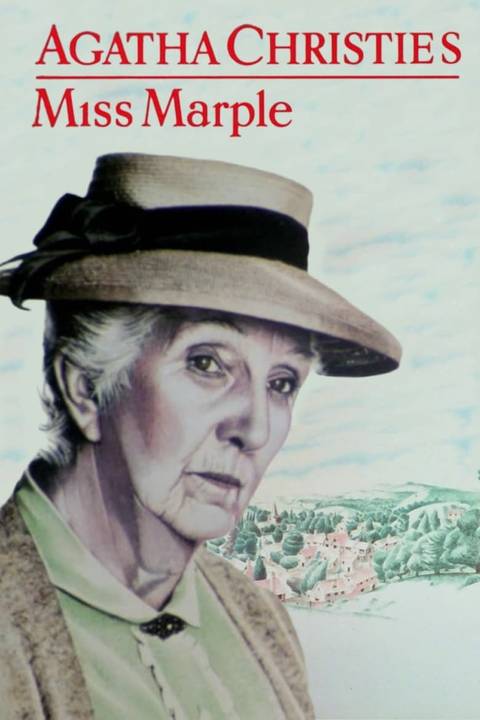
Miss Marple
- Release Date
- 1984 - 1992-00-00
- Network
- BBC One
- Directors
- Silvio Narizzano
- Writers
- T.R. Bowen
-

Adrian Lukis
Tim Kendal
-
Ann Queensberry
Miss Wimpole
-
Arthur Bostrom
George Bartlett
-
Barbara Barnes
Esther Walters
KioskNews shows a cleaned-up reading view extracted from the publisher’s page — the original always lives on their site, not ours.