Unabomber Review: A Frustrating Joker Origin For One Of America's Most Notorious Villains
Netflix's uneven true crime biopic suffers from a serious identity problem that ruins its potential and accidentally glorifies a monster.

Simon Gallagher has worked in movie and TV journalism for more than 17 years. He has written more than 6000 articles and reviews, and edited thousands more. He is an expert in the entertainment industry, particularly in the golden age of screen superheroes. Simon is also a Rotten Tomatoes approved critic.
As the real world stands at a technological crossroads, with warring factions either extolling the virtues or screaming about the dangers of AI, Netflix releasing a biopic focused on the most infamous anti-technological domestic terrorist could look inspired or deeply exploitative. It's a bold choice, certainly, but even without the current climate, Unabomber's core story is an interesting one, which is clearly what drew Andor director Janus Metz Pedersen to the project.
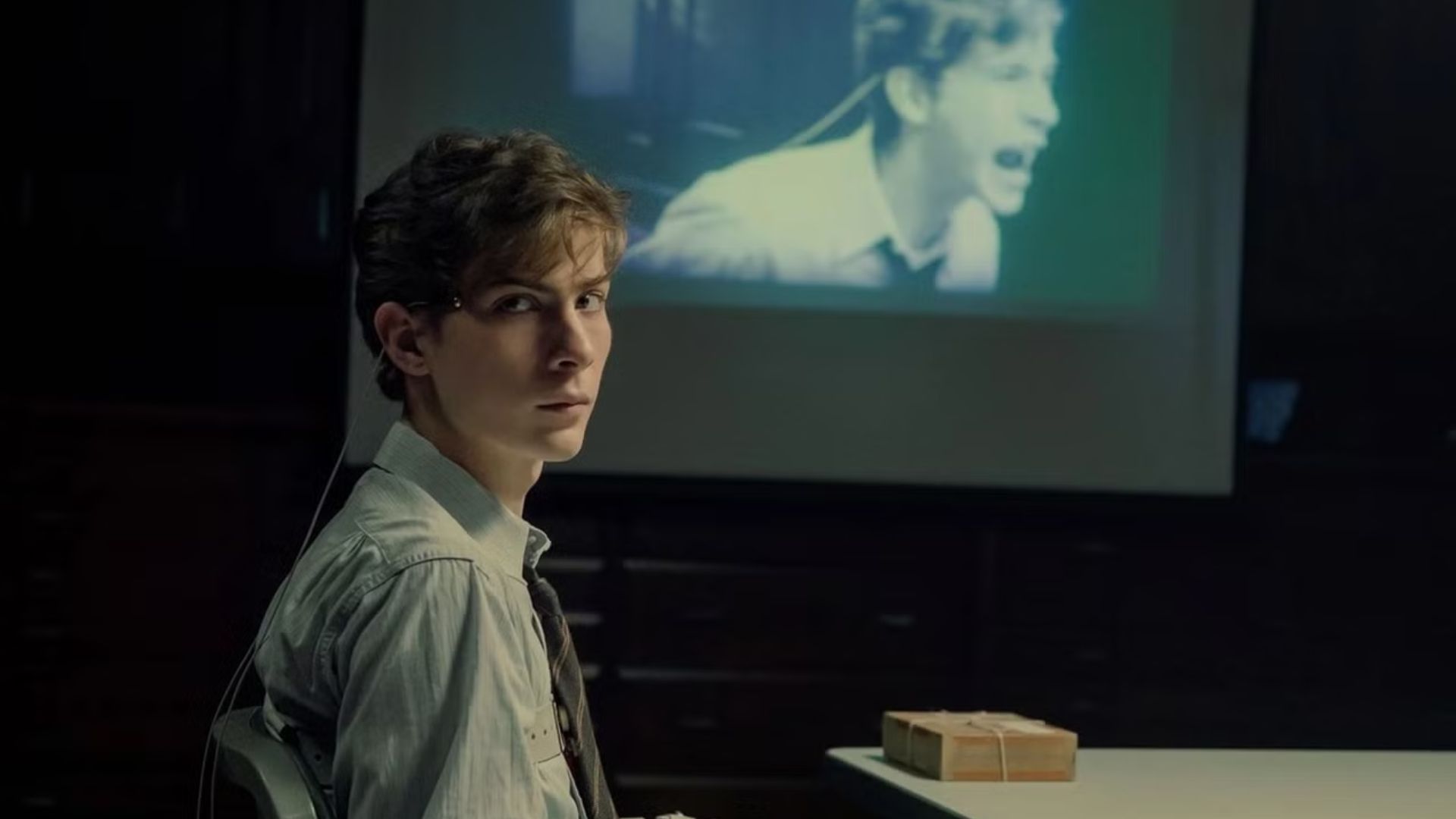
Positioned as a sort of Columbo-like inverted detective story, Unabomber splits into two timelines, first showing a young Theodore Kaczynski (Jacob Tremblay) in the late 1960s at Harvard, and then the manhunt for him starting from 1994 with the death of his penultimate victim, and into 1995 and 1996 when he was captured. In the earlier timeline, we see Kaczynski subjected to a harrowing set of psychological tests by Russell Crowe's Henry Murray, a notorious figure who wrote a psychoanalytical profile of Adolf Hitler. The tests, later reclassified as highly unethical, were designed to break the subjects, despite Kaczynski's belief that he was chosen for his philosophical prowess.
The later timeline, which winds around the past like a snake, centers on Shailene Woodley's FBI Agent Joanne Miller, who is investigating her belief that anti-industrialization loner Ted Kaczynski is the notorious Unabomber, who killed 3 people and injured 23 in a series of bombings over 18 years that targeted key figures in technology, academia, and aviation. Over the course of a surprisingly brief 97 minutes, Unabomber seems to want you to question whether the experiments might have caused the later crimes, which frustratingly misses the mark and feels like a movie with an identity problem.
Unabomber Is A Weird Mix Of A Beautiful Mind & Silence Of The Lambs
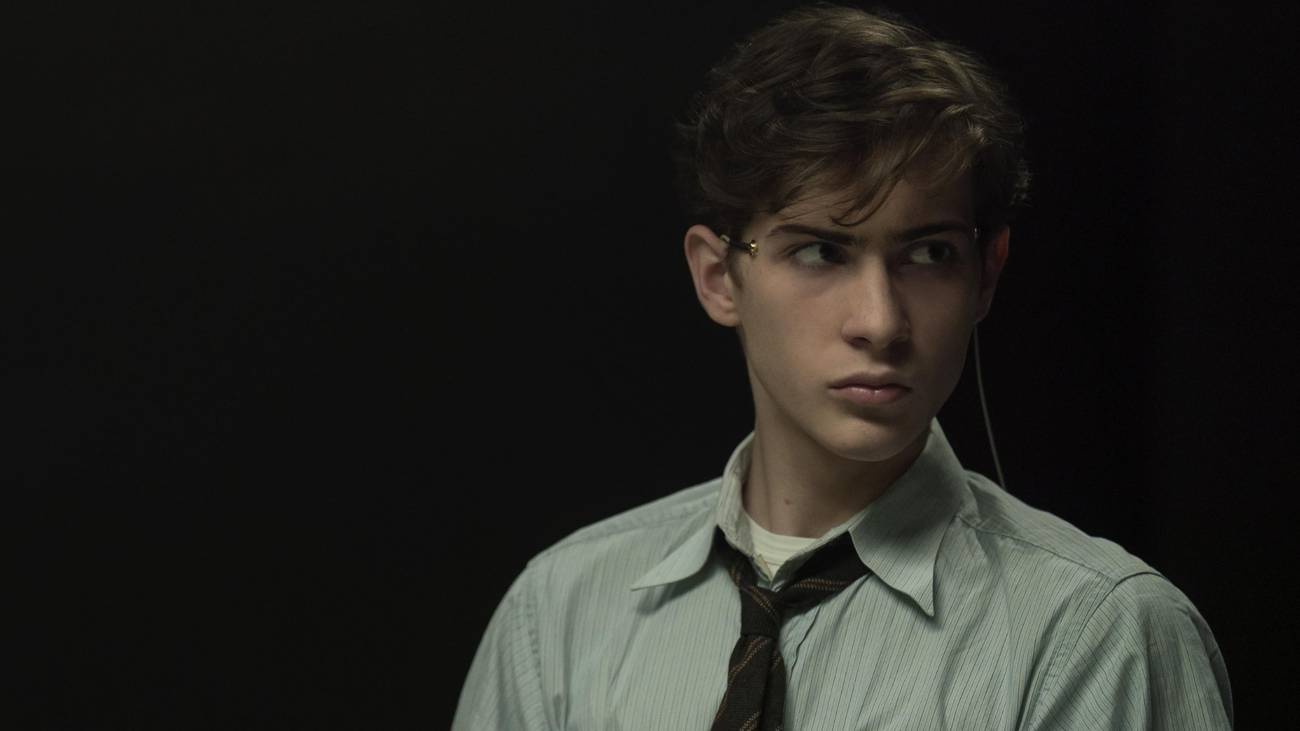
Unabomber's earlier sequences set in Harvard are – ironically, given Russell Crowe's involvement – not hugely unlike A Beautiful Mind, as Kaczynski struggles to fit in at Harvard, explores his challenging ideas, and finds what he believes is his purpose. There's what amounts to a twist in the revelation of what Murray's experiments really are, but if you know the real story, the way it's set up feels a little odd.
There's obviously a major difference, because John Nash's paranoid schizophrenia was very different from Kaczynski's social difficulties, but the parallel comes in the portrait of bright minds that don't quite fit with their surroundings. Unlike A Beautiful Mind, Unabomber explores the casual, devastating effect of putting such a mind under duress in order to prove that "all men can be broken." Tremblay's performance as the young Kaczynski is impressive in its detachment: He plays him a little like Aidan Gallagher's Number Five in The Umbrella Academy - a burdened mind and an isolated outsider.
Crowe's Henry Murray is the villain of the piece, committed to his experiments and shown to be determined to break Kaczynski in a way that suggests a more personal agenda than the real history seems to indicate. Crowe plays him as a straightforward man, indifferent to the implications of actions, who shows flashes of inhumanity, but it's not the typical Nazi scientist trope you'd expect. It's arguably too normal a performance, in fact, and not what you'd necessarily expect from Crowe, who was stunning as Hermann Göring in 2025's Nuremberg.
The second, later timeline essentially makes Woodley's FBI agent Unabomber's answer to Clarice Starling, and shows how the terrorist's reign of terror ended. Unfortunately, this second timeline is undernourished. While Woodley does admirably enough to suggest this could have been a good movie in itself, it just ends up being less interesting than the exploration of his past.
To give that half of Unabomber some credit, it follows the post-Silence of the Lambs playbook for tension-building very well. But ultimately, the flirtations with quality aren't consistent enough. It's just too hard not to wish it hadn't been more like Mindhunter and given us more of the adult Kaczynski, who is, oddly, completely absent for almost all of it.
Unabomber's Intent Is Frustratingly Muddled

I'm not at all sure Unabomber knows what it wants to be. It feels like two completely different movies bolted together – both of which would have been more interesting than the final movie. The result of trying to balance them is that neither is served well enough. There are fascinating parts to the fictionalized account of Murray's despicable Harvard experiments, but he isn't fleshed out as a character, and his history is sped past. I just felt short-changed. The same goes for the Woodley timeline, which cycles through some procedural drama clichés in place of real development, and never gets into who anyone is.
The choice to leave Kaczynski out of 95% of the future timeline feels provocative, but it reveals the intent of the movie to remove any doubt over the connection between the Unabomber killings and the Harvard experiment. Interestingly, Kaczynski was adamant that the correlation wasn't legitimate: His motivation was his own rational thought. But there's not enough of that in the movie.
Unabomber is an odd movie that is both fragmented and, frankly, feels a bit problematic.
We are led to a sense of his hatred for society's trajectory, but the removal of any of his life after Harvard (other than what we see from Woodley's perspective) means anyone who watches this without any knowledge of the true-crime story will get a very definite idea of what happened. Perhaps that's a conscious choice to reflect on the difference between the real motivation of the man and him purely as a suspect, but I cannot stress how much this is unclear.
With a movie like this, you have to ask yourself whether something proclaiming itself to be based on a true story has a responsibility to tell the whole truth. Is entertainment enough? Is disregarding Kaczynski's own testimony fair in the name of dramatic intrigue? Ultimately, as a result of all of this, Unabomber is an odd movie that is both fragmented and, frankly, feels a bit problematic.
Because of the focus on Kaczynski's "origin story" at Harvard, it paints a picture of him as a victim of Henry Murray's experiments. But there's more at play that brings Unabomber into the orbit of Todd Phillips' Joker, as the experiments devolve into a battle of wits between Kaczynski and Murray, and whether the intent is there or not, it uncomfortably romanticizes a mass killer and terrorist in the process. That's not unheard of, and Phillips famously did it with Joaquin Phoenix's Joker – but there's a lack of consideration here that doesn't show enough of what made Kaczynski the Unabomber beyond the experiments, nor enough of the cost of his terrorist campaign.
Unabomber is available to stream on Netflix worldwide from Friday, September 25.

Unabomber

5/10
- Release Date
- September 25, 2026
- Runtime
- 97 Minutes
- Director
- Janus Metz
- Writers
- Nelson Greaves, Sam Chalsen
KioskNews shows a cleaned-up reading view extracted from the publisher’s page — the original always lives on their site, not ours.