Powerful El Nino In Pacific Ocean Threatens California, Beaches Erode
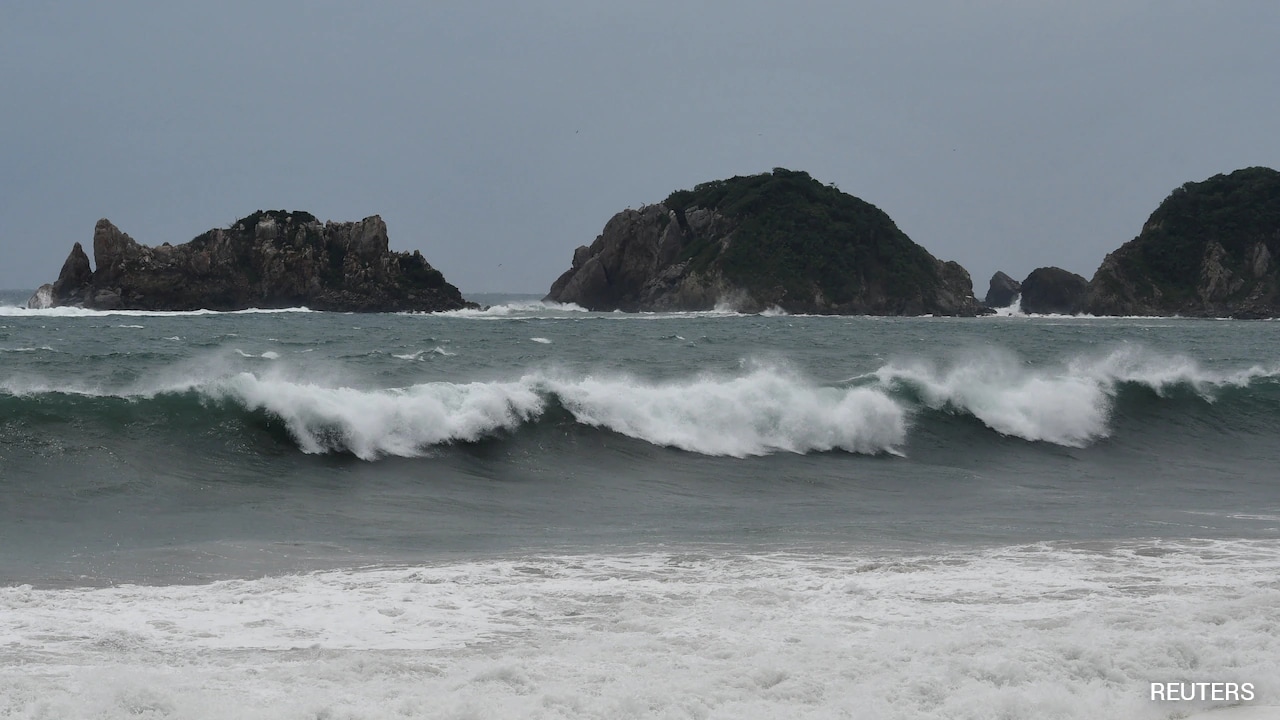
California is facing a potentially multi-billion-dollar flood threat as El Nino gathers strength in the Pacific Ocean.
The warming El Nino phenomenon tends to unleash powerful storms in the Pacific, including atmospheric rivers, some of which are named the "Pineapple Express" if they originate near Hawaii.
The heaviest rains tend to come during the winter months. But El Nino is already creating chaos on some California beaches, with flood risks expected to rise in the weeks ahead.
Disaster modelers at Climate X, a risk analytics firm backed by Google Ventures, estimate that El Nino could cause $2 billion to $3 billion in losses from flooding and mudslides statewide through the winter, based on damage inflicted during past events.
On average, California tends to see about $500 million a year in flood damages, according to estimates from the nonprofit Climate Central.
An emerging threat comes from a pulse of Kelvin waves that boost sea levels through the Pacific Ocean, said Michael McPhaden, a senior scientist affiliated with the University of Washington's Cooperative Institute for Climate, Ocean and Ecosystem Studies. The massive, underwater waves - which result from changing winds during El Nino - can intensify coastal flooding when extreme storms and high winds pound California's shoreline.
The next significant wave is expected to land in California by early October, according to McPhaden. So far, Kelvin waves have boosted sea levels up to 16 inches (40 centimeters) on their trek through the Pacific, said Paul Roundy, an El Nino researcher and atmospheric science professor at the University at Albany.
They won't be the first coastal threat California has faced since El Nino developed in June. For weeks, the phenomenon has been supercharging hurricanes and typhoons through the Pacific, flinging tropical winds and heavy surf toward the US West Coast.
In early September, remnants of storm Marie slammed the Southern California coastline and all but erased some beaches and seawalls. More than a dozen oceanfront homes were severely damaged in Orange County, with at least one marked for demolition.
These early bursts of "substantial" beach erosion months ahead of El Nino's peak "raise the potential for more severe coastal flooding, erosion, and infrastructure damage," said Adam Smith, a Climate Central disaster researcher.
Across California, coastal erosion risk tends to rise by more than two-thirds during extreme El Nino events, according to Climate X.
With damage already beginning to stack up, California communities and state agencies are ramping up preparations for what's anticipated to be a wild winter of storms.
Governor Gavin Newsom declared a statewide emergency on September 22 that directs transportation officials to assess vulnerable infrastructure. Permitting agencies are expected to help ease the way for expedited levee repairs, channel-widening projects and protections for bridges, Newsom said in his order.
City officials in Carlsbad, in north San Diego County, are attempting to shore up crumbling bluffs, while authorities in storm-hit Malibu are now planning a series of community workshops starting September 29 to coach residents through the "unique risks" that residents face living along the coast during an El Nino winter.
"We've mapped it out and the worst-case scenario is not good," said Susan Duenas, Malibu's public safety director. Rock slides and "mud floods" through vulnerable canyons can easily cut off roads located at either end of the city, potentially leaving residents stranded after heavy rains. "We tell people to have enough food for a couple weeks," Duenas said.
Infrastructure and homes near recent wildfire burn scars will be especially vulnerable, said Erik Larson, a Climate X scientist. "Anytime you have wildfire, especially on slopes, you're way more at risk of landslides," Larson said. "The removal of vegetation like that is going to cause a lot more water to flow over the surface, so it increases your risk of flash floods."
(Except for the headline, this story has not been edited by NDTV staff and is published from a syndicated feed.)
KioskNews shows a cleaned-up reading view extracted from the publisher’s page — the original always lives on their site, not ours.