‘Public order’ vs ‘law and order’: What Jammu & Kashmir HC ruled on PSA
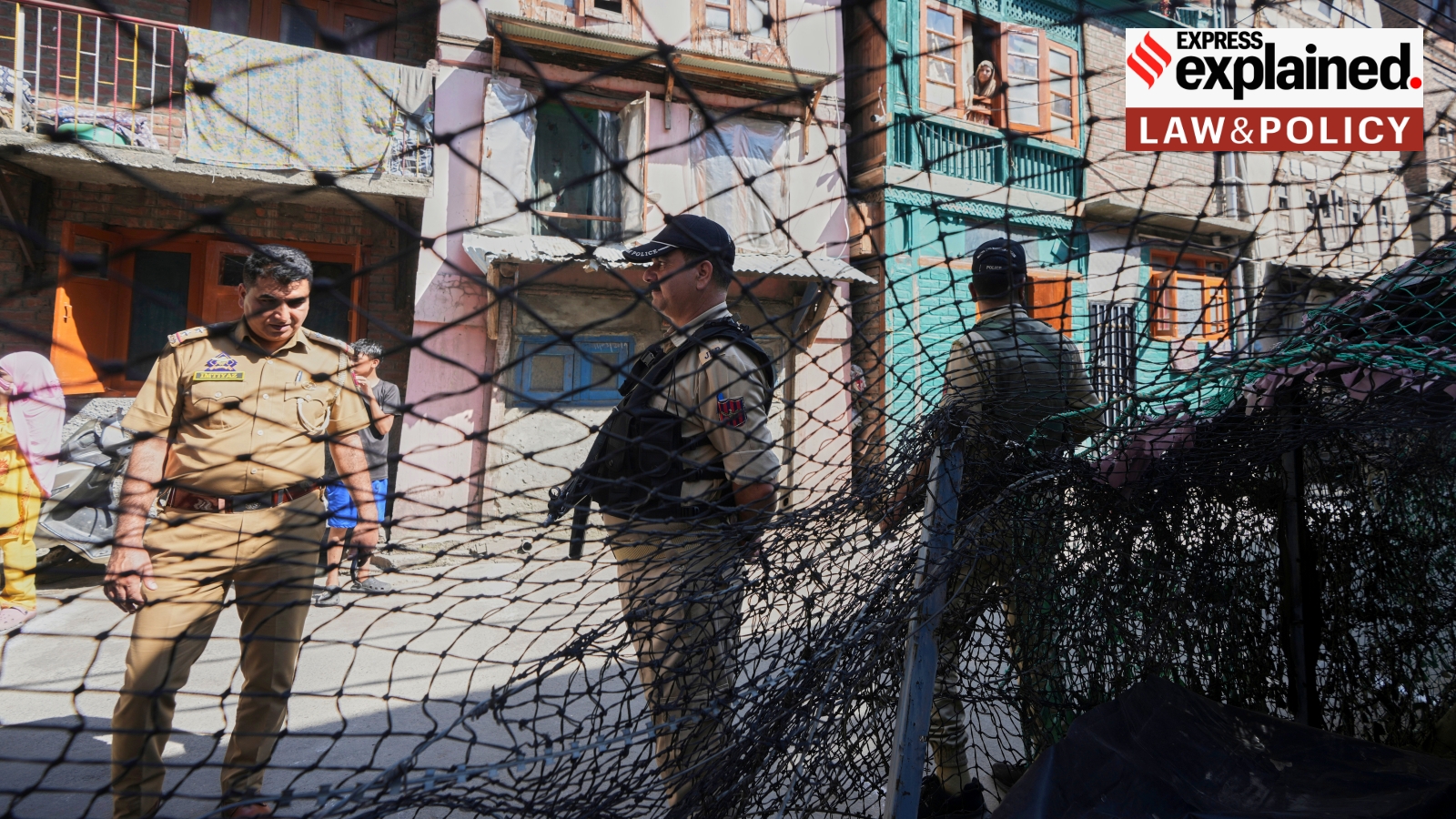
The Jammu & Kashmir and Ladakh High Court has quashed preventive detention of a Poonch resident under the Jammu and Kashmir Public Safety Act (PSA), holding that the allegations against him may constitute a law and order problem but does not justify invoking the extraordinary power of preventive detention.
The bench comprising Justice Sanjay Dhar set aside the detention order of the District Magistrate, Poonch, saying, “It appears that the detaining authority, while passing the impugned order of detention, has failed to appreciate the difference between ‘public order’ and ‘law and order’.”
The bench added that preventive detention could not have been invoked where “ordinarily criminal law provides sufficient means to address the situation”.
Facts of the case
Mohd. Yousuf, a resident of Poonch district, was detained under the PSA in April 2026. The District Magistrate, Poonch, said his detention was necessary to prevent him from acting in a manner “prejudicial to the maintenance of public order”. His wife challenged that detention before the High Court, arguing that the allegations against him did not justify the use of preventive detention.
The authorities relied on four FIRs registered between 2018 and 2026, involving an altercation with a Panchayat employee, a dispute linked to prior enmity, an altercation at a wedding function, and an assault case in which one person suffered injuries. The State argued that these cases showed a pattern of conduct warranting detention, while Yousuf contended that they were individual disputes that could be dealt with under ordinary criminal law.
The legal framework
Article 22 of the Constitution provides safeguards from arrest and detention, stipulates that the grounds of arrest be communicated to the accused, and that they be produced before a magistrate within 24 hours of their arrest. But the Article carves out an exception “to any person who is arrested or detained under any law providing for preventive detention”.
The PSA is one such law that allows the government to detain a person without trial if it is satisfied that it is necessary to prevent them “from acting in any manner prejudicial to…the security of the state or maintenance of public order”.
Story continues below this ad
The Act gives District Magistrates and Divisional Commissioners the powers to issue detention orders, subject to government approval and review by an Advisory Board. A person can be detained for up to a year on grounds of public order and up to two years on grounds of security of the state.
But the Supreme Court has held that not every criminal offence or breach of peace amounts to a public order problem.
In its ruling of Ram Manohar Lohia v. State of Bihar, the Supreme Court had observed that an act may affect law and order without affecting public order. It described law and order, public order, and security of the State as three concentric circles, with public order occupying a narrower category than ordinary law and order issues.
“One has to imagine three concentric circles. Law and order represents the largest circle within which is the next circle representing public order and the smallest circle represents security of State. It is then easy to see that an act may affect law and order but not public order just as an act may affect public order but not security of the State,” it said.
Story continues below this ad
The Supreme Court, in Ameena Begum v. State of Telangana (2023), said that courts can scrutinise detention orders where there is reason to believe that the detaining authority has misunderstood the limits of its powers. It said that “if circumstances appear therefrom raising a doubt of the detaining authority misconceiving his own powers, the Court ought not to shut its eyes; even not venturing to make any attempt to investigate the sufficiency of the materials, an enquiry can be made by the Court into the authority’s notions of his power”.
What the High Court said
Applying these principles, the High Court found that the four FIRs relied upon by the authorities arose from personal disputes and altercations involving specific individuals. The incidents were “confined to personal enmity” and were “individualistic in nature”.
The court noted that while multiple criminal cases had been registered against Yousuf, that alone could not justify preventive detention. The allegations affected private individuals and did not show any disruption of public life or threat to the community at large. “The repetition of similar acts by the petitioner would not, by itself, affect the flow of life of the community,” the court said.
The bench observed that “these incidents, at best, in the inimitable words of Justice Rahul Bharti, are a ‘pain in the neck’ for the authorities responsible for maintaining ‘law and order’, and do not disturb the flow of public life”.
Story continues below this ad
The court held that ordinary criminal law was sufficient to deal with the allegations against Yousuf and that preventive detention is an “extraordinary power” which “cannot be invoked in a situation which gives rise to a ‘law and order’ problem”.
KioskNews shows a cleaned-up reading view extracted from the publisher’s page — the original always lives on their site, not ours.