Markets In Red: Why Investors Should Manage Money Better, Not Just Trade More
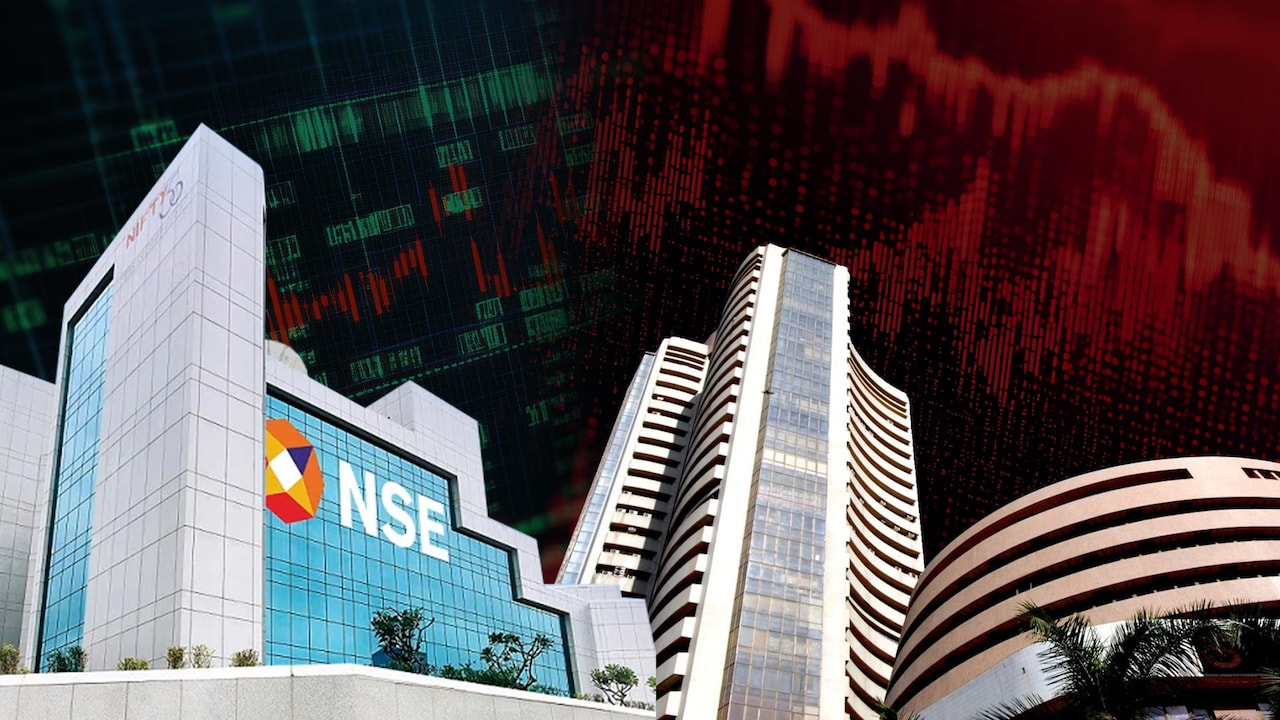
Stock Market News: When markets turn red, the first instinct for many investors is to do something.
Check the portfolio. Track the next move. Buy the dip. Sell a stock. Open a trading app again.
But a market downturn may be a good time to ask a different question: Are investors managing their money better, or simply trading more?
Also Read | Layoffs Are Rising In Tech, But These Skills Are Helping People Unlock Better Pay
More Trading Does Not Mean More Wealth
SEBI's latest data offers a warning for investors who equate market participation with wealth creation.
In its study covering FY26, the Securities and Exchange Board of India found that 87.7 per cent of individual traders in equity derivatives incurred losses. Collectively, individual traders lost around Rs 91,685 crore during the year. The average loss was about Rs 1.17 lakh per trader.
The data is particularly striking because participation itself fell. The number of active individual traders declined during FY26. In other words, fewer people were trading, but losses remained widespread.
"Markets will always have periods of volatility, but the larger opportunity for investors is to move from simply participating in the market to managing their money with greater intent," Sarvjeet Singh Virk, Co-founder & MD, Shoonya, told NDTV.
For someone investing for retirement, a child's education or a house, the number of orders placed is not the real measure of progress. The goal is.
India's Investment Story Is Also Changing
There is another side to India's retail market. While derivatives have seen widespread losses, systematic investing has continued to expand.
SIP contributions reached a record Rs 32,297 crore in August 2026. The number of contributing SIP accounts crossed 10 crore for the first time, reaching around 10.02 crore. The mutual fund industry's AUM stood at Rs 87.08 lakh crore at the end of August.
The mutual fund industry's AUM has also grown nearly three times in five years, from Rs 36.59 lakh crore in August 2021 to Rs 87.08 lakh crore in August 2026. That does not mean every SIP investor will make money or that systematic investing eliminates market risk.
But it does point to a broader shift. For a growing number of households, investing is becoming a regular financial activity rather than something done only when the market is rising.
SEBI's Investor Survey 2025 also highlights the gap that remains. It found that 63 per cent of Indian households were aware of at least one securities market product, but only 9.5 per cent participated in securities markets. The survey also found that only 36 per cent of investors had high or moderate knowledge of securities markets.
So, the next challenge is not simply getting more people into the market. It is helping them understand what they are doing once they get there.
From Market Returns To Life Goals
The emerging investor is also looking at the market differently. A young professional may start investing to build an emergency corpus. Another may want to buy a house. Someone else may be saving for retirement or a child's education.
That changes the question. Instead of asking, "How much can I make this month?", the investor starts asking, "Am I on track to meet my financial goal?"
It could mean diversifying across assets instead of concentrating money in a handful of stocks. It could mean maintaining an emergency fund before taking higher market risks. It could also mean staying invested through periods when markets are uncomfortable.
"Investors need to look beyond the immediate market movement and understand how each investment fits into their larger financial plan. Technology can play an important role here by providing better portfolio insights, research, risk information and educational tools," Virk added.
The Real Test Comes When Markets Fall
A rising market can make almost every strategy look good. A falling market is different. It tests whether an investor has a plan or is simply reacting to every headline.
This is also where financial discipline becomes important. Investors may be tempted to increase trading activity when prices fall, hoping to recover losses quickly. But SEBI's derivatives data shows why frequent trading, particularly in complex products, can carry significant risks. Options accounted for around 92 per cent of aggregate individual trader losses in FY26.
For the retail investor, the lesson is not that every trade is wrong. It is that more activity is not automatically better money management.
"The maturity of India's retail investing ecosystem should ultimately be reflected not only in the number of demat accounts or trading volumes, but in the quality of investor behaviour, including diversification, consistency and informed decision-making," Virk said.
KioskNews shows a cleaned-up reading view extracted from the publisher’s page — the original always lives on their site, not ours.