Why is OPEC+ keeping oil production unchanged despite the Iran war, and what does it mean for global crude prices?
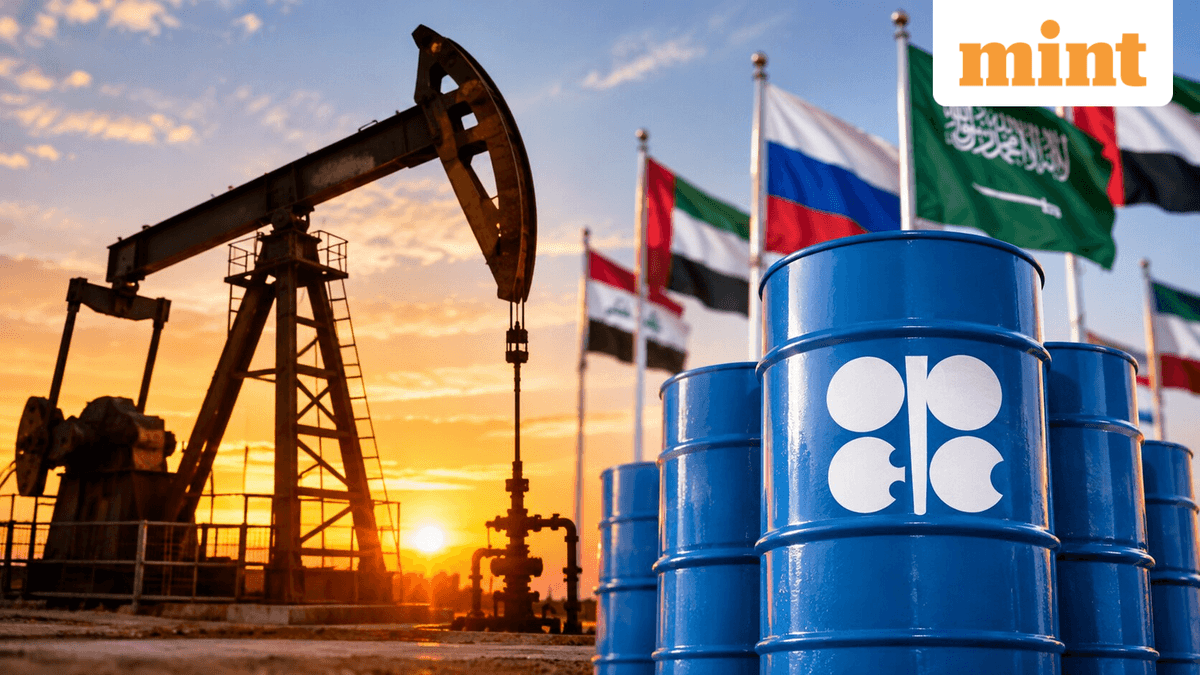
OPEC+ is leaning towards keeping its oil production targets unchanged in the first quarter of 2027, as uncertainty surrounding the Iran war, disruptions to crude supplies and disagreements among member countries complicate the group's production plans.
The alliance, which includes the Organization of the Petroleum Exporting Countries (OPEC) and allied producers such as Russia, has reached an agreement in principle to maintain existing output quotas, according to a Bloomberg report citing two delegates familiar with the discussions.
Saudi Arabia and its partners are expected to formally approve the decision during a series of virtual meetings scheduled for Sunday.
The decision comes at a time when the global oil market is grappling with competing pressures.
While the Iran war has disrupted energy flows and heightened uncertainty over exports from the Persian Gulf, recovering supplies and expectations of a potential surplus next year have put downward pressure on crude prices.
Why is OPEC+ keeping production unchanged?
Uncertainty over the duration and consequences of the US-Iran conflict is a key factor behind OPEC+'s cautious approach.
The conflict has disrupted oil production and exports across the Gulf, making it difficult for producers to assess how much crude will be available in the coming months. Although oil flows have recovered towards pre-war levels, the situation remains uncertain.
Against this backdrop, increasing or reducing production targets could complicate the alliance's efforts to manage supplies.
Moreover, a decision to maintain existing quotas may have limited immediate implications for actual oil supply. Several OPEC+ members are already producing close to their maximum capacity, leaving them with little room to increase output even if production targets are raised.
Oil analyst firm Rapidan Energy Group also expects OPEC+ to leave production targets unchanged, citing uncertainty over the duration of the US-Iran war and its implications for crude production and exports, CNBC reported.
Disagreements over production capacity complicate OPEC+ plans
Internal disagreements over production capacity have emerged as another obstacle for the alliance.
OPEC+ had planned to establish new production targets for 2027, using the findings of its first-ever external assessment of members' maximum production capacities. The year-long exercise was intended to determine how much each country could technically produce and help establish future output quotas.
However, the assessment has triggered disagreements, with Iraq and Kazakhstan challenging the findings, arguing that the production ceilings assigned to them were too low, according to OPEC+ sources cited by Reuters.
Iraq has particularly pushed back against the capacity limit it was allocated.
These disagreements come amid growing frustration among members over the group's production restrictions. The United Arab Emirates, which had differences with the alliance over production limits, exited OPEC earlier this year.
The latest developments could make it harder for OPEC+ to maintain unity, particularly as members compete for a larger share of the global oil market.
What does the decision mean for global crude prices?
OPEC+'s decision to maintain production quotas is unlikely to provide a significant fresh boost to global oil supplies, particularly because several members are already pumping close to their capacity.
For crude prices, the immediate direction will depend more on developments in the Iran war, the pace of recovery in Gulf exports and expectations of global demand.
Oil prices surged above $100 per barrel during the conflict as concerns over disrupted supplies intensified.
However, crude futures have retreated in recent weeks as exports from the Gulf recovered and expectations of a supply surplus in 2027 strengthened.
According to Bloomberg, crude futures have fallen nearly 20% this month amid recovering supplies and fragile demand, putting additional pressure on oil-producing countries.
The prospect of an expanding supply surplus next year could further weigh on prices if global production outpaces consumption.
What lies ahead for OPEC+?
The alliance faces a potentially difficult year in 2027. A renewed global supply surplus could intensify competition among producers and put further pressure on oil revenues.
The United States, which is not part of OPEC+, has also continued to expand its presence in the global oil market, increasing competitive pressure on traditional producers.
Maintaining existing quotas in the first quarter of 2027 therefore reportedly reflects a cautious approach rather than a clear indication that supply concerns have eased.
Much will depend on how the Iran war evolves and whether the alliance can resolve its internal differences over production capacity.
KioskNews shows a cleaned-up reading view extracted from the publisher’s page — the original always lives on their site, not ours.