INNER-CITY ADVENTURES: An exotic and divine sensory overload in the heart of Hillbrow’s chaos
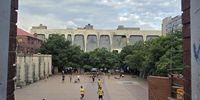
Don’t expect a calm stroll around orderly markets while nibbling on curated platters. The Taste of Africa Food Tour is a fascinating, delicious and intimate encounter with chaos. It starts and ends at the historic Drill Hall on the edge of Hillbrow, opposite the MTN Noord taxi rank, one of the busiest transit hubs in the city.
It took our rather reluctant Uber driver half an hour to edge his way into the area where Twist, Plein, De Villiers and Quartz streets merge into four lanes of minibus pandemonium, the sidewalks thronged with commuters, vendors and hustlers amid sternum-busting music.
My friend Dave and I were wide-eyed and wondering what the hell we were doing there when Kganyapa Kganyapa, our guide from Exotically Divine, gave us a reassuring wave and swung open the gates to the parking lot at the Drill Hall. We stepped out of the Uber and the atmosphere changed completely.
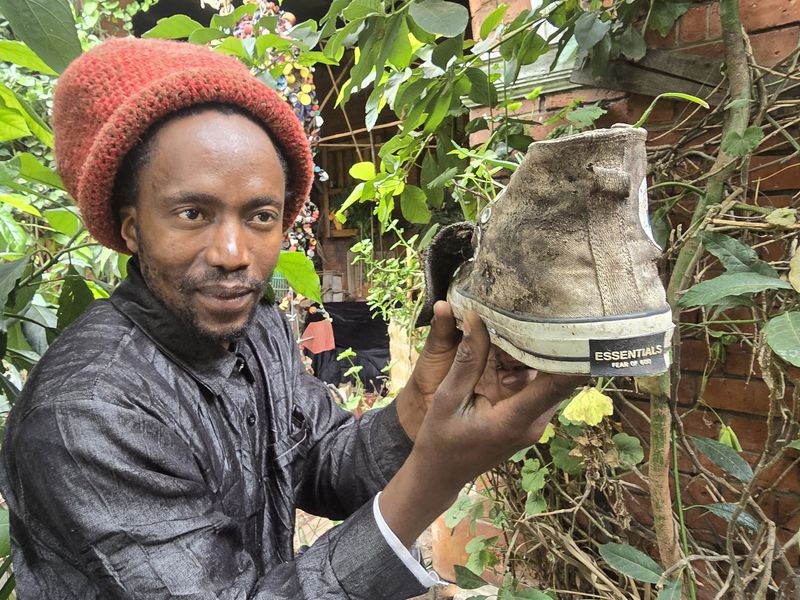
Our anxiety transformed into wonder. Exotically Divine is a calm eco-sanctuary and community hub, decorated with upcycled art and plants, infused with love and hope.
History today
The Drill Hall was built in 1904 as a symbol of British victory over the Boers, a physical display of military power and colonial conquest, commissioned to serve as the headquarters for the newly formed Transvaal Volunteer Corps.
It has been thoroughly decolonised. The big concrete area outside the hall is now a play area for local kids who use it for soccer and romping around. The top level of the double-storey building is a home for local artists. Downstairs is where Kganyapa, his partner Ayanda Dludla and her sister Nono live and work.
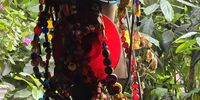
Jozi’s favourite digi-guide, Johannesburg in Your Pocket, describes it beautifully: “The ground floor of the building is a cavern of delights. Plants festoon the ceiling, grow from objects on the walls. Nature unexpectedly resides here, surrounds you and beckons you in. The place is jammed with stuff, recovered items from the streets, hundreds of glass bottles, mannequin legs planted with saplings (we are told they provide the perfect humidity), newspaper posters hinting at an outside world, giant mushrooms, beaded cow dung, skulls discarded by skop (sellers of sheep and cow head meat) that have been artfully painted.”
Welcome sanctuary
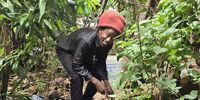
“Welcome to the Green Square Mile,” says Kganyapa proudly as we step outside into a space filled with fruit trees, vertical gardens, walls covered in discarded carpets and trash waiting to be turned into art. “We may not be the richest square mile like Sandton, but we are creating a different wealth in Joburg.”
Indeed, in this crazy corner of the city, Kganyapa, Ayanda and their community are reimagining a different city, one that is transformed by nature. They believe in its power to heal and bring peace to inner-city lives. Kganyapa treats the city as his garden and dreams of building a greenhouse on the property to grow food for the immediate community.
The Drill Hall was the site of the preliminary hearings of the 1956 Treason Trial in which 156 leaders of the Congress Alliance – including Nelson Mandela, Walter Sisulu and Chief Albert Luthuli – were charged with high treason. The building was almost consumed by a fire in 2002. The Johannesburg Development Agency did a R10-million refurbishment but not much came of it.
We see the fire-damaged and faded billboards commemorating this significant history – and then we step out of the sanctuary, cross the road and head into the Nigerian market.
Hello, Africa
It’s a different world. People are selling jollof rice, plantains, yams, okra, meat, spices. “Hey Rasta,” the people greet Kganyapa. “Hello m’lord,” he replies. Ayanda and Nono are our security detail, small and slender as they are, and we feel safe.
It took Kganyapa and Ayanda years to map out the exact locations, alleyways and stalls of authentic continental markets in this ’hood – and they are known and respected.
The Nigerian market is the first step into a series of Johannesburg’s diaspora street markets – including Mozambican, Tanzanian, Congolese and Ethiopian hubs. At first, the sheer volume of people and sensory input feels overwhelming, but as we walk, it’s clear there is no real danger. People are friendly and curious.
We pass a road that is potholed and filled with water. “This is the river of Ramaphosa,” jokes Kganyapa. But, jokes aside, the City of Joburg’s utter neglect of the area is obvious.
People greet us from inside their small shops selling their national specialities like dried fish, cassava, tiger nuts and spices. And, on the streets, there are fresh vegetables at low prices – spinach, watercress, mustard, sweet potatoes, yams, okra, coconuts, amadumbe.
We sample soursop (custard apples) and coconut water. We head into the area around Marble Towers, known as Little Addis, and go into a coffee house for traditional Ethiopian coffee, which is served with popcorn.
Dave and I are amped and overstimulated. The ceaseless activity, broken streets, the hustle, the energy. Our Exotically Divine crew steers us gently through the MTN Noord taxi rank and back into the calm of the Drill Hall eco-sanctuary.

Food philosophy
We are welcomed into the eating space, remove our shoes and sit on big cushions on the floor to enjoy a vegan meal, grounded in their purely plant-based Ital philosophy.
Ital food, explains Kganyapa, is a dietary practice created by the Jamaican Rastafari movement. The word comes from “vital”, with the “v” removed to emphasise the Rastafari concept of I and I, which represents the divine connection between the individual, nature and God. It relies entirely on whole foods provided by the earth, such as fruits, vegetables, grains, tubers, nuts and seeds.
Lesotho-born Kganyapa is part mystic, part philosopher. He sees potential to shape lives in the inner city by creating work from waste, using it to make art. Ayanda is an artist, a presenter on Hillbrow Radio and Exotically Divine’s administrator. She’s passionate about community wellness and urban greening.
During Jozi My Jozi’s Main Street Sundays, car-free days in Marshalltown, she created a herb garden in the middle of the city outside Sadie’s Bistro. Nono is a recent arrival in Jozi and does the social media.
Before they took custodianship of the Drill Hall, Ayanda and Kganyapa were purveyors of delicious vegan food. They once had a restaurant in Melville and then traded at the former Market on Main in Maboneng.
“People used to taste our food and say, ‘this is exotic, this is divine’, and that’s how we got our name,” explains Ayanda. When the Covid-19 pandemic forced them to close, they channelled their energy into rejuvenating the vacant Drill Hall.
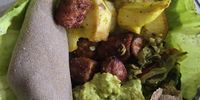
We are served a delicious meal in a cabbage leaf. Sweet potato with avo, butternut on the side, scooped up with Ethiopian injera flatbread. They tell us how they host regular barefoot gardening workshops, natural soil-building sessions, drumming circles and festivals.
We talk about life in the city, turning trash into treasure, how hope can grow out of cracks, how seeds become plants, how greenery can heal. It is dark by the time we finish and they walk us out to a safe spot to meet our Uber. DM
Bridget Hilton-Barber is a freelance writer who writes for Jozi My Jozi.
To book a tour, call or message 079 227 8712.
This story first appeared in our weekly DM168 newspaper, available countrywide for R39. The e-edition of Daily Maverick’s weekly newspaper, DM168, is now free for readers who are signed into their Daily Maverick account. Click on the cover of the newspaper below to access the e-edition.
KioskNews shows a cleaned-up reading view extracted from the publisher’s page — the original always lives on their site, not ours.