John Goddard: Mississauga ISIS supporters tried to slaughter entire family who knew too much
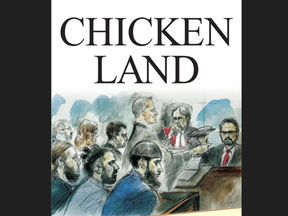
A man entered a family’s takeout restaurant and started shooting. He killed one son on the spot, execution-style, and inflicted other terrible injuries — a second son was shot through the neck, the father in the chest. The attempted mass-murder of a family at their workplace marked a first for Canada, and police arrested three men — shooter, getaway driver and ringleader. But what was their motive? All three were sending money to the Islamic State of Iraq and Syria (ISIS) in Pakistan, prosecutors alleged, and all three planned terrorist attacks in Canada. When someone at the chicken restaurant discovered their secret, the three tried to slaughter everyone working there. In his new book, Chicken Land: Murder in the Name of Allah, Toronto author John Goddard tells the full story of the atrocity that took place five years ago in Mississauga.
Sign In or Create an Account
He had reddish-brown hair, unusual for a Pakistani, and freckles around his eyes and nose. In other ways, he conformed to one of the stereotypical profiles of the South Asian Muslim male. He was bearded, with a thin, almost non-existent moustache and a squarish, heavy-looking face. His body, even in his twenties, was taking on the pudgy shapelessness that would become characteristic as he grew older. He projected not exactly charisma but enough confidence and charm to hold sway over others, especially those younger and less emotionally mature than himself.

Columnist Jesse Kline keeps you up to date with what’s happening in Israel and the effects of antisemitism on life here in Canada. Friday mornings.
By signing up you consent to receive the above newsletter from Postmedia Network Inc.
A welcome email is on its way. If you don't see it, please check your junk folder.
The next issue of Channel Israel will soon be in your inbox.
We encountered an issue signing you up. Please try again
Naqash Abbasi was his name. He grew up in a reasonably affluent household. Both his parents held good jobs. Within a few years of arriving in Canada, they bought a four-bedroom home in Mississauga, a sprawling conglomeration of villages, towns and suburban developments adjoining the western limits of Toronto, the country’s largest city. After high school, he enrolled in college to study Customs and International Transportation but didn’t finish. He was more a doer than a thinker. For two years, he worked on the assembly line at the local Chrysler automotive plant and afterward took a job as a truck dispatcher.
In early 2012, when Abbasi was 22 years old, he started down his wayward path. He visited a friend at a juvenile detention centre, a boy he had known since childhood and regarded as a younger brother. The boy was also Muslim from Pakistan. He had been dating a girl in his high school class and when she broke it off, he reacted badly. He phoned and texted her obsessively for months, and the more she insisted they were finished, the more aggressive he became. One day, he tried to break into her family’s home and another time he actually did break in. The girl opened her bedroom closet and found him standing inside. Finally, when he threatened to kill her new boyfriend, she called police.
What pushed the boy to such extremes has never been adequately explained. She was Roman Catholic from Portugal. Maybe religion played a role, or culture. A hint of forbidden love might have factored in, or maybe the boy felt obliged to defend his honour.
In any case, Abbasi went to see him in detention. What he and the boy talked about during the visit, Abbasi later said he couldn’t remember. He might have told the boy to “hold on,” or maybe suggested he pray to Allah. No action of any kind was discussed, he insisted, but ten days later he went to a gun shop to order a Norinco CQ-A 5.56 military-style rifle, a restricted weapon in Canada at the time and since banned outright.
Abbasi was familiar with guns. His family originated in what he later described as a rural, mountainous region of Pakistan where firearms of all types were commonplace, including AK-47 assault rifles and other offensive weapons. He and his family, including his two brothers, would sometimes return to the region to attend weddings where guests would fire into the air in celebration.
Five days after taking possession of the Norinco, Abbasi drove to a residential street where the girl lived with her family. The date was Feb. 9, 2012. The time was one o’clock in the morning. He stood in front of the house and released a volley of bullets into the front, bay window, shattering the glass. The projectiles passed through furniture, a television set and an interior wall, and some of them lodged in the kitchen cabinets at the back of the house. It was an outrageous crime, unheard of in Canada, but nobody was hurt. Everybody was upstairs asleep in their beds — the girl along with her parents, older brother, aunt and two cousins. They woke up, but none of them, and none of their neighbours, were able to identify a car or a suspect. The gunman had made a clean getaway.
Three months later, as fate would have it, Abbasi got into a bar fight. Allegedly, he broke a pool cue over a man’s head and police charged him with assault with a weapon and assault causing bodily harm. A bail judge released him pending trial on the condition that he surrender any weapons he might possess, so he turned in his Norinco rifle.
One month after that, in June 2012, Abbasi got into trouble again. Two of his friends abducted a teenage boy from his home and stole his money and cell phone. They took him to another house where Abbasi allegedly also got involved. When they released the boy after several hours, he called the police, who caught all three suspects the same day. Officers charged the first two with kidnapping and other offences and charged Abbasi with assault, robbery and forcible confinement.
No convictions resulted from either the bar fight or the abduction. All charges were dropped, but in January 2013 — nearly a year after the assault on the family home — a ballistics expert matched the recovered bullets to the Norinco. Police also established a motive: to terrify the girl out of testifying against Abbasi’s friend at the detention centre. Officers laid ten charges, including “attempted obstruction of justice,” “intending to provoke a state of fear” and “endangering life.” At a bail hearing, a judge ordered Abbasi to live with his parents under house arrest, except to go to work.
Another year went by. At trial, at the age of 24, Abbasi denied having anything to do with the shooting. He had no motive, he said. He barely knew the boy in question. He had long since lost touch with him and had only heard of his detention by chance before deciding to visit.
The judge was skeptical.
“The gunfire left a trail of destruction,” Ontario Court Justice James Stribopoulos said of the seriousness of the attack. “If a member of the family had been asleep on the sofa in the living room or getting a drink from the kitchen when the shooting took place, they could very likely have been killed.”
Abbasi’s testimony was full of “empty generalities” the judge also said. Abbasi couldn’t remember how he heard of the boy’s arrest. He couldn’t remember if he visited the boy right away or a couple of weeks later. He couldn’t remember what the two talked about, exactly, or how long the visit lasted.
“I watched the accused closely and listened to him carefully as he testified,” Justice Stribopoulos said in his ruling. “I have concluded that I do not believe him.”
Abbasi fired the Norinco and did so to terrify the girl into silence, the judge ruled. He imposed a seven-year sentence and added two further conditions that were to have far-reaching consequences. Abbasi was to submit a DNA sample for police files and was banned from possessing a gun for the rest of his life. He appealed the sentence but lost. In the future, if his DNA were ever lifted from a crime scene, or if he were ever caught with a gun, he would face serious prison time. He knew that if he ever wished to shoot up a place again, he would have to find others to do the job.
National Post
John Goddard reported for The Associated Press from Tehran in 1981 on the release of the American hostages, the world’s top story at the time. Chicken Land: Murder in the Name of Allah is available exclusively on Amazon in trade paperback and e-book form.
Join the Conversation
This website uses cookies to personalize your content (including ads), and allows us to analyze our traffic. Read more about cookies here. By continuing to use our site, you agree to our Terms of Use and Privacy Policy.
KioskNews shows a cleaned-up reading view extracted from the publisher’s page — the original always lives on their site, not ours.