To fix a toxic culture, CSIS is trying to build trust in a world where no one trusts anyone
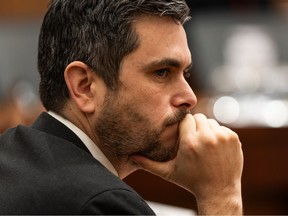
OTTAWA — When CSIS director Dan Rogers meets staff at one of the spy agency’s offices across the country, there comes a time when he asks the bosses to leave the room.
Sign In or Create an Account
Then, he asks spy agency staff how thing are really going.
There’s good reason for the head of the spy agency — who marked two years on the job earlier this month — to want to put his ear directly to the ground.
CSIS has a morale issue. It has a red tape problem. It’s strained from years of under-resourcing. And above all, it has a serious leadership trust issues.
In an interview alongside CSIS’s deputy director Vanessa Lloyd and human resources head Jesse Schwartz, Rogers candidly acknowledges those problems. In fact, he’s brutally honest in his assessment of the service.
The agency is full of passionate people who are extremely dedicated to their mission of keeping Canada safe. But it’s also struggling.
“CSIS is strained,” he told National Post.
“We have an organization that is extremely overtaxed in an extraordinarily complex environment, and people do hard work in stressful environments every day.”
Rogers may lead one of the most mysterious and shadowy agencies in the country, but he spends a lot of his time thinking not about spy stuff… but about culture change.
That’s because the same year he was appointed, the government released the 2024 edition of the Public Service Employment Survey (PSES) that showed deeply concerning results for CSIS workers.
The poll suggested only half (51 per cent) of CSIS respondents believed senior managers “lead by example in ethical behaviour.” Far fewer (40 per cent) said they had confidence in top management, whereas barely 29 per cent believed senior management makes “effective and timely decisions.”
Just over half (56 per cent) said they had the tools, technology and equipment to do their job.
Nearly one in five (17 per cent) of respondents said they’d been harassed in the previous 12 months.
In all those cases, CSIS’s results were both consistent or worse than previous surveys and below the average across the federal public service.
That’s on top of repeat allegations of racism, sexism, a “macho” environment and even sexual assault over the last decade within the secretive service. Notably, in 2017, then-Director David Vigneault issued a statement acknowledging “serious concerns surrounding retribution, favouritism, bullying and other inappropriate behaviour” in the service’s Toronto office.
Issues with trust and ethics are of particular concern at CSIS because the spy agency has tremendous and invasive investigative power. With the proper ministerial authorization, agents can even break the law to advance an investigation.
The agency is also required to act quickly to detect and respond to imminent national security threats. Red tape and overly complex internal processes are likely to complicate that mission.
Last year, National Post revealed that Rogers sent a memo to staff in June 2025 acknowledging the “disappointing and unacceptable” PSES results. Culture change would become his and management’s “overriding priority,” he wrote, because the current environment was hampering CSIS’s ability to deliver on its critical national security role.
The director and his colleagues are well aware that changing a culture — particularly one that has been allowed to fester slowly for so long — is not an overnight experience.
“Habits are hard to change,” said Schwartz in the recent interview in which she, Rogers and Lloyd listed a number of changes they were implementing following his memo.
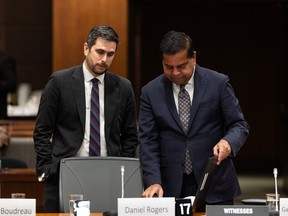
One is improving communication by having senior executives speak more directly to their staff and vice-versa. Executives need to speak more directly to their reports, and employees are encouraged to write directly to a senior leader, and even the director himself.
“You can make all the right decisions as a senior manager, but if people never know who you are, they don’t know your values, and they don’t hear the context about why you made the decision that you made, and they don’t feel like you’re being earnest with them, and you’re just this nameless, faceless thing that exists and communicates them through an email or a very corporate speak message, they might assume the worst,” Rogers said.
A second is making it clear to executives that their priority over the next year was to focus on “key elements of our workforce”, such as creating a better team environment. It’s now part of their performance reviews and directly impacts their bonus.
Another is hiring more, faster and addressing critical staffing gaps.
For Schwartz, the head of HR, much time has been spent speeding up recruitment and the infamously slow enhanced top secret security clearance process. There is no lack of applicants to the spy agency, she said, but getting them through the door has not always been easy.
She said she’s worked to cut down on hiring “bottlenecks”, speed up the clearance process such as by hiring more polygraph operators, and avoiding redundancies in the process.
“So this year we have (hiring) targets. Next year, we have more ambitious targets because we know that this year we’re going to take a bit of time to build the capacity because we hadn’t been doing it for a while. I expect that that trajectory gets better,” Rogers explained.
He also said the service has “really fundamentally adjusted the way that we do training, the way that we classify people in positions” in the name of efficiency.
There’s also recognition. Because of CSIS’s secret mandate, much of the work done to protect Canada’s national security like foiling a terrorist plot or preventing sabotage on Canadian infrastructure goes unrecognized. It’s a longstanding frustration by employees at the service.
So if a team has a “great operational success,” instead of sending them an email, why not bring them a box of donuts, say thank you and ask them how they did it, Rogers said. Simple stuff that simply wasn’t being done consistently.
We have an organization that is extremely overtaxed in an extraordinarily complex environment, and people do hard work in stressful environments every day
But in an organization where so many employees are spies who are trained to lie, deceive and conceal their true identity professionally, how does Rogers ensure executives are actually making the changes he demands?
On the same day National Post sat down with Rogers, former intelligence officer Diana Bayko published an account of her time at CSIS in which she explained how her then-boss had advised her to handle conflict with her colleagues.
“Handle my co-workers like sources. Meaning: assess their reliability, spot vulnerabilities and exploit them if need be, and trust sparingly,” wrote Bayko.
So, how does Rogers make sure he isn’t being lied to?
“That’s a great question,” Rogers said. “There are ways we can try and figure that out and try and mitigate against the risk of inaction where we expect action.”
For example, he ordered multi-rater assessments (also know as 360-degree review tests) for every single executive in the organization. The comprehensive (and generally expensive) test gathers feedback from not only the executive’s subordinates, but their colleagues and their bosses through a questionnaire of hundreds of questions. It’s a lot of work.
The point, he said, is to get a holistic assessment of an executive’s work seen by a coterie of other people. Then, you can compare it to what they should be doing.
Another example is his meetings with staff both at headquarters and regional offices without the bosses around.
“When I’ll go to visit a region, I’ll have a meeting with management. I’ll also have a meeting without management in the room, and I’ll ask questions, and I’ll say, ‘You can email me directly’,” Rogers said.
“And people will email me directly, and they will say, ‘I do not want you to share this with my management, but here’s something I think you should know’,” he continued.
“It’s not an irregular occurrence that people will email. Now, to be candid, sometimes I wish they didn’t have to. They’re emailing because they feel like they don’t have another resort.”
Rogers wouldn’t say if any executives been fired, demoted or sanctioned for not living up to expectations, citing privacy rules. But he noted that it was crucial for him to set expectations for culture change before holding people to account.
“We are going to have to get there,” he said of identifying executives and staff who aren’t performing as expected.
Asked how the situation got so bad, CSIS leadership demurs, unwilling to blame any particular previous leader or policy.
“I’m not going to cast blame. Having come in, I saw a lot of people trying to resolve these issues,” Rogers said.
“I know this is hard, and I’m pretty forgiving about the fact that some people may not have been able to create exactly the culture that we would want.”
But now, Canada’s spy chief spends much of his time cleaning up the mess.
National Post
cnardi@postmedia.com
Our website is the place for the latest breaking news, exclusive scoops, longreads and provocative commentary. Please bookmark nationalpost.com and sign up for our politics newsletter, First Reading, here.
Join the Conversation
This website uses cookies to personalize your content (including ads), and allows us to analyze our traffic. Read more about cookies here. By continuing to use our site, you agree to our Terms of Use and Privacy Policy.
KioskNews shows a cleaned-up reading view extracted from the publisher’s page — the original always lives on their site, not ours.