Meet Sinchana Santosh, 15, who manages a Rs 13 lakh investment portfolio
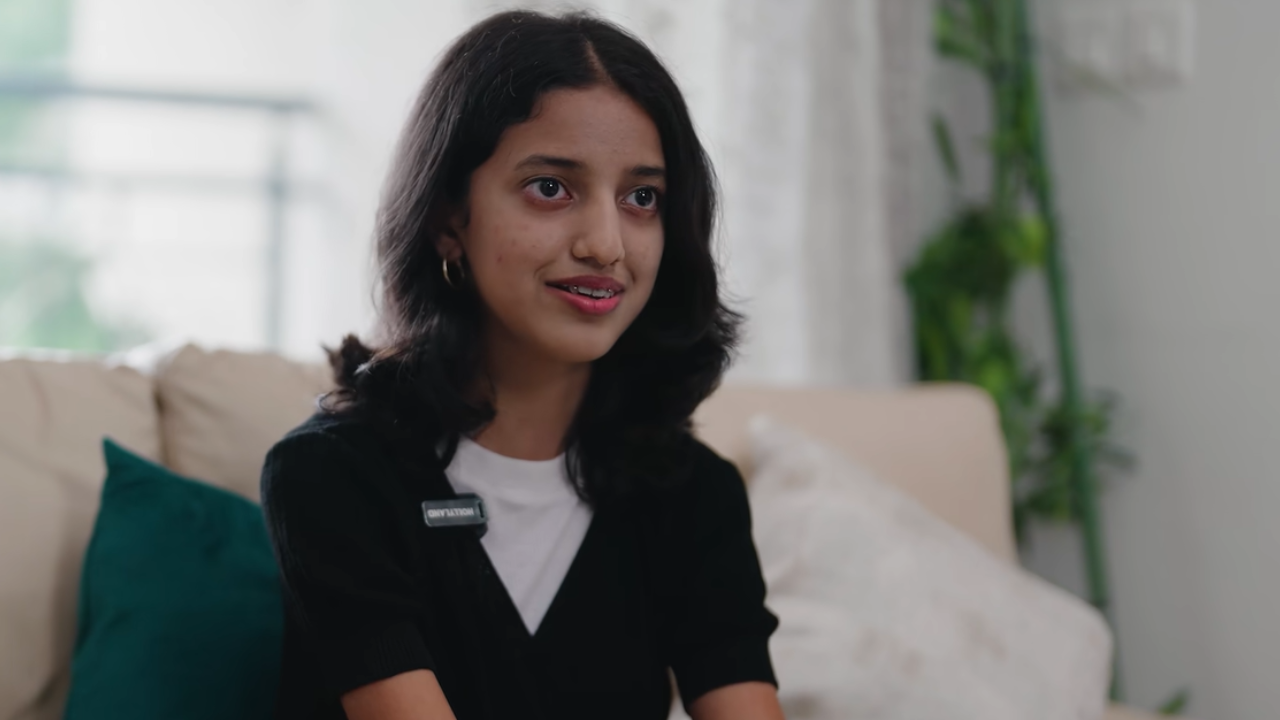
Bengaluru’s Sinchana Santosh started investing at 15 and says her portfolio is now worth ₹13.9 lakh. (Photo courtesy: PowerUp Money)
At 15, while most Class 10 students are busy navigating school, exams and extracurricular activities, Sinchana has another responsibility on her plate- managing an investment portfolio worth ₹13.9 lakh.The Bengaluru student says she started investing only this April, after her parents withdrew money from their insurance policies because they felt the policies were not giving good returns. The money was then handed over to her to manage, under their supervision.“I’m 15 years old and I’m currently managing a ₹13 lakh portfolio on my own,” Sinchana said in an interview with PowerUp Money. Her portfolio, she later clarified, is currently worth ₹13.9 lakh, which she rounds off to ₹14 lakh.But investing is only one part of her life. A Class 10 student at Swagani School in Bengaluru, Sinchana has been balancing academics with financial education, extracurricular activities and another unusual project - a history-based card game designed to help students remember historical figures from the NCERT syllabus.
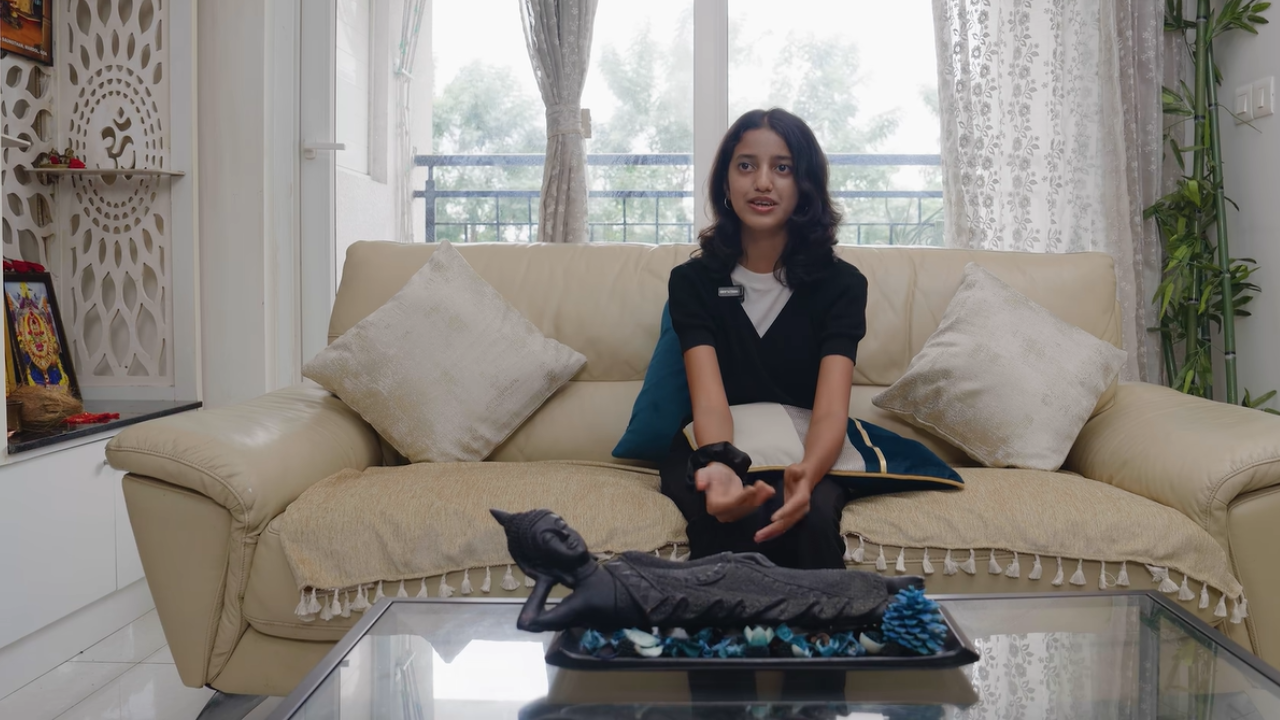
Sinchana says she began learning about personal finance before starting to invest her family’s money. (Photo courtesy: PowerUp Money)
It started with a telescope
Sinchana traces her interest in money back to a childhood request for a telescope.“When I was younger, I wanted a telescope. So, I asked my dad to buy it for me, but it was too expensive,” she recalled.
Instead of simply being told no, her father suggested that she raise the money herself. Sinchana went from one relative’s house to another, asking them to contribute towards the telescope. Her pitch was simple: if they helped fund it, they could use the telescope whenever they visited her home.“I got ₹10k from them and the rest ₹2k was pitched by my dad and my mom,” she said.For Sinchana, that experience became the beginning of what she calls her “money journey”.Her parents continued encouraging her to become comfortable with financial decisions. Her father recalled taking her to an ATM when she was around four or five years old and allowing her to handle transactions with his card while he supervised her.The idea, he explained, was not simply to teach her how to use money, but to build confidence and independence around financial decisions.
From YouTube videos to NISM exams
Before Sinchana began managing money, her father wanted her to understand the basics.
She went on to earn two NISM certifications and one SEBI-related certification, according to the interview.She began preparing for one of the NISM examinations during the last week of Class 9. Much of her learning happened during weekends and holidays.“YouTube was a very important resource. I learned a lot about finances from Ankur... Power of Money, Wealth and then Sonia Shenoy — all these YouTube channels that I watched frequently helped me improve and learn these concepts,” she said.The learning process was not always easy. She recalled missing the passing mark in one of her first attempts by a single mark.“I didn’t qualify. I missed by one mark. 60% was passing and I got 59,” she said.She appeared again the following month, even as schoolwork, projects and a Guides camp competed for her time.The experience appears to have reinforced one of the principles her parents wanted her to learn: financial knowledge cannot remain theoretical.Her father compared it to learning to swim. “You might watch 400 hours of YouTube video about swimming; until you get into water you can’t learn swimming,” he said. The family therefore wanted Sinchana to gain experience with real money while having “guard rails” around her.“If she makes a mistake, we should not chastise her but rather tell her to learn from those mistakes,” he said.
Sinchana manages the portfolio under her parents' supervision. (Photo courtesy: PowerUp Money)
How she manages the ₹13.9 lakh portfolio
Sinchana says her portfolio is diversified across asset classes and markets.
According to her interview, around 63% is in equity and 37% in mutual funds. Geographically, she says approximately 71% is invested in Indian markets and 29% in international markets, including the US, Asia and Taiwan.She also follows her own framework while selecting mutual funds, which she calls “GDP” - growth, direct and passive.“I generally invest in growth-oriented funds because I don’t need money now because I need it for my master’s education, which is seven years later,” she explained.She chooses direct plans because, in her words, “there’ll be less charges of the intermediaries”, while passive funds are chosen because they replicate benchmark indexes.Her approach also involves keeping an eye on what is happening in the markets. She says she reads newspapers on weekends and checks whether any information could affect companies in her portfolio.“If there’s any information that impacts any of my portfolio stocks, I take action,” she said, adding that she discusses whether to buy, sell or retain an investment with her parents.“I manage my funds on my own but under my parents’ supervision,” she said.Her stated investment horizon is seven years, with the money earmarked for her master’s education.
A student who wants finance taught in schools
For Sinchana, investing is also about a gap she sees among her peers.“In this current education system, they don’t teach much about personal finance, investment,” she said.She noticed this particularly among her friends, who would ask her basic questions about investing.
Her suggestion is straightforward: schools should devote at least some regular classroom time to financial education.“If schools at least spent an hour a week for personal finance, kids could learn how to manage money and that’s very important in life,” she said. “If you learn the art of managing money, life becomes a lot easier.”Her interest in learning, however, extends well beyond stocks and mutual funds.
From Pokémon cards to a history game
Sinchana says she has always been curious about different subjects.
Temple architecture and history were among her interests, and she found herself wondering why she could remember Pokémon characters so easily but struggled to remember historical figures.“One day while coming back from my guitar classes, my friend and I were playing Pokémon cards,” she recalled. “It made me curious how I could remember all the Pokémon characters and all his friends. But we could not remember history characters so well.”That led her to develop a card game based on historical figures from Classes 7 to 10 of the NCERT syllabus.Her idea was to use repeated gameplay to help students remember information. The cards feature historical figures and facts, with a game manual explaining how to play.The project reflects the same curiosity that drew her to finance: rather than simply accepting how something works, she wants to understand it and experiment with another way of doing it.
Sinchana says she is investing with a seven-year horizon to help fund her master’s education.
‘Knowledge doesn’t diminish by sharing’
There is also a social dimension to Sinchana’s interests.During the Covid pandemic, when her family received help from frontline workers, she became concerned about the risks faced by ASHA workers visiting homes. She wanted to do something for them and, with her parents’ help, raised around ₹45,000. The money was used to procure and deliver PPE kits, masks and gloves for ASHA workers, according to the interview.Today, she says she is already teaching her friends about financial topics.Her ambition is to take that much further.“Every one of us, we have a social responsibility. Knowledge doesn’t diminish by sharing,” she said. “I want to expand this to a larger portion of the world, like at least teach about one million students.”For now, though, there are Class 10 studies, a growing interest in history and finance, and a portfolio being managed with parental supervision.And when asked what advice she would give other young people, Sinchana keeps it simple: “Don’t be afraid to try to experiment.”“I’ve noticed many of my friends, they are very hesitant. They believe they’re not good at it, so they don’t try it. But you never know without trying,” she said.
KioskNews shows a cleaned-up reading view extracted from the publisher’s page — the original always lives on their site, not ours.