China’s HQ series intercepts 2 new missile types as PLA tests weapon platform
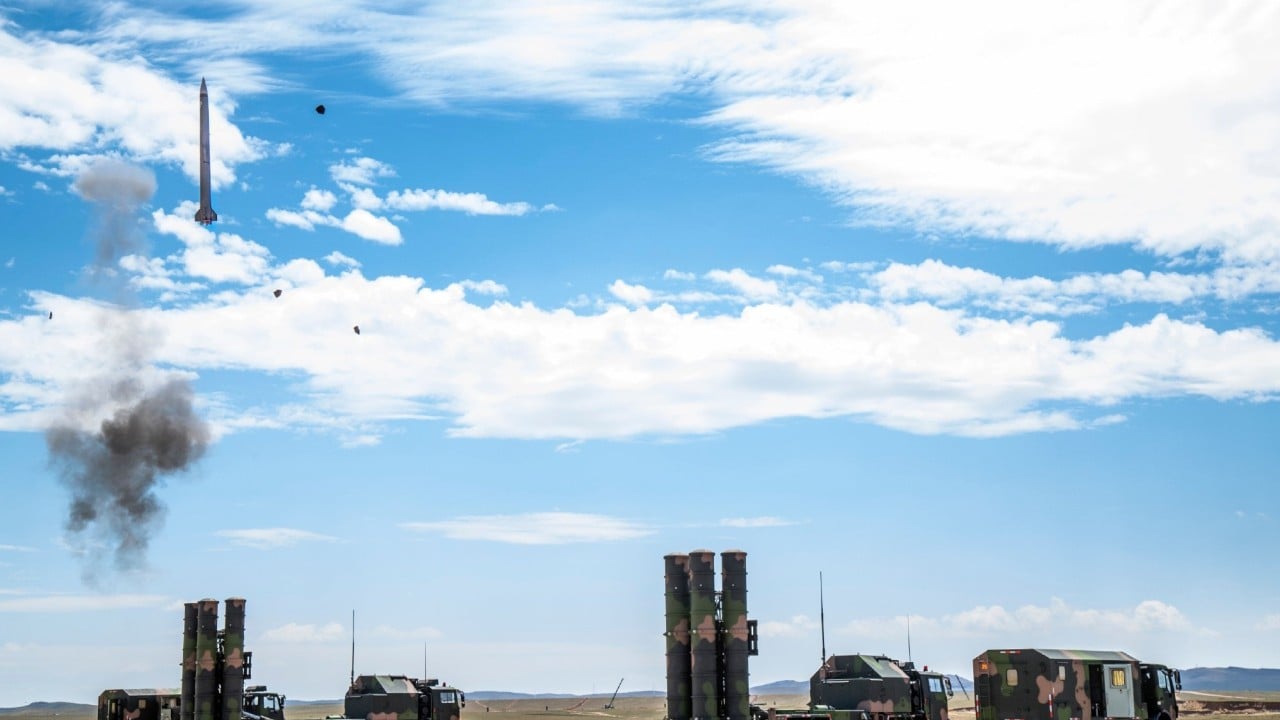
A People’s Liberation Army air defence unit has for the first time intercepted two new types of missile simultaneously during a drill – including one that made a sudden change of direction, according to state television.
The CCTV report on Monday said it was a rapid response operation by the ground-based Shenwei Missile Battalion – under the PLA Central Theatre Command Air Force – which is equipped with Hongqing surface-to-air missiles.
It did not disclose the type of missiles intercepted or any details about the air defence interceptors used, nor did it give the timing or location of the exercise.
The report said only that the drill was testing a new weapon platform, without saying whether it was the incoming missiles or the interceptor system being tested.
The PLA battalion had travelled thousands of kilometres for the drill before it immediately moved into position in an overnight operation, according to the report. It included footage showing air defence missiles deployed in a desert landscape that appeared to be in northwest China.
Shi Shidong, a member of the battalion, told the broadcaster that the unit was alerted about multiple missiles incoming, with one rapidly descending on them after making an unexpected and drastic change of direction.
“We only knew there would be multiple types of targets, including ballistic missile[s],” Shi said.
The report also showed footage of the battalion’s air defence missiles being deployed by road-mobile launch vehicles, as well as by railway, large military transport aircraft like the Y-20, and roll-on/roll-off (Ro-Ro) ships.
It said the military’s firepower was being pushed “to the frontier of the seas”.
The PLA has used the large civilian cargo ships to transport equipment and personnel, and the country’s vast Ro-Ro fleet is seen as a potential asset to help the military mobilise in the event of a campaign across the Taiwan Strait.

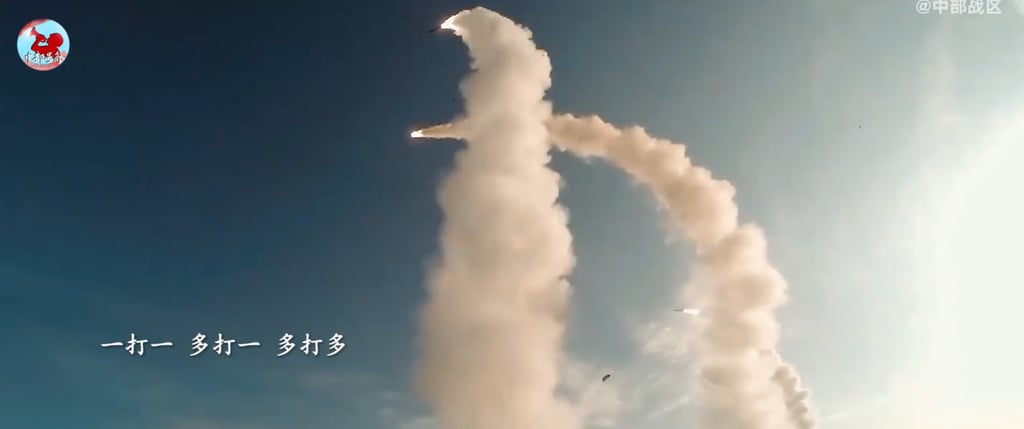
In separate videos posted on Chinese social media, CCTV highlighted the missile systems used by the Shenwei battalion – including a rare mention of the HQ-29. The exo-atmospheric anti-ballistic missile was unveiled during last year’s military parade in Beijing after years of reported development and testing.
The broadcaster said the PLA unit was equipped with the HQ-29 as well as the HQ-9 surface-to-air missile and the HQ-19 ballistic missile interceptor, and that together they could be used to defend against targets such as drone swarms and stealth aircraft, in addition to traditional ballistic missiles.
Each is designed to intercept threats at different altitudes and stages of flight.
The HQ-29 can destroy longer-range ballistic missiles during their midcourse flight outside the Earth’s atmosphere. Chinese military magazine Ordnance Industry Science and Technology has estimated the HQ-29’s interception altitude at up to 2,000km (1,240 miles) and its range at 4,000km (2,485 miles).
Meanwhile the HQ-9 is a long-range surface-to-air missile system designed to intercept fighter jets, bombers and cruise missiles.
And the HQ-19 is a high-altitude anti-ballistic missile interceptor designed to destroy short- and medium-range ballistic missiles during their terminal phase of flight, at altitudes reportedly below 100km.
Military analyst Zhang Xuefeng told CCTV that the HQ series provided multilayered air and missile defence, and by integrating laser and microwave systems the PLA would be able to more effectively neutralise drones.
“It is fair to say that, up to this point, we have firmly positioned ourselves at the very forefront of the world’s top tier in surface-to-air missile weapon systems,” Zhang said.
The report noted that the Shenwei battalion had achieved other operational firsts in recent years, including the “breakthrough” of simultaneously engaging multiple types of missiles as they approached at high and low altitudes during a maritime operation.
Another member of the battalion, Hu Yang, said in a separate CCTV video posted on Monday that the unit could now intercept targets ranging from ballistic missiles to hypersonic weapons, stealth aircraft and drone swarms.
“The target we defend against is upgrading,” Hu said. “And we are upgrading as well.”
KioskNews shows a cleaned-up reading view extracted from the publisher’s page — the original always lives on their site, not ours.