Aid shortages and fears of starvation as Indonesia reels from deadly earthquake
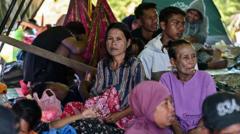
Aid disruptions and aftershocks across the Indonesian island of Flores are fuelling fears among thousands of survivors who were displaced by a 7.7 magnitude earthquake on Saturday.
Refugees are sleeping outdoors through sweltering days and frigid nights for fear that more buildings may collapse. Tents set up amid the rubble of collapsed hospitals are serving as makeshift emergency rooms for injured patients. And as landslides sever access roads and supplies dwindle in several parts of the island, there are growing concerns about how much longer survivors can hold out.
At least 53 people were killed and some 5,000 displaced by the initial quake, which struck shortly before 06:00 Saturday (23:00 GMT Friday) at a depth of just 15km.
It is the country's deadliest earthquake since 2022, when hundreds of people were killed in West Java.
"We heard that medical assistance would be provided, but nothing has arrived yet," Rista Mari, a public relations officer at the Ruteng Regional General Hospital in Manggarai Regency, told the BBC. "We hope that assistance will arrive soon."
Early data from Indonesia's National Disaster Management Agency indicates that more than 1,000 houses have been damaged, along with dozens of health facilities, schools and government offices.
But the full scale of the disaster is still being uncovered.
In Flores' westernmost town of Labuan Bajo, the gateway to Komodo National Park and one of Indonesia's most popular tourist destinations, many survivors have been sleeping outdoors, fearful that if the tremors continue they might be crushed in their sleep.
"The shaking was very scary. My house almost collapsed," said one farmer named Anastasia Imad, from a green emergency tent erected next to her damaged home. "We were worried that the aftershocks would collapse the house while we were sleeping."
Herry Kabut, editor-in-chief of local publication Floresa Media, told the BBC that "each resident has set up their own evacuation post" amid blackouts, landslides and roadblocks.
"So far, many basic necessities such as [basic foodstuffs] and clean water are in great demand," he said. "People have no idea where to evacuate. There's been no government advice. Many have fled to the hills and are starving."
Health services across the island have similarly been forced to move outside and set up emergency tents due to damaged facilities. Ruteng Regional General Hospital's operating room, delivery room, pharmacy, and laboratory were all rendered defunct after the building's roof collapsed.
Elsewhere, in Ngada Regency, local resident Charles Abar told the BBC that health facilities and equipment had been severely damaged and that, as of Sunday night, no medical assistance had arrived.
He believes the government's response hasn't been swift enough.
"I think facilities like emergency tents need to be provided immediately, but I also see that district and regional governments are struggling due to budget constraints, limited supplies, and so on," he said.
Meanwhile, he added, villages have been cut off from aid and displaced people whose homes were damaged or destroyed have been forced to seek higher ground, as hundreds of aftershocks continue to rattle the island.
"The community is still traumatised," he stressed.
Indonesia is prone to earthquakes and volcanic activity, lying along the meeting point of three major tectonic plates.
On Sunday night, rescuers successfully reached a village on Palue Island, just north of Flores's mainland, that had been cut off for nearly two full days after the initial quake.
Rescuers were only able to reach Nitung Village after a two-hour overland journey from the coast.
"Our challenge was the road, which was still prone to landslides," said Sikka Deputy Police Chief Commissioner Marselus Yugo Amboro, who led the rescue mission. "It was a life-threatening route."
Yugo said hundreds of homes in Nitung Village were severely damaged by the earthquake, and that residents had been sheltering in makeshift shelters. Electricity and communication lines were completely cut off following the earthquake, he added.
"They haven't received aid yet because Nitung Village was isolated for nearly two days after the quake," he said, noting that efforts were underway to rush aid to the survivors.
"This is likely the village in Sikka Regency that suffered the worst damage from the earthquake."
Additional reporting by Eliazar Robert in Sikka Regency, East Nusa Tenggara
KioskNews shows a cleaned-up reading view extracted from the publisher’s page — the original always lives on their site, not ours.